How to choose the best swimming goggles?
Updated: 7 October 2026
Short answer: the best swimming goggles are the ones that match your swimming. Choose by fit first (press the goggles onto your eyes without the strap: if they stay on by suction for 2 to 3 seconds, they will not leak), then choose the lens for where you swim (clear or light for the pool, mirrored or polarised for open water) and finally choose the frame: larger goggles with a ratchet clip for comfort, compact racing goggles with a loop strap for speed. We explain every step below.
Want to choose a good pair of open water goggles right away? Then have a look at our top 7 best open water swimming goggles: there we compare the most popular goggles for open water and triathlon model by model.
When you go swimming you cannot do without a good pair of swimming goggles. Goggles are often seen as a small detail of your kit, but this little item makes a big difference during your swim sessions. Good goggles make sure you keep sharp vision, that your eyes are protected against chlorine, salt and bright light and that you hold your line in open water.
Swimming goggles come in many types, sizes and colours. So how do you know which goggles suit your goal? In this guide we walk you through the choice step by step: your swimming goal, the fit, the lenses, the frame and the strap adjustment. The tips come from the experience in our triathlon store in Volkel, where we fit goggles every day and help swimmers who come in with leaking or fogged-up goggles.
In this blog about choosing the right swimming goggles:

Why good goggles make the difference
Goggles that fit well and match your goal prevent the three problems we hear most often: leaking, fogged-up lenses and poor vision. This is what good goggles give you:
- Protection against UV radiation and bright light
At a triathlon, swim race or open water training the sun reflects off the water. A dark, mirrored or polarised lens cuts that glare, so you keep seeing the buoys and are not blinded. - No more leaking goggles
Goggles with the right fit seal by suction on your eye sockets, so no water seeps in. A snug fit also keeps the goggles in place during a dive start or in the scrum of a triathlon start. - Protection against chlorine, salt and dirty water
Chlorine, salt and murky water irritate your eyes. With goggles your eyes stay protected and you keep clear vision even after a long training session. - Comfort or speed, matched to your goal
Want maximum comfort? Choose larger goggles with a soft gasket. Want maximum speed? Choose compact racing goggles that sit in the eye socket and give hardly any drag.
Step 1: Your swimming goal (pool, open water or racing)
Whether you swim laps in the pool, train for a triathlon or swim for fun: which goggles give you the most comfort and benefit depends on where you swim and how seriously you take it. Indoors and outdoors you deal with very different conditions: light, waves, salt or chlorine and the distance you swim. Below we explain what to look for per goal.
The right goggles for the pool and your training
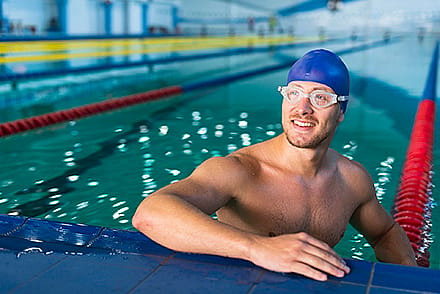
Do you swim (a lot) indoors? Then you probably know the unpleasant feeling of sore, red eyes after swimming. That is caused by the chlorine in the pool water. For the pool, goggles with a clear or lightly tinted lens are ideal: indoors you hardly suffer from sun or glare, and with a clear lens you see the black line on the bottom and the pace clock at the side most sharply.
Do you train several times a week? Then go for comfort: training goggles with a slightly larger lens and a soft silicone gasket press less on your eye sockets, so you can wear them for an hour without marks. An anti-fog coating is practically standard on training goggles.
Want to see how you are swimming while you train? The Form Smart Swim 2 swimming goggles with display show your pace, distance and heart rate live in your goggles, both in the pool and in open water.
Order before 17:00, delivered tomorrow
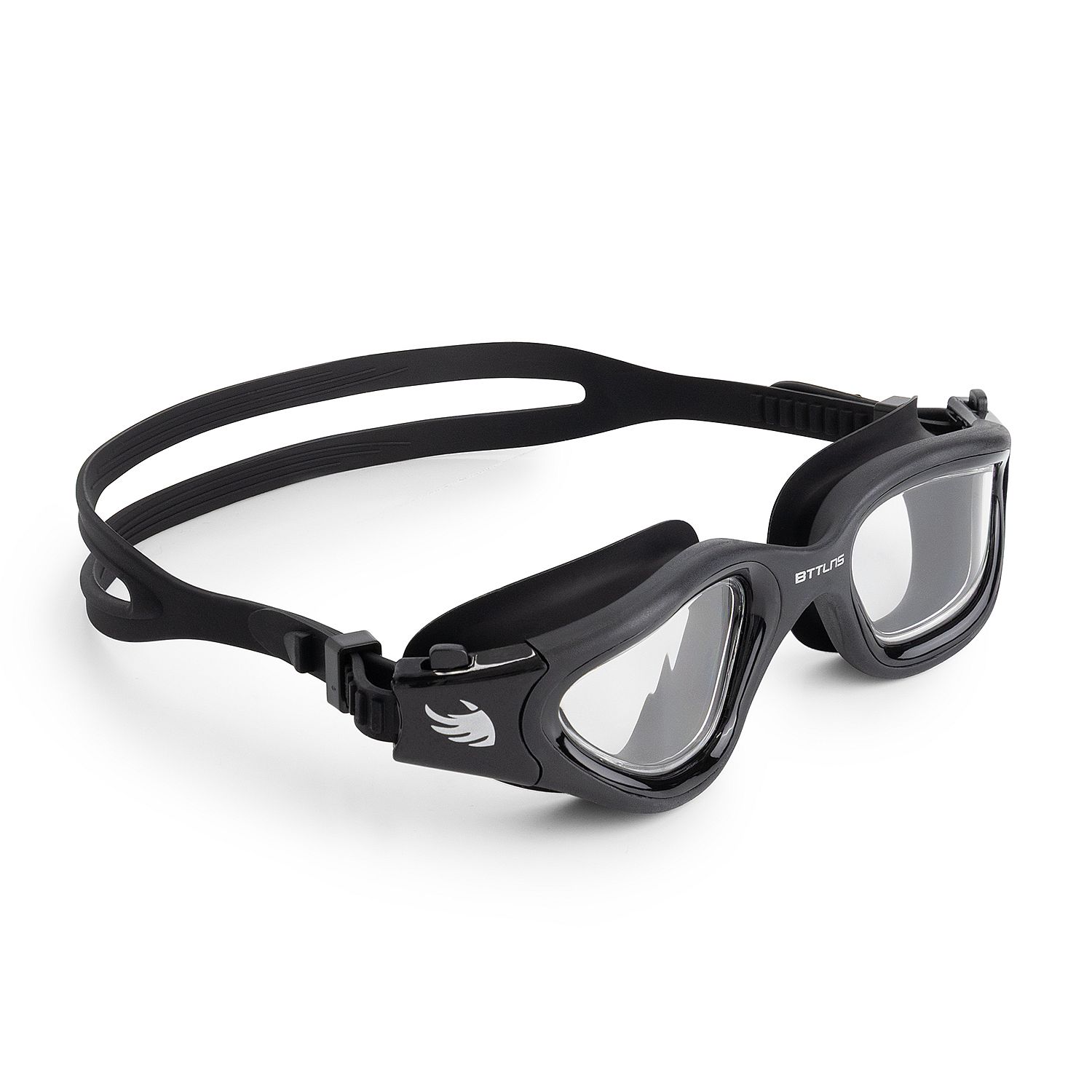
The BTTLNS Ghiskar 1.0 is our favourite training goggle for the pool: clear lenses with anti-fog coating, Face Fit Technology for a leak-free fit and a soft gasket that leaves no marks even after a long session. Available in several colours.
Order before 5:00 PM, delivered tomorrow
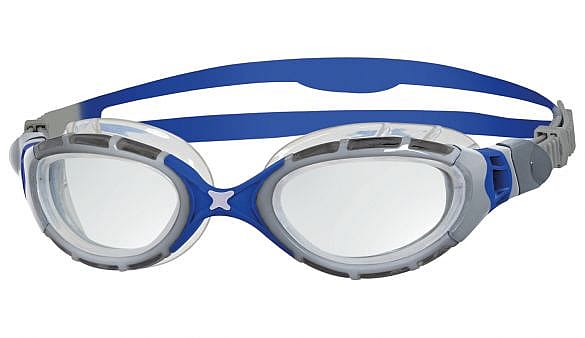
The Zoggs Predator Flex 2.0 has been a favourite for years among swimmers who want larger goggles with Flexpoint technology: the frame moves with your face and therefore also fits a narrower or wider face well. Curved lenses for a wide field of view in the pool.
The right goggles for open water and triathlon
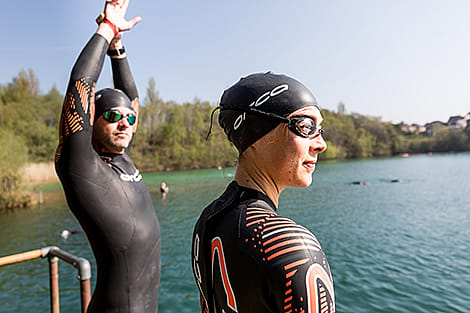
Do you like swimming outdoors or do you do triathlons? Then you swim a lot in open water, with different water and weather conditions than in the pool: low sun, waves, murky water and buoys you need to keep in sight. Open water goggles therefore usually have a larger lens for a wide field of view and a mirrored or polarised lens that filters out sunlight and glare and protects your eyes against UV radiation.
Pay extra attention to the fit of open water goggles: in the scrum of a triathlon start you want goggles that stay firmly in place and do not leak when an arm hits them. A slightly tighter strap and goggles that seal on (rather than over) the eye socket stay put best. Which goggles score best here, you can read in the top 7 best open water swimming goggles.
Order before 17:00, delivered tomorrow
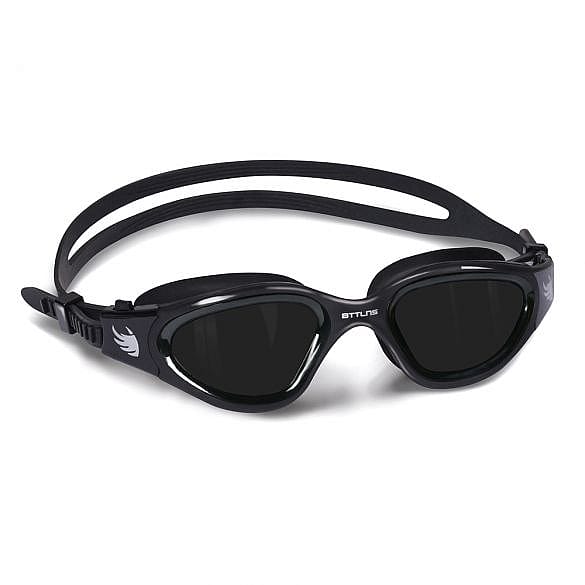
The BTTLNS Vermithrax 1.0 is one of the best-selling open water goggles in our store: a wide polarised lens that filters out the glare of the sun on the water, Face Fit Technology for a leak-free seal and quick-adjust buckles on both sides for an easy fit.

Delivery within 2 – 4 business days
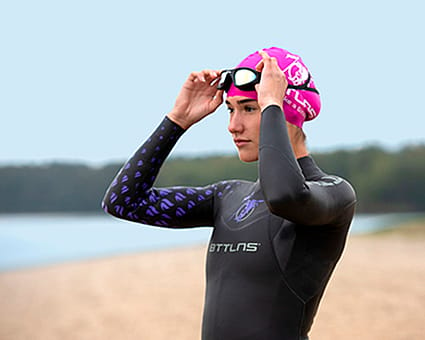
The Zoggs Predator Flex Polarized Ultra is the comfortable all-rounder for open water and pool: polarised lenses against glare and UV, an extra soft seal and a flexible frame that shapes itself to your face. A great choice if you want one pair of goggles for training and racing.
The right goggles for competitive swimming
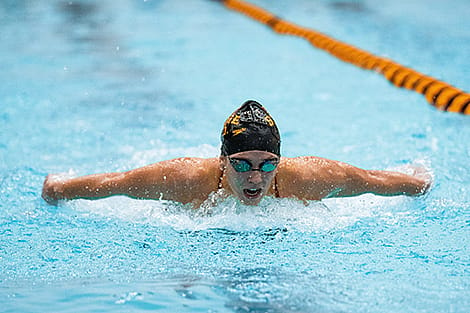
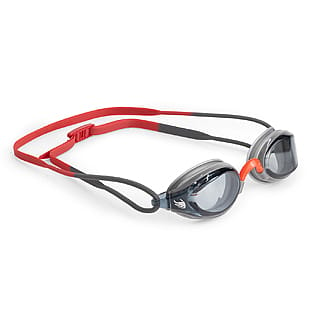
Do you race in the pool and want to set the fastest time? Then you choose racing goggles: compact goggles with small, streamlined lenses that sit in the eye socket, a low profile and a loop strap without protruding parts. These goggles give the least drag in the water and stay in place during a dive start and at the turn. The downside is that racing goggles put more pressure on your eye sockets; for long training sessions they are therefore less comfortable than training goggles.
Racing goggles usually come with a set of loose nose bridges in the box, so you can match the width exactly to your face. Take the time to adjust them properly: racing goggles that are not tight enough will leak at the start.
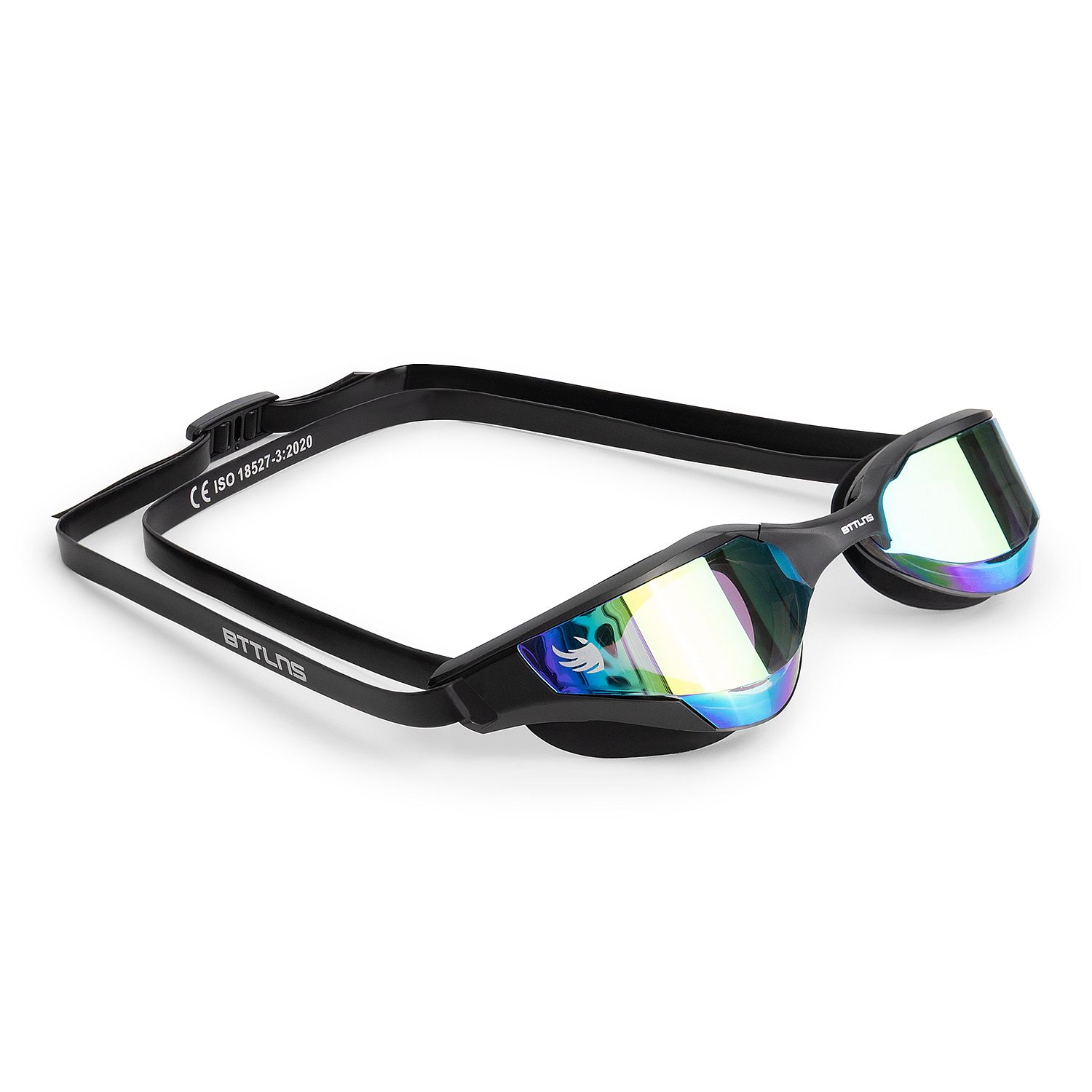
Order before 17:00, delivered tomorrow
The BTTLNS Sunfyre 1.0 is our most advanced racing model: a hydrodynamically curved race design with mirrored lenses against reflections, Race Fit Technology and a flexible flat nose bridge. Minimal drag, so suitable for swimmers who want to perform at top speed.
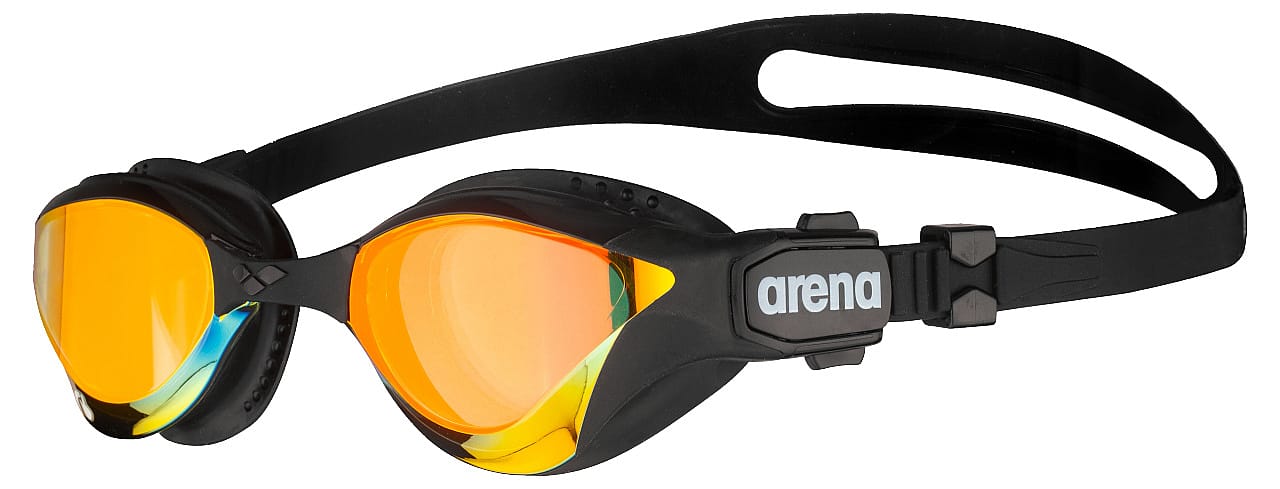
Order before 5:00 PM, delivered tomorrow
The Arena Cobra Tri Swipe Mirror is the racing goggle of many top triathletes: the Swipe anti-fog technology stays clear up to ten times longer than a regular coating (just swipe the inside with your finger and it is clear again), with a wide field of view and mirrored lenses.
Step 2: The fit
The fit is the most important point when choosing your new goggles. The last thing you want is water leaking into your goggles while swimming and blocking your view. So the goggles must seal well on your eye sockets, so that no water gets in.
A handy trick to test whether goggles fit: put the goggles on your eyes without the strap and press them on gently. If the goggles stay on by suction for 2 to 3 seconds, there is enough suction and they will not leak. Only then put the strap around your head and feel whether the goggles sit comfortably. Pay particular attention to the nose bridge and the area around the eyes: the goggles must not pinch or leave a gap anywhere.
Do you have a narrower face or deeper eye sockets? Then the fit is extra important. If the goggles are too wide, a gap appears at the side of your face through which water gets in. In that case choose goggles with a narrower frame or with interchangeable nose bridges, so you can set the width precisely. Models with a flexible frame that shapes itself to your face often suit more face shapes.
Goggles without marks and rings
Do you get rings around your eyes after swimming? That is usually because the strap is too tight, not because the goggles are too small. Goggles should stay in place by the suction of the gasket, not by the tension of the strap. So set the strap as loose as possible and choose goggles with a wider, soft silicone gasket that spreads the pressure over a larger area. Racing goggles press more than training goggles; that is the price of the low, streamlined fit.
Fit and speed
Want to swim as fast as possible? Then choose hydrodynamic racing goggles that sit in the eye socket. Are you a recreational swimmer or do you mainly train for distance? Then choose the goggles that give you the most comfort, with a larger lens that seals over the eye socket.
Step 3: The lenses
Swimming goggles come with lenses in many colours. Those colours not only look nice, they mainly have a function: they determine how much light and contrast you see. These are the lens types you will find with us:
- Clear lens: clear and colourless, for the indoor pool and low-light conditions. Gives the most natural vision.
- Dark lens: tinted to reduce bright light. Suitable for outdoor swimming in the sun and for brightly lit pools.
- Mirrored lens: a mirror coating on the outside reflects sunlight and reduces glare. Perfect for open water on sunny days and for racing.
- Polarised lens: filters out the reflections of the water surface, so you see buoys and other swimmers better and your eyes get less tired. Ideal for lakes and the sea.
- Orange lens: increases contrast in low light, such as cloudy weather, early mornings or evening training.
- Blue lens: reduces glare and increases contrast in bright light, indoors and outdoors.
- Photochromic lens: adapts automatically to the light: darker in the sun, lighter when it is cloudy. Handy if you swim indoors and outdoors on the same day.
Not sure which lens colour suits your conditions? In Which swimming goggle colour do I need? we compare all lens types by light conditions and swimming location.
Anti-fog: how to keep your lens clear
Nothing is as annoying as fogged-up lenses while swimming: you have to keep cleaning your goggles, and at a triathlon that costs valuable time. Almost all goggles come from the factory with an anti-fog layer on the inside of the lens. It is important not to touch or wipe this layer, because then it wears off and your goggles fog up even faster. Only rinse the goggles with clean water after swimming and let them air-dry.
Has the coating worn off over time? Then you simply reapply it with an anti-fog spray such as the BTTLNS Achlys 1.0 anti-fog spray: a few drops on the inside of the lens, rinse and your goggles are clear again. An old swimmer's trick is a little saliva on the inside of the lens, but a spray works longer and is more hygienic.
Step 4: The frame
Have you determined your swimming goal, the fit and the lens colour? Then the frame and the nose bridge play the last important role. You can divide goggles into goggles with a fixed frame and goggles with an adjustable nose bridge, and into goggles with larger lenses that seal over your eye sockets and goggles with smaller lenses that seal on or in the eye socket.
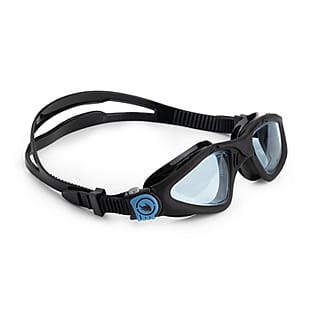
Goggles with a fixed, larger frame seal over the eye socket. That gives less pressure on the eyes, prevents the well-known marks and rings and sits more comfortably. They usually have a ratchet clip. These goggles are ideal for recreational swimmers, for training and for anyone who values comfort over a small advantage in hydrodynamics.
Are you a real competitive swimmer who wants to set the best time? Then choose racing goggles: the frame is smaller and more streamlined, the lenses fit exactly in the eye socket and the strap runs through a loop clip. Below you see a few examples of frames and lenses from our collection.
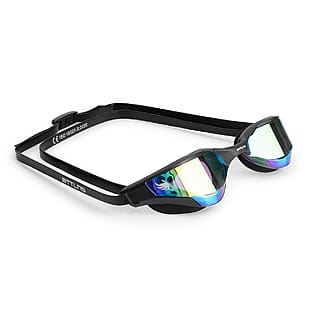
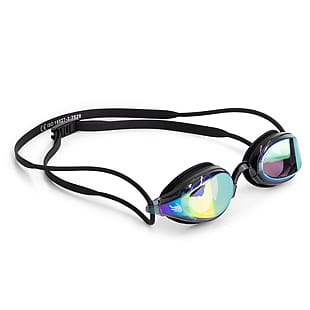
Step 5: The nose bridge and the strap adjustment
There are goggles with an adjustable nose bridge: you take the nose bridge out and replace it with a larger or smaller size from the box. These give you the most precise, firm fit in the eye socket and you mainly find them on racing goggles. There are also goggles with a flexible, fixed nose bridge that fits almost everyone; the frame is then one piece. You mainly find those on training and open water goggles.
Loop strap or ratchet clip?
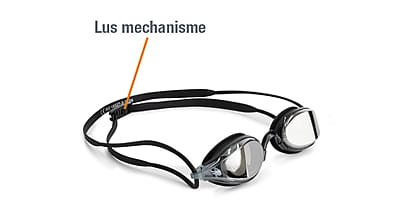
Goggles have two kinds of strap adjustment: the loop strap and the ratchet clip. With a loop strap the adjustment is on the strap itself: you thread the strap through a clip on the side of the goggles and pull it tight. The advantage is that this closure is more streamlined (more hydrodynamic), without protruding parts. That is why you see it on almost all racing goggles.
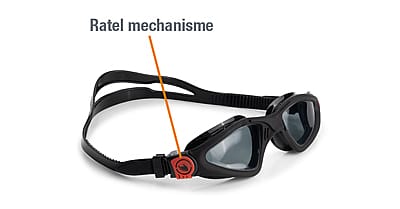
The ratchet clip sits on the side of the frame: with a button or wheel you tighten or loosen the strap in small steps, even with wet hands and with the goggles on your head. That is slightly more comfortable and easier, but slightly less hydrodynamic. For training, open water and recreational swimming the ratchet clip is the nicest choice.
How to make your goggles last longer
A good pair of goggles lasts for seasons if you take a little care of them. Rinse the goggles with clean, cold water after every session to remove chlorine, salt and sand, and let them air-dry out of the sun. Do not touch the inside of the lenses and do not rub them with a towel: that keeps the anti-fog layer intact and prevents scratches.
Store your goggles in a case or protective pouch, not loose in your swim bag between the zip and your keys. Scratches on the lens cannot be polished away. A goggle case such as the BTTLNS Soteria 1.0 is one of the best-selling accessories in our store, precisely because it is such a cheap way to protect more expensive goggles. Does the strap go slack or the gasket hard after a few seasons? Then it is time for new goggles.
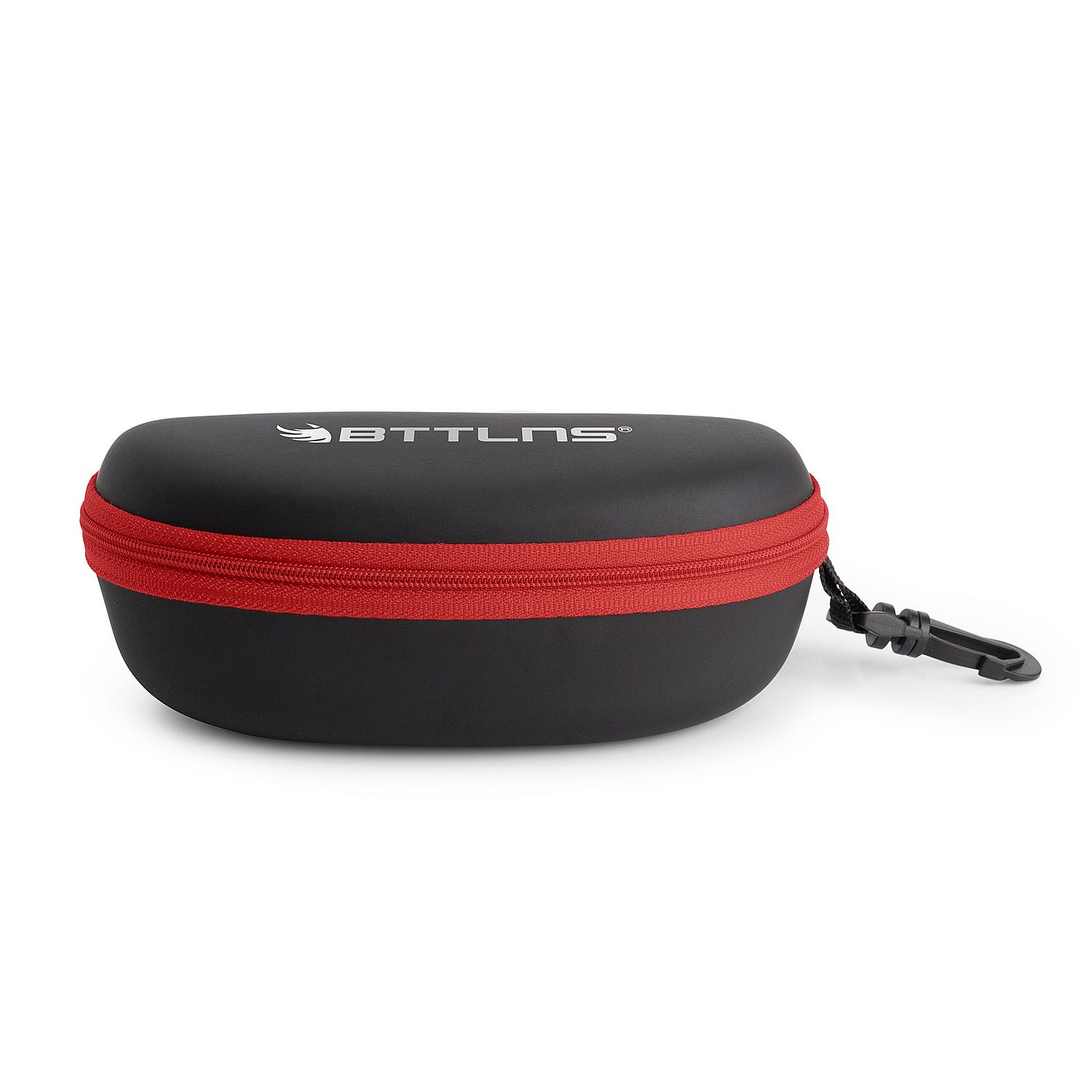
The BTTLNS Soteria 1.0 goggle case protects your lenses against scratches in your swim bag and has ventilation holes, so the goggles also dry in the case.

Order before 17:00, delivered tomorrow
The BTTLNS Achlys 1.0 anti-fog spray gives older goggles a clear anti-fog layer again. A few drops on the inside of the lens is enough for a whole training session.
Frequently asked questions about choosing swimming goggles
How do I know if goggles fit well?
Put the goggles on your eyes without the strap and press them on lightly. If they stay on by suction for 2 to 3 seconds by themselves, the gasket seals well and they will not leak. Then put the strap on and check that the nose bridge does not pinch. If you come to our store in Volkel, we will fit several models with you.
Which goggles are the most comfortable for recreational swimming and training?
Training goggles with a slightly larger lens and a wide, soft silicone gasket that seals over the eye socket, such as the BTTLNS Ghiskar 1.0 or the Zoggs Predator Flex 2.0. They spread the pressure, leave no marks and have a ratchet clip that is easy to adjust.
Which goggles do I choose for open water and triathlon?
Goggles with a wide field of view and a mirrored or polarised lens against glare, with a good gasket that stays in place in the scrum of the start. A popular choice is the BTTLNS Vermithrax 1.0; in the top 7 best open water swimming goggles we compare the most popular models.
Why do my goggles fog up and what can I do about it?
Fogging is caused by the temperature difference between your warm face and the cold water. New goggles have an anti-fog layer; do not touch or wipe it. If the layer has worn off, use an anti-fog spray such as the BTTLNS Achlys 1.0.
How do I prevent marks and rings around my eyes?
Set the strap looser: goggles should stay in place by the suction of the gasket, not by the tension of the strap. Also choose goggles with a wider, soft gasket. Racing goggles always press slightly more than training goggles.
Is there a difference between goggles for women and men?
Most goggles are unisex. A few models have a "lady" version with a slightly narrower frame and a smaller nose bridge, such as the Zoggs Fusion Air Lady. More important than the label is whether the goggles fit your face shape; test that with the suction test.
How long do swimming goggles last?
With two to three training sessions a week, good goggles last one to two seasons. Rinse them after every session, let them dry out of the sun and store them in a case. If the strap goes slack or the gasket hard, it is time for a new pair.
Conclusion: how to choose the best swimming goggles
Good goggles are an essential item for an enjoyable swim, whether you swim for fun, train for a race or take part in a triathlon. Choose in this order: first the fit (suction test), then the lens that suits your swimming location, then the frame and the strap adjustment that suit your goal: comfort for training and open water, compact racing goggles for races in the pool. That way you not only ensure clear vision, but also protect your eyes against UV radiation, chlorine and dirty water.
Want to choose a good pair of open water goggles right away? Then read the top 7 best open water swimming goggles. You will find all the goggles from this blog and more in our collection.
Need help choosing your new swimming goggles?
Would you like to buy new swimming goggles, but are you not quite sure which goggles best suit your needs? Then our swimming specialists will be happy to help you with all your questions. You can reach us on +31 (0)85 773 00 58, send an e-mail or visit our store in Volkel, the Netherlands. Then we will fit a few pairs of goggles with you right away.
Also worth reading