


The top 5 best running shoes for beginners
Updated: 6 October 2026
Short answer: for most beginners the Hoka Clifton 11 or the Brooks Ghost 18 is the best first running shoe: soft, light enough and suitable for every run. Looking for maximum cushioning (sensitive knees, a heavier build, lots of walk-run intervals)? Choose the Hoka Bondi 9. Do your feet roll inwards (overpronation)? Then the Brooks Adrenaline GTS 25 is the safest choice. Want a light shoe you can also do a fast lap in? Go for the Hoka Mach 7. Below you can read per shoe who it suits, and how to choose the right size and type.
Have you just started running and are you looking for your first pair of running shoes? Good shoes are the foundation of a comfortable and safe running experience. As a beginner you want shoes that are forgiving and offer plenty of comfort, cushioning and support: your body still has to get used to the impact of running, and it is precisely in those first months that most injuries occur.
In this blog we look at the top 5 best running shoes for beginners: models that have been chosen most often by beginner runners in our shop in Volkel and in the webshop for years, and that are known for their comfort, cushioning and quality. For each model we explain what makes it special, who it suits and what the pros and cons are. Then we help you choose: neutral or stability, how much cushioning, which size and what not to do.
In this blog about the best running shoes for beginners:
- At a glance: the top 5 compared
- 1. Hoka Clifton 11 – lightweight comfort for every day
- 2. Hoka Bondi 9 – maximum cushioning and protection
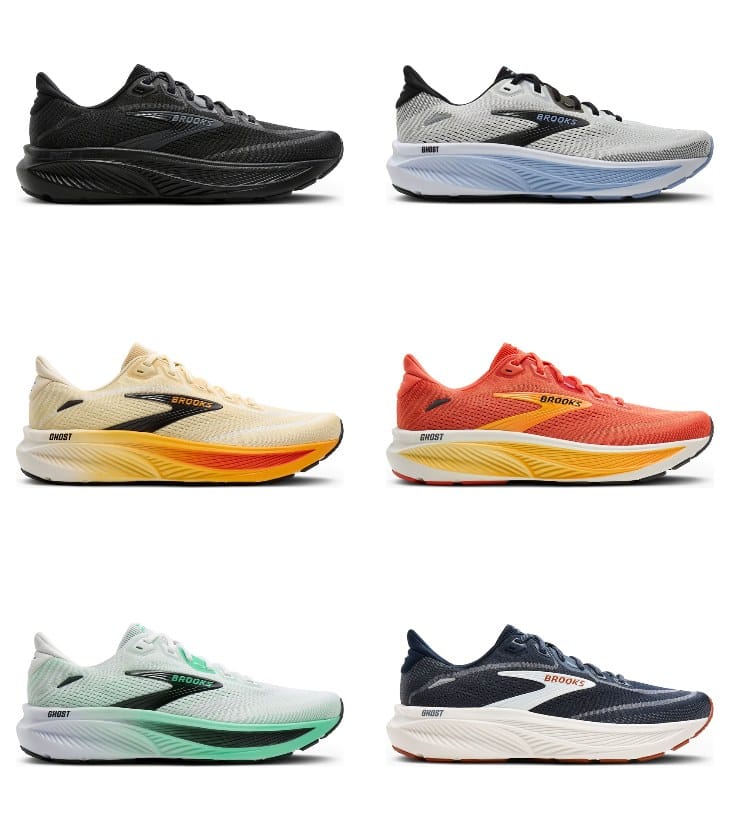
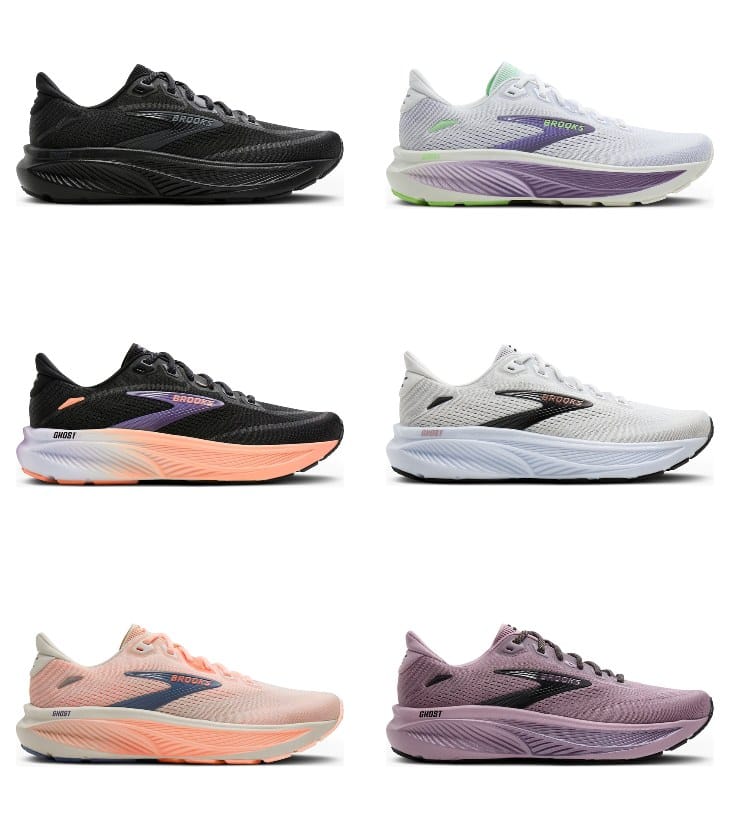
- 3. Brooks Ghost 18 – reliable all-rounder with soft cushioning
- 4. Brooks Adrenaline GTS 25 – stability for overpronators
- 5. Hoka Mach 7 – light and fast all-rounder
- How do you choose the right running shoes as a beginner?
- Which shoe suits you?
- Don't forget the rest of your kit
- Conclusion
- Frequently asked questions about running shoes for beginners
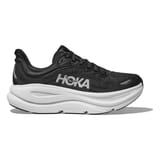
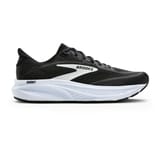
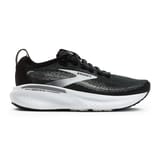
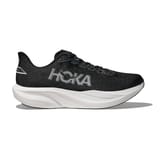
Want to see straight away what is in stock in your size?
View all running shoes for men View all running shoes for women
We have chosen the Hoka and Brooks models that most often leave our shop as a first running shoe. They excel in ease of use, cushioning and comfort: perfect for your first kilometres. The order is not a ranking from good to less good; which shoe is best depends on your feet, your weight and what you want to do with it. You can read that per shoe under "Who it suits".
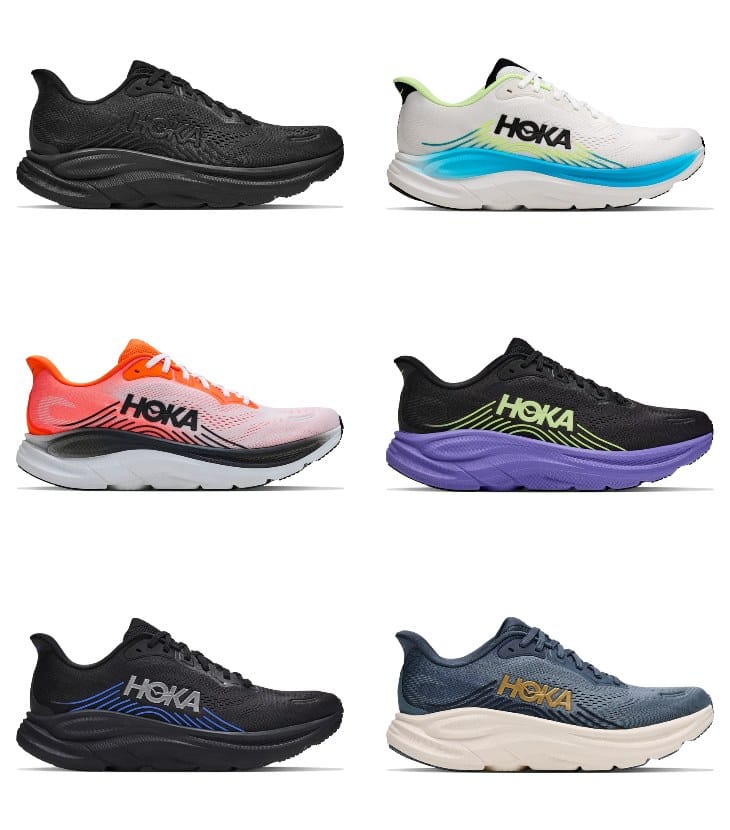
1. Hoka Clifton 11 – lightweight comfort for every day
The Hoka Clifton has been one of the most popular running shoes among beginners and experienced runners alike for years, and with good reason. The Clifton 11 is the latest model in the series and offers a perfect balance between soft cushioning and low weight. As a neutral running shoe with plenty of shock absorption, the Clifton 11 makes every step comfortable, which is especially welcome when you are just starting out and your body still has to get used to running.
The Clifton is known for its smooth transition thanks to Hoka's MetaRocker: the rounded sole shape guides your foot forward by itself, so your stride feels fluid. The Active Foot Frame, an enveloping heel frame, lets your foot land stably without hard stability elements in the shoe. Compared to its predecessor, the Clifton 11 got a more comfortable technical mesh upper and a softer insole, so it fits well from the first step and needs no break-in period. The 8 mm drop gives pleasant support under the heel, ideal for most beginners, who mainly land on the heel.
Beginner runners will notice that the Hoka Clifton 11 is very comfortable. You can use it for daily training runs, from jogging to your first 5 or 10 kilometres, without overloading your legs. Thanks to the thick EVA midsole (42 mm under the heel), every step feels soft, which helps prevent knee and joint complaints. On top of that, this running shoe is surprisingly light for the amount of cushioning it offers: you never feel like you are running in clunky shoes.
Who is the Hoka Clifton 11 suitable for?
For neutral runners (without clear overpronation) who want one comfortable shoe for all their training. Not sure whether your pronation is neutral? Read our blog What is overpronation? or drop by the shop for a gait analysis. The Clifton is also available in a wide version for broader feet.
Advantages of the Hoka Clifton 11:
- Soft, balanced cushioning: the thick EVA midsole absorbs shocks excellently, ideal for preventing injuries as a beginner.
- Lightweight design: despite the generous cushioning, the Clifton 11 is remarkably light, which helps reduce fatigue in the legs.
- Smooth transition: thanks to the MetaRocker sole the shoe rolls very smoothly, pleasant while you are still developing your technique.
- Comfortable fit: the updated, breathable upper fits snugly and the softer insole feels good right away.
What should you keep in mind? The Clifton is deliberately an all-rounder: it cushions less maximally than the Bondi and is less fast than the Mach. For most beginners that is exactly the right middle ground.
Tip: want more details about the Clifton series? Read our review of the Hoka Clifton running shoes for an in-depth look at this model.

Delivery within 2 – 4 business days

Delivery within 2 – 4 business days
2. Hoka Bondi 9 – maximum cushioning and protection
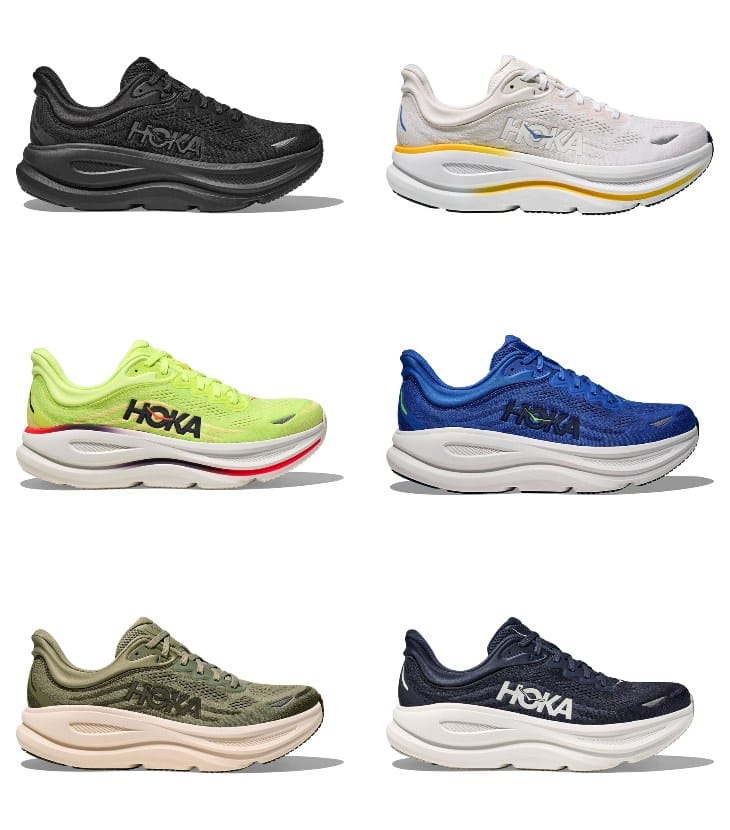
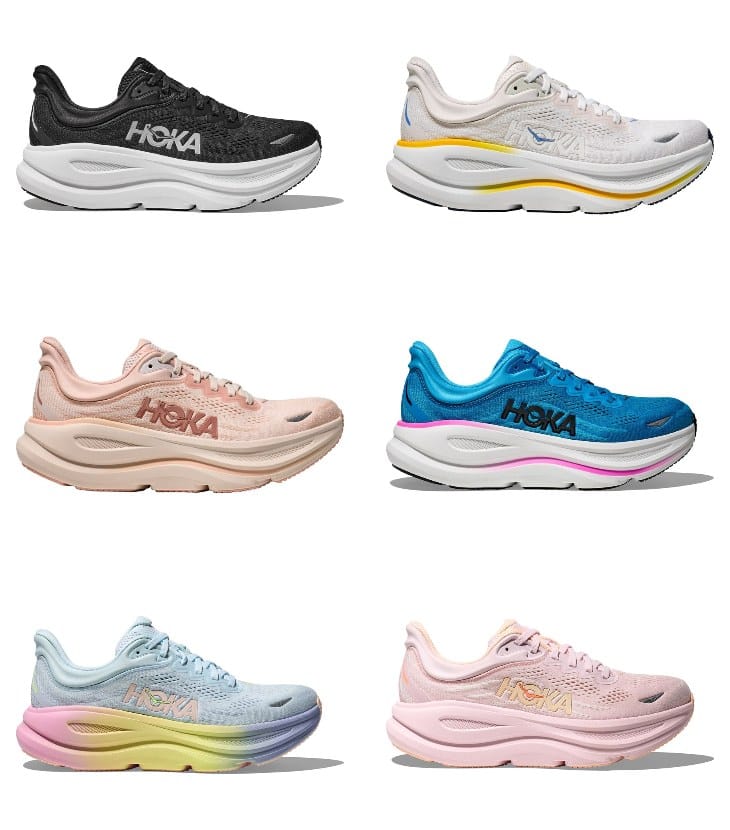
If you are looking for maximum comfort, you will quickly end up at the Hoka Bondi 9. Hoka's Bondi series is known for its ultimate cushioning and the Bondi 9 continues that tradition with some nice improvements. This model has an extra thick sole (the stack height has been raised slightly again compared to its predecessor) and uses new, supercritical EVA foam. For you as a beginner this means a wonderfully soft running experience. Thanks to that cushioning, shocks are absorbed to the maximum, which is especially pleasant if you are a bit heavier, have sensitive joints or simply want to go easy on your body while training.
Despite the enormous cushioning, Hoka has made the Bondi 9 lighter and more responsive than version 8. The sole is slightly slimmer and has strategically placed rubber pods, which keeps the weight down while providing good grip and stability. You stand firmly, even during longer runs or on a wet road: ideal for a beginner looking for a bit of extra security underfoot.
The upper of the Bondi 9 is made of technical mesh (with recycled material) and has improved ventilation, so your feet do not overheat while running. Reflective details have also been added, a nice bonus if you head out early in the morning or in the evening.
Who is the Hoka Bondi 9 suitable for?
Mainly for neutral runners who want maximum cushioning. This running shoe is perfect for long, easy runs, recovery runs and walks. As a beginner you can use the Bondi 9, for example, to comfortably build up a plan with walking and running intervals, such as our 12-week schedule for beginners. Keep in mind that the Bondi 9 is slightly heavier than the average running shoe, a logical trade-off for all the extra comfort the shoe offers. You won't break speed records in it, but that is not the point: the Bondi 9 is all about comfort, protection and support. Many beginner runners with sensitive knees, or who simply want to run wonderfully soft, swear by this model. It is not for nothing the best-selling running shoe in our shop.
Advantages of the Hoka Bondi 9:
- Maximum cushioning: one of the most cushioned shoes on the market, ideal for absorbing shocks and preventing aches and pains in beginners.
- Very comfortable and stable: the wide, supportive platform and Hoka's Active Foot Frame provide a stable feel despite the soft sole.
- Improved fit and ventilation: a new breathable mesh upper keeps your feet cool and the fit is firm but comfortable (also available in wide for those who need it).
- Ideal for long distances: made for long runs, recovery runs and even walking; perfect for building fitness at your own pace.
We discussed this model in detail in our review of the Hoka Bondi 9 running shoes. There you can read more about the differences between the Bondi 9 and 8 and why the Bondi 9 is such a good choice for comfort seekers.


3. Brooks Ghost 18 – reliable all-rounder with soft cushioning
The Brooks Ghost has been a favourite among beginner and experienced runners for years. It is a true all-rounder: this neutral shoe offers an excellent mix of cushioning, stability and responsiveness. The Ghost 18 features Brooks' latest DNA Loft v3 cushioning: a nitrogen-infused foam that is lighter, softer and springier than in previous generations. Every step is absorbed well, but the sole never feels too soft or unstable: you keep enough response and energy in your push-off. That makes the Ghost very versatile. As a beginner you can do your easy runs in it, but you can also pick up the pace or try a tempo run once you get a bit more advanced.
What makes the Brooks Ghost extra attractive for beginners is the comfortable fit. The Triple Jacquard Air Mesh upper wraps your foot comfortably without pressure points, breathes well and the shoe has a roomy toe box (no pinched toes while running). Brooks also uses a higher drop of 10 mm in the Ghost, which is pleasant if you mainly land on your heel; it makes the transition to the forefoot a little easier.
The stability of the Ghost is naturally good. Although it is not a stability shoe, the slightly firmer sole edge gives enough support for mild overpronation. In other words: even if your foot tilts inwards a little while running, the Ghost offers enough guidance to run comfortably. Does your foot clearly roll inwards? Then look at the Adrenaline GTS 25 below.
Who is the Brooks Ghost 18 suitable for?
The Brooks Ghost is rightly a go-to shoe for beginners: it does everything well and has no major weaknesses. Durability is excellent, so you can cover a lot of kilometres on your first pair before they need replacing. This model is ideal for neutral runners or runners with mild pronation who want one shoe for all their training, from short runs to (eventually) a first half marathon. Its predecessor, the Ghost 17, is also still available and remains an excellent (and often attractively priced) choice; read our review of the Brooks Ghost 17.
Advantages of the Brooks Ghost 18:
- Reliable cushioning: the DNA Loft v3 cushioning gives a soft landing with every step, comfortable for beginner runners who still have to get used to the impact.
- Versatile: suitable for different distances and paces, whether you jog 3 km or run your first 10 km.
- Comfortable fit: the upper is seamless and breathable, with enough room for the toes; the Ghost is also available in a wide fit.
- Good stability for a neutral shoe: the Ghost feels stable and balanced, so you still experience support with mild pronation without a real stability element.

Delivery within 2 – 5 business days

Delivery within 2 – 5 business days
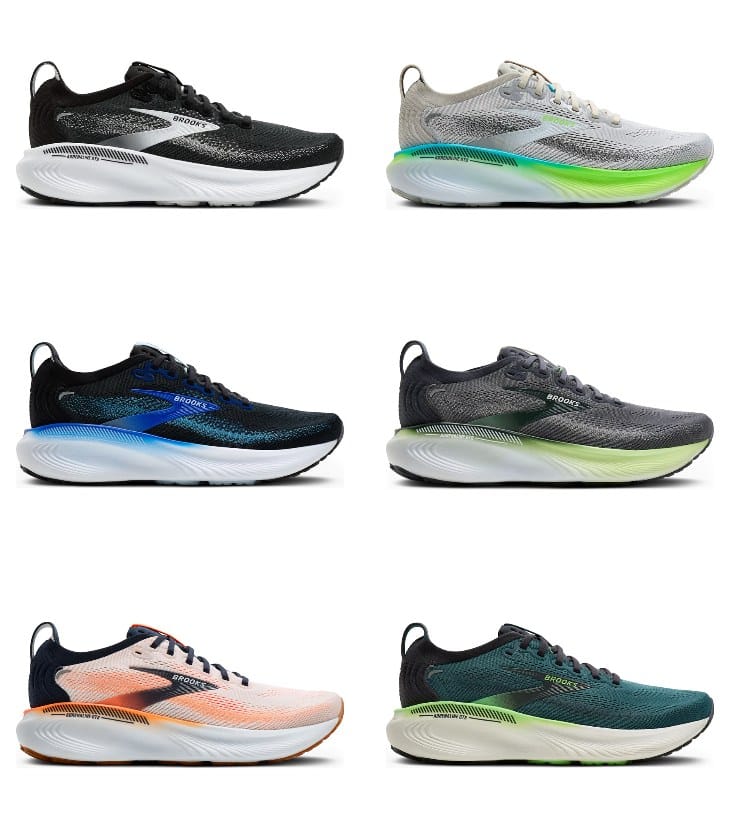
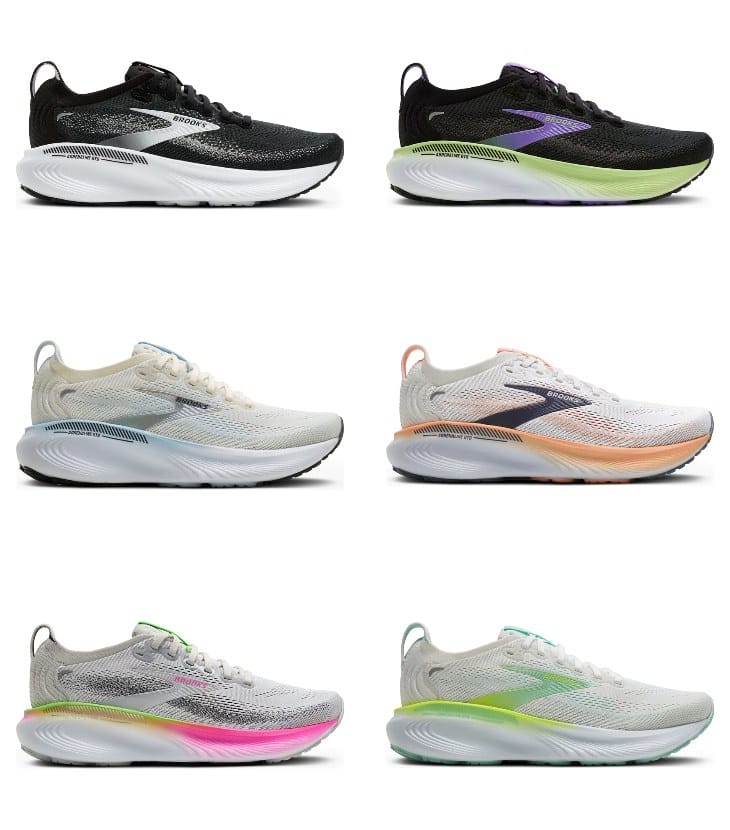
4. Brooks Adrenaline GTS 25 – stability and comfort hand in hand
Do you need a bit of extra support while running? Then the Brooks Adrenaline GTS 25 is a top choice. This shoe has been one of the most popular stability models for more than twenty years and is often recommended to beginner runners who overpronate (meaning their feet roll inwards a little too much on landing). The Adrenaline GTS 25 offers the same soft cushioning as the Ghost, now with even more nitrogen-infused DNA Loft v3 foam in the heel and forefoot, complemented by Brooks' signature GuideRails technology. These GuideRails work like invisible guardrails on the sides of your foot: they subtly correct your stride when you tilt inwards too much and so help prevent knee and ankle injuries. Don't notice anything? That is only a good thing: the support is adaptive and only kicks in when needed. That is why the Adrenaline also feels natural to neutral runners.
For beginners who could use some extra stability, the Adrenaline GTS 25 is an ideal running shoe. The midsole cushions every step and offers enough comfort for longer runs, while the sole is slightly firmer on the inside so you don't sink in and your running posture stays nicely upright. The 10 mm drop also makes it pleasant for heel strikers. The upper is comparable to that of the Ghost: comfortable, breathable and supportive in the right places. Many beginners find it reassuring that the Adrenaline "keeps an eye" on their running posture, so they have to pay less attention to it themselves.
Who is the Brooks Adrenaline GTS 25 suitable for?
Mainly if you know (or suspect) that your pronation needs support: worn inner edges on your old shoes, flat feet or knee complaints after running are signs. In running tests and beginner guides this shoe consistently comes out as the best choice for stability. But even if you simply want a firm, supportive shoe to start with, the Adrenaline will not disappoint you. You can find more stability shoes in our overview of the 4 best running shoes for overpronation.
Advantages of the Brooks Adrenaline GTS 25:
- Excellent support: the GuideRails technology corrects overpronation effortlessly and helps you stay injury-free.
- Comfortable cushioning: despite the stability features, the Adrenaline offers soft cushioning comparable to a neutral shoe.
- Versatile and durable: ideal for daily training and longer distances; the shoe can take a beating and lasts a long time.
- Trusted and proven model: the Adrenaline has been a bestseller for beginners for years, with a good reputation and many positive user experiences. (Fun fact: GTS stands for "Go-To Support", the shoe runners fall back on when they need support.)
You can read everything about this model in our review of the Brooks Adrenaline GTS 25.

Delivery within 2 – 5 business days

Delivery within 2 – 5 business days
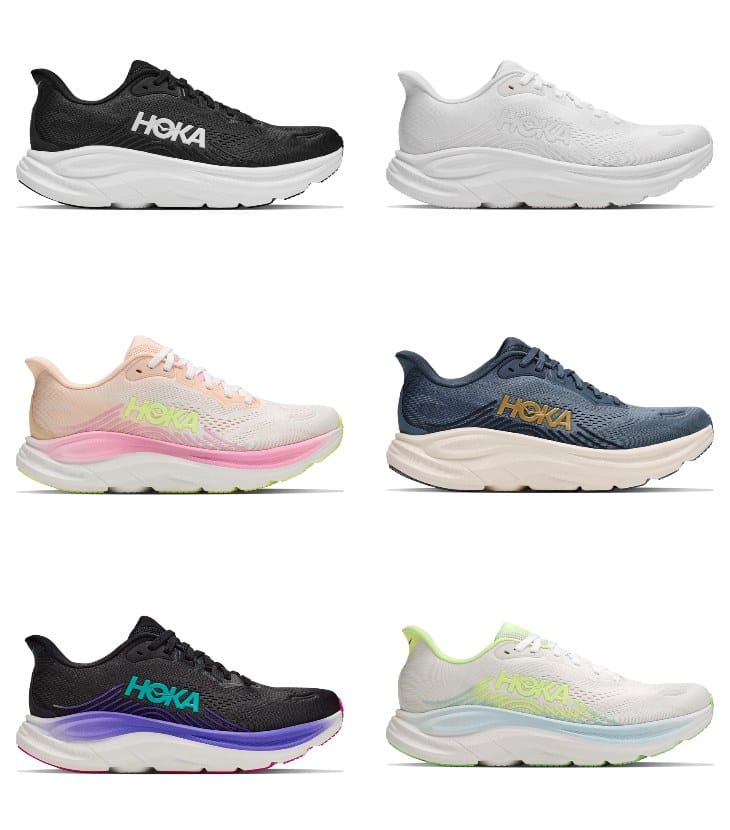
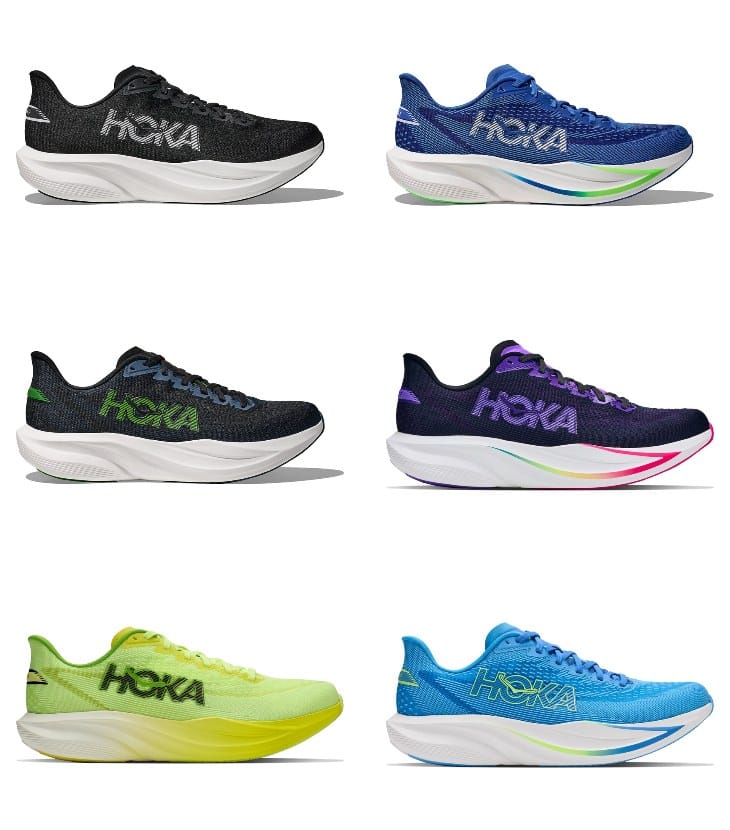
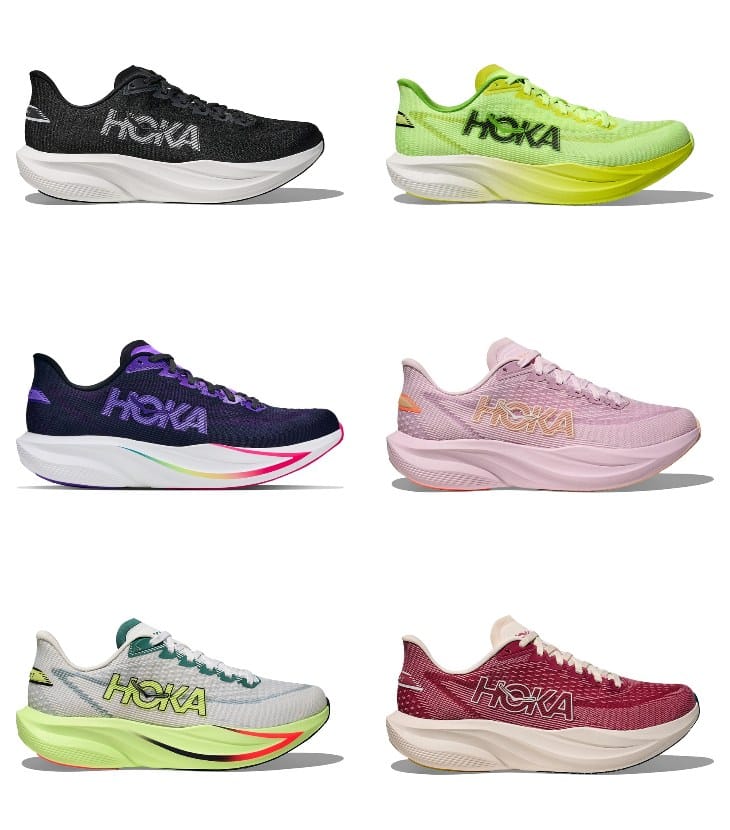
5. Hoka Mach 7 – light and fast all-rounder
Perhaps less obvious as a beginner shoe, but definitely worth considering: the Hoka Mach 7. Where the Bondi and Clifton are all about comfort, the Mach is the light and energetic shoe in the Hoka family. The midsole consists of supercritical foamed EVA: light cushioning with high energy return, so every push-off feels direct and springy. Yet there is enough cushioning under the heel and midfoot to absorb the impact of landing, certainly for lighter runners.
The lightweight woven upper with zonal ventilation wraps your foot snugly, ventilates where needed and provides a comfortable fit without pressure points. Strategically placed rubber zones under the sole give reliable grip, even at higher speeds and on wet roads. With a 5 mm drop and a weight of only 237 grams, the Mach 7 feels quick and nimble: as a beginner you will notice that this shoe carries your pace easily and feels livelier than, for example, the Bondi.
Who is the Hoka Mach 7 suitable for?
For beginners who want a slightly more dynamic feel in their shoes, or who already know that besides easy runs they also want to do an interval session or a faster 5 km now and then. Also a good second shoe next to a Clifton or Bondi: the soft shoe for the easy days, the Mach for the fast ones. It is lighter than the other four shoes in this list, which helps your legs move faster, without sacrificing comfort on short to medium distances.
Advantages of the Hoka Mach 7:
- Light and responsive: the low weight and the supercritical foam make this shoe very pleasant for beginners looking for an energetic running experience.
- High energy return: the midsole gives a little extra spring with every step, which makes running feel lighter.
- Breathable and comfortable: the woven upper ventilates excellently and follows the contours of your foot.
- Good grip: rubber zones on the wear-prone spots provide grip and a long lifespan.
What should you keep in mind? The Mach 7 cushions less than the Bondi and Clifton. If you have a heavier build or sensitive knees, start with one of the first three shoes instead. Want to know which Hoka suits you? Read Which Hoka running shoes do I need?


How do you choose the right running shoes as a beginner?
With the top 5 above you already have an excellent starting point. But how do you determine which shoe is your perfect match? Beginners often end up in a jungle of terminology: pronation, drop, stack, cushioning, fit. Below we explain the most important choices. Want even more tips? Also read 7 handy tips for choosing the right running shoes.
Neutral shoe or stability shoe?
This is the most important question. With a neutral gait your foot lands on the outside of the heel and rolls slightly inwards: normal and healthy. With overpronation the foot tilts clearly too far inwards, putting extra strain on your knees and shins. Signs: worn inner edges on your old (walking) shoes, flat feet, knee complaints after running. A stability shoe such as the Brooks Adrenaline GTS 25 handles that; the other four shoes in this top 5 are neutral. In doubt? Come by for a free gait analysis in our shop in Volkel, or read what overpronation is exactly. Also see all stability shoes for men and stability shoes for women.
How much cushioning do you need?
As a beginner you can safely opt for plenty of cushioning: your muscles, tendons and joints are not yet used to the impact. The heavier you are and the more you run on asphalt, the more cushioning you will appreciate (Bondi 9). Lighter runners and people who want a "faster" feel are well served by a balanced shoe (Clifton 11, Ghost 18) or a light shoe (Mach 7). Note: more cushioning is not automatically better. An extremely soft shoe can feel unstable and hides poor running technique. The middle ground is ideal for most beginners.
What is the drop and does it matter?
The drop is the height difference between heel and forefoot, in millimetres. A higher drop (10 mm on the Brooks Ghost and Adrenaline) relieves the calves and Achilles tendon and suits runners who land on the heel, which almost all beginners do. A lower drop (5 to 8 mm on Hoka) feels more natural and encourages a midfoot landing, but asks a bit more of your calves. Coming from walking shoes or sneakers with a high heel? Then don't start with a very low drop right away. Read more about running technique in What is running cadence?
Fit and size: most beginners buy too small
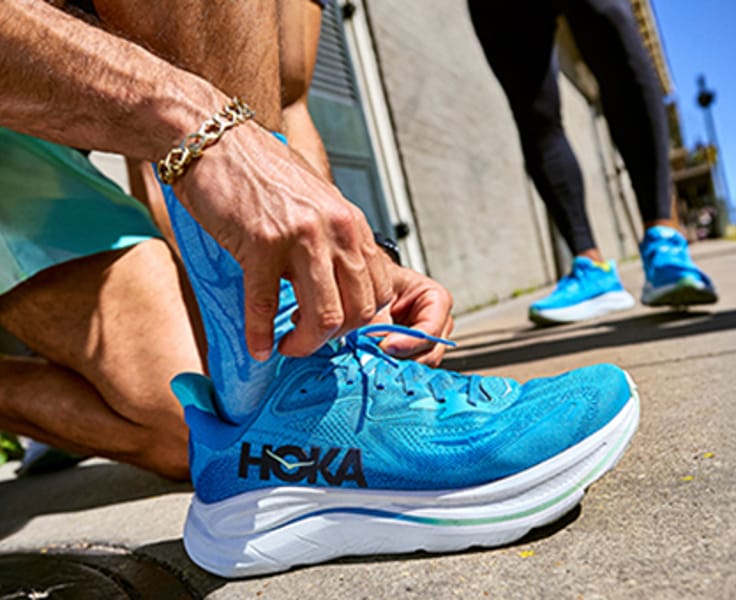
You usually wear running shoes half a size to a full size bigger than your regular shoes. Your feet expand while running and slide forward a little with every step; shoes that are too tight cause black toenails and blisters. Rule of thumb: a thumb's width (about a centimetre) of space between your longest toe and the tip of the shoe, while your heel is held firmly. Try shoes on at the end of the day (when your feet are at their largest) and with the running socks you will actually wear. Do you have wide feet? All five shoes above are available in a wide version.
Men's or women's: is there really a difference?
Yes. Women's models are narrower in the heel and often tuned slightly softer, because women are lighter on average; men's models are wider and firmer. That is why both versions are always listed in this top 5. In principle choose the version for your gender, but above all listen to the fit: a woman with wide feet can perfectly well choose a men's model (or a wide women's version), and vice versa.
How much should you spend on your first running shoes?
A good beginner shoe from a quality brand costs roughly between 130 and 180 euros. That is more than an ordinary sneaker, but you get cushioning, stability and a sole that lasts hundreds of kilometres. Cheap own-brand running shoes look attractive, but often have harder cushioning that collapses quickly, and beginners in particular then take the impact on their knees. Want to save money? Look at the previous version of a model (for example the Brooks Ghost 17 next to the Ghost 18): technically almost identical, often more sharply priced. Expensive carbon shoes are not a good choice for beginners: too little stability and made for race pace.
How long do running shoes last?
Count on 600 to 1,000 kilometres, depending on your weight, running technique and surface. Do you notice that your cushioning feels "dead", that you get new aches after running or that the outsole at the heel is worn? Then it is time for a new pair. If you run five kilometres three times a week, your shoes will last well over a year. Use your running shoes only for running, not for everyday wear; that wears them out unnecessarily.
Common mistakes with your first running shoes
- Choosing by colour or brand instead of fit and type (neutral or stability).
- Buying a size too small: a thumb's width of space at the toes is not a luxury.
- Starting in ordinary trainers or gym shoes: those are made for sideways movements, not for thousands of identical landings.
- Not testing anything: always run a short distance in the shoe in the shop, or order two sizes and send one back.
- Wearing cotton socks: blisters guaranteed. Read our top 5 best running socks.
More pitfalls (and how to avoid them) can be found in the 10 biggest beginner mistakes in running and in the 10 most common running injuries.

Which shoe suits you?
- You are just starting, run 2 to 3 times a week and want one shoe for everything: Hoka Clifton 11 or Brooks Ghost 18. Prefer a lower drop and a rocker shape: Clifton. Prefer a classic feel with a higher drop: Ghost.
- You have a heavier build, sensitive knees or are building up with walk-run intervals: Hoka Bondi 9.
- Your old shoes are worn on the inside, you have flat feet or knee complaints: Brooks Adrenaline GTS 25 (have a gait analysis done to be sure).
- You are light, already run a bit faster and want an energetic shoe: Hoka Mach 7.
- You prefer a good deal: the previous version of the Ghost or Clifton, while stocks last.
Don't forget the rest of your kit
Don't just think about shoes, but also about the rest of your kit. Good socks and clothing make a world of difference in comfort. Wear a moisture-wicking running shirt and in colder months long running tights (in warm weather running shorts instead), so your body stays at temperature without overheating. Don't forget to wear good running socks either: special running socks help prevent blisters and wick sweat away better than ordinary cotton socks. We have listed the best options for you in our blog The top 5 best running socks. Want a complete overview of everything you need to start running? Then also check out What do you need for running? The complete guide. There you will find a handy overview of running clothing, accessories and tips for a good start.
Conclusion
Taking your first steps in the running world is exciting, but with the right shoes on your feet you are already 1-0 up. The five models we discussed here, the Hoka Clifton 11, Hoka Bondi 9, Brooks Ghost 18, Brooks Adrenaline GTS 25 and Hoka Mach 7, are among the best running shoes for beginners. Whether you go for ultimate cushioning, some extra stability or a light all-rounder: there is a perfect match for you. Above all, take the time to see which shoe suits your feet and goals best, so you get the most out of it later.
With good running shoes, the right kit and a bit of know-how you can prevent injuries and make running a lot more fun. Start easy, build up your training gradually and listen to your body. Also discover our 14 tips for starting to run: they help you step by step with practical tips, motivation and a plan you can easily follow. Good luck and above all enjoy your running!
View all running shoes for men View all running shoes for women
Frequently asked questions about running shoes for beginners
What are good running shoes for beginners?
A good beginner shoe has plenty of cushioning, a stable base and a roomy fit. Neutral all-rounders such as the Hoka Clifton 11 and Brooks Ghost 18 are the safest choice for most beginners; with overpronation you choose a stability shoe such as the Brooks Adrenaline GTS 25.
Do I need to break in my running shoes?
Modern running shoes hardly need a break-in period. Do run a short, easy loop (3 to 5 km) the first time to feel whether there are any pressure points. If they still don't fit well after two or three runs, it is usually the wrong size or the wrong type, not a matter of breaking in.
Can I also walk or go to the gym in running shoes?
Walking is fine, certainly in a shoe like the Hoka Bondi 9. For fitness and strength training, running shoes are less suitable: the soft sole is unstable during squats and sideways movements. If you only use them for running, they will also last the longest.
When should I choose a wide version?
If you feel pressure on the outside of the forefoot or the little toe in the regular fit, or if your old shoes are stretched there. All five shoes in this top 5 are available in wide. In doubt, order both and send one back.
Do I need two pairs of running shoes as a beginner?
No, one good pair is enough to start with. If you run three times a week or more, a second pair is nice to have: the cushioning gets time to recover and you can alternate between a soft shoe (Bondi or Clifton) and a lighter one (Mach 7).
How do I know if I overpronate?
Look at the wear on your old shoes (inside of the heel and forefoot worn), at your arch (flat feet) and at complaints on the inside of your knees or shins. A gait analysis gives you certainty; in our shop in Volkel we do it for free. Also read What is overpronation?
How often should I replace my running shoes?
On average every 600 to 1,000 kilometres. Track your kilometres with a sports watch or app, and watch for signs such as dead cushioning, new aches or a worn outsole.
Are expensive running shoes better for beginners?
Not necessarily. The most expensive models are often racing shoes with a carbon plate, which offer little stability. A daily trainer of 130 to 180 euros, like the shoes in this top 5, is the best investment for a beginner.
Need help choosing your new running shoes?
Would you like to buy new running shoes, but are you not quite sure which shoes best suit your wishes and needs? Then we are happy to help you with all your questions to make the perfect choice. You can reach our running specialists on +31 (0)85 773 00 58 or send an e-mail. You can also visit our shop in Volkel, the Netherlands, for a free gait analysis.