


What do you need for road cycling? [The complete guide]
Updated: 13 November 2026
Short answer: to get started with road cycling you need six things besides a road bike in the right size: padded cycling shorts, a breathable cycling jersey, a cycling helmet, cycling shoes with clipless pedals, a water bottle with bottle cage and a saddle bag with repair kit. A cycling jacket, cycling gloves, cycling glasses, arm and leg warmers and overshoes come next, as soon as you also ride in spring and autumn. You will find everything at a glance in the checklist, and what to wear at which temperature in the clothing table.
Whether you have just bought your first road bike or already have plenty of miles in your legs: with the right cycling clothing and accessories you ride more comfortably, more safely and faster. Road cycling looks simple, you get on and go, but after an hour in the saddle you notice the difference between ordinary shorts and padded cycling shorts, between a cotton shirt and a jersey that wicks sweat away, and between a saddle bag with a repair kit and a flat tyre twenty kilometres from home.
In this guide our cycling specialists list everything you need for road cycling: the minimum you need to start, what is a smart addition and what you buy later. You will read which road bike size you need, which cycling clothing to wear at which temperature, which accessories belong on your road bike and what to take with you on a ride. For each item we name the models that road cyclists choose most often in our store. After reading this, you will know exactly what to hit the road with.

In this blog about what you need for road cycling:
- The complete road cycling checklist at a glance
- Why good cycling gear makes the difference
- The road bike: which size do you need and how do you set it up?
- Cycling clothing: the basic kit (shorts, jersey, jacket, helmet, shoes)
- What cycling clothing do you wear at which temperature?
- Cycling gear for cold days and winter
- Accessories for your road bike: bottle, saddle bag, pump and lights
- What do you take on the road bike? Food, drink and essentials
- Maintenance: keeping your road bike in top condition
- Getting into road cycling: in which order do you buy your gear?
- Frequently asked questions
The complete road cycling checklist at a glance
Everything you need for road cycling, per item. "Essential" is what you need for your first ride or what every cyclist who rides all season has in the wardrobe, "Recommended" is what almost everyone buys after a few rides and "Later" is what you add once you ride more often or in the cold months. Click on the category to see all options.
On a limited budget? Then buy in this order: padded cycling shorts, cycling helmet, jersey, water bottle with saddle bag, and only then the cycling shoes and the rest. Further down in this blog you will read why that order makes sense.
Why good cycling gear makes the difference
Road cycling is about pedalling for hours in the same position. Everything that is just about fine on a half-hour loop becomes a problem after two hours: a seam that chafes, shorts without padding, a cotton shirt that stays wet or a helmet that does not ventilate. Good cycling clothing is therefore not a luxury but the foundation. It wicks sweat away, fits tight so the wind has no grip on it, protects you from cold and rain and prevents saddle sores and chafing. That is also why cycling clothing is cut differently from ordinary sportswear: longer at the back, shorter at the front and with pockets on the back, tailored to the bent-forward position on the road bike.
Then there is safety. A cycling helmet, cycling glasses and lights make the difference between a scare and an injury. And with the right accessories on your bike, such as a water bottle and a saddle bag with a repair kit, you simply get home after a flat tyre or a long ride. Below we go through all the items, from the bike to the last accessory, in the order in which you need them most.
The road bike: which size do you need and how do you set it up?
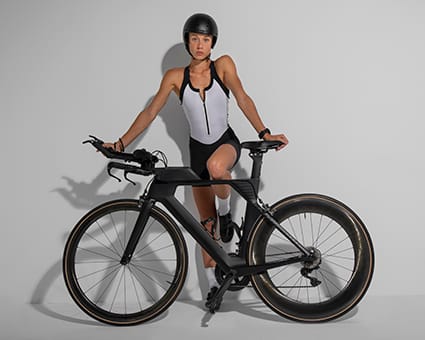
Without a bike you will not get far, so the bike is the first thing you need. For road cycling on tarmac you choose a road bike: light, with narrow tyres and drop handlebars. If you also want to ride unpaved roads and forest tracks, a gravel bike with wider tyres is the better choice. A time trial bike is only interesting if you are going to ride triathlons or time trials; what you need for that is covered in what do you need for your half or full triathlon? A second-hand road bike is a fine start, as long as the frame is the right size and the bike is technically sound.
More important than the brand or the groupset is the frame size. A bike that is too big or too small causes back, knee, neck or shoulder complaints after a few rides and is the reason many beginners give up. The frame size depends mainly on your inseam: measure it barefoot, from the floor to your crotch, and multiply the number of centimetres by about 0.65 for an indication of the frame size in centimetres. Manufacturers use different sizing (S/M/L, centimetres or stack height), so use the brand's size chart and try the bike if you can.
Then comes the set-up. As a rule of thumb for saddle height, multiply your inseam by about 0.88 and measure that distance from the centre of the bottom bracket to the top of the saddle; your knee is then slightly bent at the bottom of the pedal stroke. The handlebar height and the reach to the bars determine how sporty or comfortable you sit. If in doubt, have a bike fit done. A well-adjusted entry-level road bike is more comfortable and faster than an expensive bike that does not fit.
Cycling clothing: the basic kit for road cycling
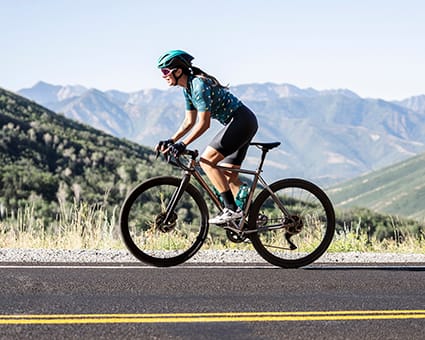
Cycling clothing is designed for the bent-forward position on the bike and for hours of continuous movement: tight so the wind slips past, made of fabric that moves sweat outwards and without seams where they would chafe. These are the parts of your cycling outfit, in the order in which you need them.
Padded cycling shorts
Cycling shorts are the most important garment in your cycling outfit. The secret is the chamois: the shaped pad in the seat that spreads the pressure on your sit bones, absorbs shocks and prevents friction. That is why you always wear cycling shorts without underwear, directly on the skin. Almost all road cyclists choose bib shorts, cycling shorts with straps: they do not slip down, do not pinch at the waist and keep the pad exactly in place. Shorts without straps are more convenient for toilet stops, but sit less securely. On long rides, apply some chamois cream to the pad to prevent chafing.
You wear cycling shorts from late spring until autumn. Long padded cycling tights are just as essential if you ride all year round: below about fifteen degrees you protect your knees, and in winter you choose a thermal lined version. Cycling shorts come in a men's and a women's version with a pad shaped for the anatomy, so do not just "go a size smaller". When trying them on, check the fit: the pad should sit snugly against your body without creases, and the shorts should not pinch anywhere. If you are torn between the models of one brand, read our comparison of the Castelli cycling shorts.
Padded cycling shorts: the most popular models
These are the bib shorts that road cyclists choose most often with us: the Assos Equipe R as the all-rounder for men, the Assos Dyora R as the women's version with a women-specific pad, and the Castelli Endurance 4 for long rides and sportives.


The cycling jersey and the base layer
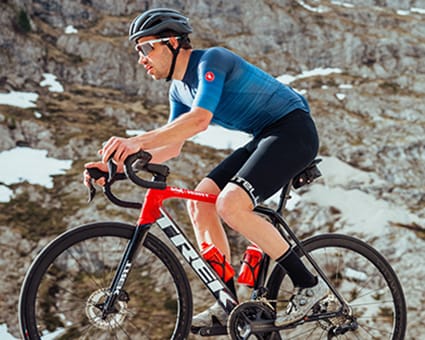
A cycling jersey is close-fitting, has a long front zip for ventilation and three pockets on the back for your phone, bar and wind jacket. The fabric wicks sweat away and dries quickly, so you do not get cold as soon as you stop. Most road cyclists ride in a short-sleeve jersey; that is also the jersey you start with. For the hottest days there is a sleeveless version and for autumn a long-sleeve jersey or a thermal jersey. When trying it on, check the fit: a cycling jersey should be tight without pinching, with the zip closed. A loose jersey flaps in the wind and holds sweat.
Under your jersey you wear a base layer of thin, moisture-wicking fabric. It moves sweat from your skin to the jersey, so you stay dry and cool down less quickly on a descent in summer. In winter you choose a long-sleeve thermal base layer; that is the most important layer for staying warm. If you wear bib shorts, the base layer goes under the straps.
The cycling jacket: wind jacket, rain jacket or winter jacket
A cycling jacket is the first addition to your basic kit. Start with a thin wind jacket: it weighs next to nothing, folds into your rear pocket and keeps the wind off on a long descent or a chilly start. If you also ride in the rain, a rain jacket with breathable, water-repellent fabric is a good second jacket. You only buy an insulated long-sleeve winter jacket when you keep riding through the cold months; together with long cycling tights, a thermal base layer and winter gloves, that is your winter outfit.
Cycling jerseys: the most popular models
The Gobik CX Solid short-sleeve jersey is our best-selling cycling jersey (unisex, also for women), the Gobik Magnitude is the men's variant with a sportier fit and the Assos UMA GT is the most popular women's jersey.

Delivery within 2 – 4 business days

Delivery within 2 – 4 business days

Delivery within 2 – 4 business days
The cycling helmet and cycling glasses
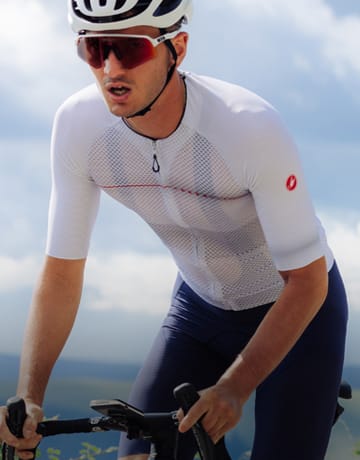
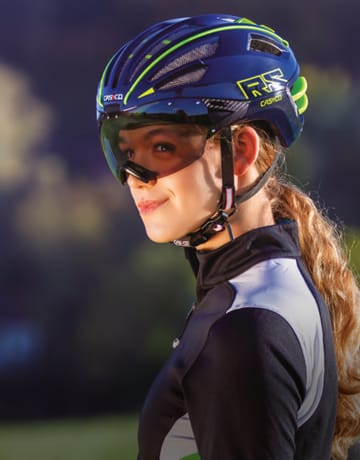
A cycling helmet is the one item you do not need to think about: without a helmet you do not go out on the road. A road helmet is light, well ventilated and secured with a dial at the back. Measure the circumference of your head for the size and check the fit: the helmet sits level on your head, about two fingers above your eyebrows, and does not move when you shake your head. Helmets with a MIPS layer or a similar system let the outer shell rotate slightly in a crash, which reduces the forces on your head. Always buy a helmet new: a second-hand helmet can be invisibly damaged, and after a crash you replace it even if nothing is visible. An aero helmet with a closed front saves drag but is warmer; for your first helmet, choose a well-ventilated model. How a modern road helmet rides is covered in our review of the Casco SPEEDairo 2 RS.
Cycling glasses protect your eyes from wind, insects, stones and UV radiation, and on long rides also from watering eyes. Choose glasses with a wide field of view and interchangeable or photochromic lenses, so you see well in the morning sun and under an overcast sky. The arms of the glasses go over the straps of your helmet, so you can easily take them off on the road.
Cycling helmets and cycling glasses: the most popular models
The Casco SPEEDairo 2 RS is our best-seller among road helmets, the SPEEDairo Aero is the aerodynamic version and the BBB Chester with interchangeable lenses is the most popular pair of cycling glasses.

Delivery within 2 – 4 business days

Delivery within 2 – 4 business days

Cycling shoes, clipless pedals and cycling socks
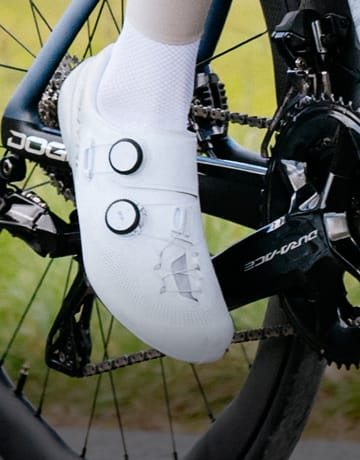
With road cycling shoes and clipless pedals your foot is attached to the pedal, so you pedal in circles instead of only pushing down. You gain power and stability, especially on long rides, on climbs and when sprinting for a town sign. The stiff sole and the closure with a dial or velcro keep your foot in place. For your first rides you can still use flat pedals and sports shoes, but clipless pedals are one of the first upgrades every road cyclist makes.
Pay attention to the pedal system. Road bikes usually have SPD-SL pedals: three bolts and a large cleat under the shoe, stable and with a large contact area. SPD pedals (two bolts, a small cleat recessed into the sole) come from mountain biking and are easier to walk in, but for those you need an MTB shoe. You buy the cleats separately with the pedals; with SPD-SL the colour indicates the float: yellow (lots of float, the best choice for beginners), blue (less) and red (none). Set the release tension of the pedal low at first and practise clipping in and out while standing still, against a wall or on a lawn.
Cycling socks are thin, tall and made of moisture-wicking fabric, so your feet stay dry and you do not get blisters. In summer you choose a thin sock, in winter a thicker merino wool one. Cotton socks hold moisture and are the fastest route to cold feet.
Cycling shoes and cycling socks: the most popular models
The Sidi Ergo 6 is the road shoe that road cyclists choose most often with us, the Sidi Fast 2 is a light and comfortable road shoe and the Craft Essence cycling socks are the best-selling cycling socks.


Delivery within 2 – 4 business days

What cycling clothing do you wear at which temperature?
The most common question in our store is not which cycling clothing you need, but when to wear what. This table is a guideline for an easy to brisk endurance ride without rain; in wind, rain or a ride in the shade you dress one step warmer, for an intensive training session one step cooler. Dress in layers that you can take off on the road and stuff into your rear pocket.
Two tips: always try cycling clothing on in the riding position (a jersey that fits well standing up creeps up on the bike) and choose loose arm warmers and leg warmers for spring and autumn instead of a second set of clothing. They turn your summer outfit into an autumn outfit in seconds.
Cycling gear for cold days and winter
With shorts, a jersey and a wind jacket you ride from April to October. If you want to keep riding all year round, you add to your outfit in this order: first the hands, then arms and legs, then head and feet. Cold hands and feet are the most common complaint in winter, and also the easiest to prevent.
Cycling gloves
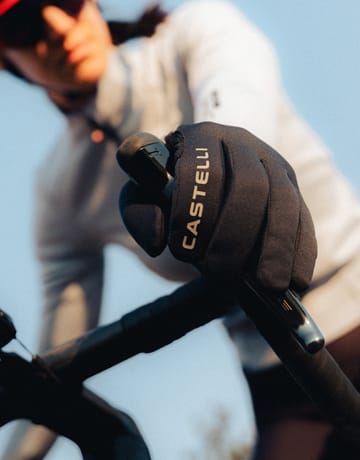
Cycling gloves are the first thing you buy, also for summer. Short gloves with gel padding absorb the vibrations from the handlebar, give grip with sweaty hands and protect your palms in a fall; most road cyclists ride with them all year round. For spring and autumn you choose thin long-finger gloves with a windproof top, for winter insulated winter gloves that keep your fingers warm, so you can keep braking and shifting. Make sure they are not too thick: you need to feel your brake levers properly.
Cycling gloves: the most popular models
The Castelli Arenberg Gel 2 is our best-selling summer glove for men, the Castelli Espresso is the most popular short glove for women and the Castelli Perfetto RoS is the windproof long-finger glove for spring and autumn.


Delivery within 2 – 5 business days

Delivery within 2 – 5 business days
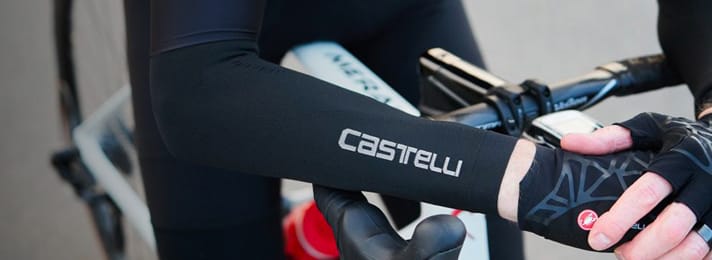
Arm warmers and leg warmers
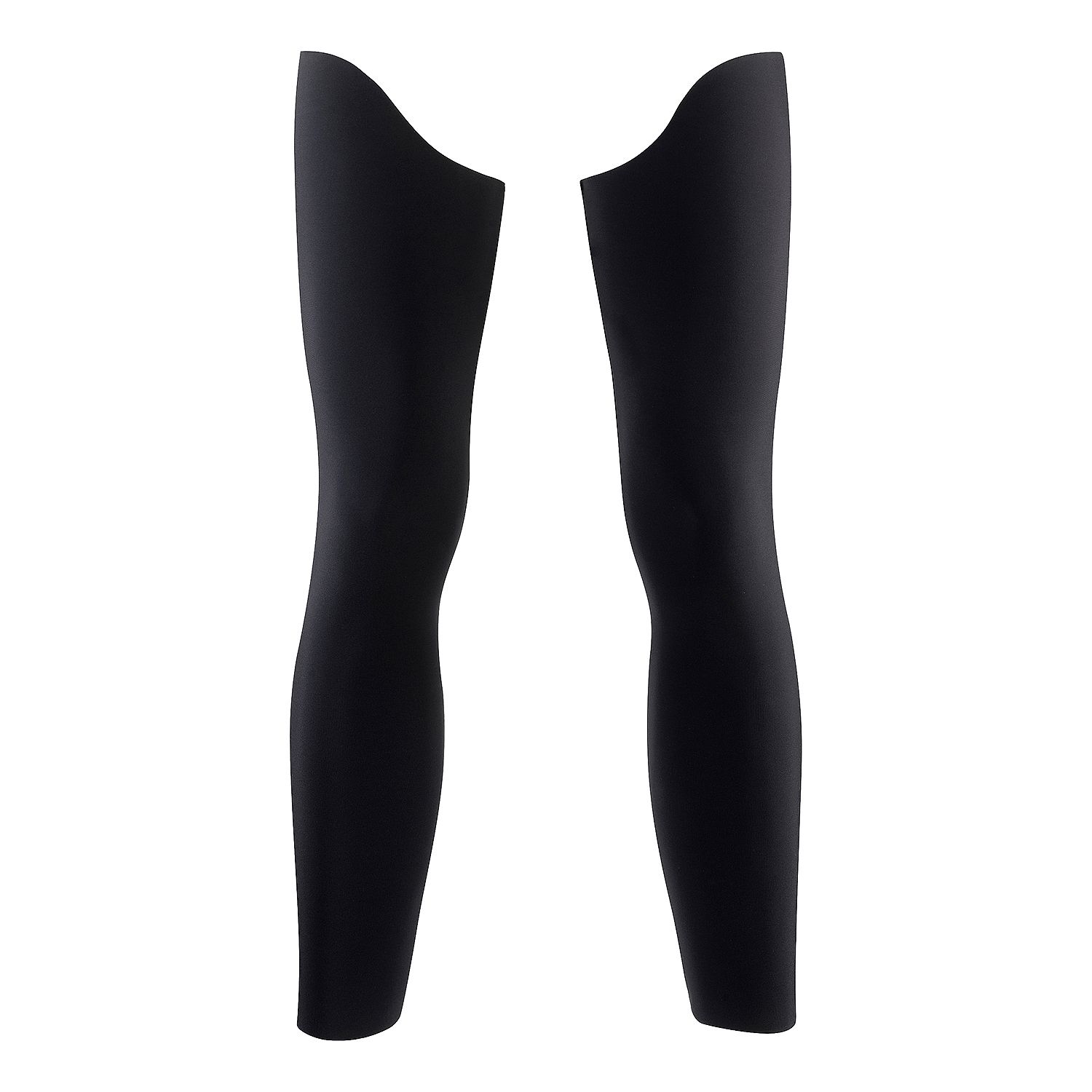
Arm warmers and leg warmers are separate sleeves and legs that you wear over your short-sleeve jersey and shorts. They turn your summer outfit into a spring and autumn outfit and go into your rear pocket as soon as it warms up. Silicone grippers keep them in place; choose them tight enough, or they will slip down. A variant is knee warmers, which only cover your knees. If you often ride at ten to fifteen degrees, arm and leg warmers are the cheapest way to stay comfortable without buying a complete second outfit.
Arm warmers and leg warmers: the most popular models
The Castelli Nano Flex 3G arm warmers are the most popular arm warmers (water-repellent, for spring and autumn), the Assos Spring/Fall RX leg warmers the best-selling leg warmers and the Castelli Espresso leg warmers the lined version for colder days.

Delivery within 2 – 4 business days

Cycling cap, skull cap and overshoes
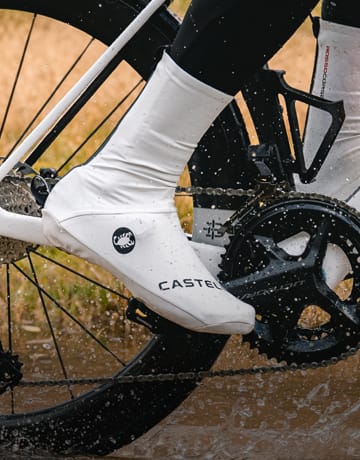
A thin cycling cap or skull cap under your helmet keeps your head and ears warm in winter and keeps sweat and sun out of your eyes in summer; a headband is the alternative if you only want to protect your ears. Overshoes go over your cycling shoes: they keep out cold, wind and rain and protect your shoes from mud and spray. There are three types: thin aero or windstopper overshoes for chilly days and races, waterproof overshoes for rain and insulated neoprene winter overshoes for the coldest months. When choosing, check the size of your cycling shoe and the opening underneath for the cleat.
Overshoes: the most popular models
The Castelli Aero Race is the thin overshoe for chilly days and races, the BBB Waterflex 3.0 is the waterproof overshoe for rain and the Castelli Estremo is the insulated winter overshoe that is chosen most often with us.


Delivery within 2 – 5 business days
Accessories for your road bike: bottle, saddle bag, pump and lights
A new road bike is often delivered bare: without pedals, bottle cages or saddle bag. So besides clothing you need a few accessories that sit on or in your bike. They are cheap compared to the bike, but you miss them immediately when they are not there.
Water bottle and bottle cage
A water bottle with bottle cage is essential: count on one bottle of 500 to 750 ml per hour of riding, and fit two cages as soon as your rides get longer than an hour and a half. A road bike has two sets of bolt holes on the frame for this. Choose a bottle cage that holds the bottle firmly (a bottle that flies out on a bump is a classic beginner's mistake) and a bottle that comes out of the cage easily and has a cap that closes properly. On warm days you drink water from one bottle and sports drink from the other; why that helps is explained in why do you need a sports drink?
Saddle bag with repair kit
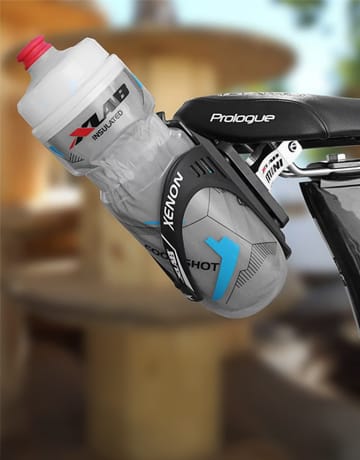
A saddle bag under your saddle holds your repair kit: a spare inner tube (or plugs if you ride tubeless), two tyre levers, a CO2 cartridge with adapter or a mini pump and a multitool with hex keys. With that you fix the flat tyre that every road cyclist gets at some point and you can adjust your saddle or handlebar on the road. A small, aerodynamic saddle bag is enough for the repair kit; if you also want to store your keys and phone, choose a slightly larger model or a frame bag. Practise changing an inner tube once at home; on the road in the rain is not the time to learn.
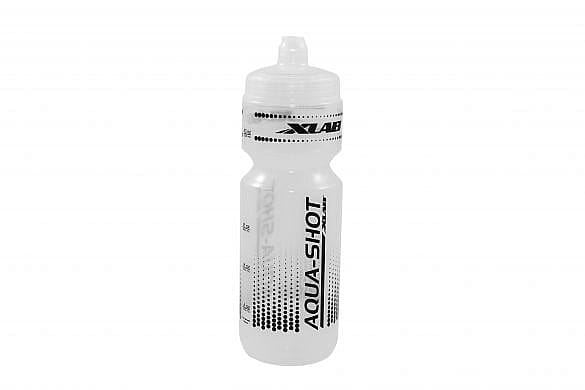
Water bottles, bottle cages and saddle bags: the most popular models
The XLAB Aqua Shot bottle is the bottle road cyclists choose most often with us, the XLAB Gorilla XT is the best-selling bottle cage (it keeps the bottle in place even on cobbles) and the XLAB Aero Pouch 300 is the most popular saddle bag for your repair kit.


Bike pump and tyre pressure
A floor pump with pressure gauge at home makes sure you always set off with the right tyre pressure; on the road you take a mini pump or CO2 cartridges. How many bar your road bike tyres need depends on the tyre width and your weight: the narrower the tyre and the heavier the rider, the higher the pressure. As a guideline you run a 25 mm tyre at about 6 to 7 bar and a 28 mm tyre at 5 to 6 bar, lighter riders at the lower end of that range. The maximum pressure is printed on the side of the tyre. A tyre that is too hard is uncomfortable and has less grip, a tyre that is too soft rolls slowly and is prone to punctures. Check the pressure before every ride; road bike tyres lose pressure every week.
Bike lights and bike computer
Bike lights are compulsory in the dark, but even in daylight a small flashing rear light makes drivers see you earlier; many road cyclists ride with one as standard. Choose rechargeable LED lights that you attach to the seatpost and handlebar with a strap or clip. A bike computer with GPS or a phone mount on the handlebar is handy for your route, distance and speed, and with a heart rate strap or power meter you can train in a targeted way later on. For your first rides a phone with a route app is enough.
Bike pumps and bike lights: the most popular models
The BBB Airsmart floor pump with pressure gauge is the pump for at home, the XLAB Tire Mate mini pump goes in your saddle bag and the BBB NanoStrike 500 + Slide 50 light set is the most popular lighting for the road bike.


What do you take on the road bike? Food, drink and essentials
The three rear pockets of your jersey are there for a reason. In them you always carry: your phone (in a plastic bag or case against sweat and rain), a bank card or some cash for a coffee on the way or a train home, your ID or an ICE card with an emergency number, your house key and something to eat. Your wind jacket fits rolled up in the third pocket. Tell someone at home which route you are riding if you ride alone.
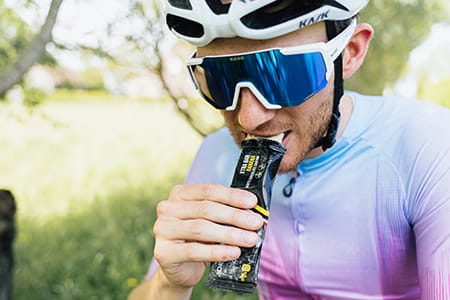
Drinking and eating are not a luxury on the road bike. Count on one bottle per hour and start eating after about an hour of riding, before you get hungry: after one and a half to two hours your carbohydrate stores are empty and you hit the wall, the infamous bonk. For easy rides a banana, an energy bar or a piece of cake is enough; for long or intensive rides you choose sports nutrition such as energy gels and an energy drink in your bottle. As a guideline, take 60 to 90 grams of carbohydrates per hour on long rides; test in training what your stomach tolerates. Everything about sports nutrition for road cycling can be found in our sports nutrition range.
Sports nutrition for the road bike: the most popular products
The Maurten Solid 160 energy bar is the bar road cyclists choose most often with us, the Maurten Gel100 the best-selling energy gel for long or intensive rides and SIS Go Electrolyte the sports drink for your bottle.


Delivery within 2 – 4 business days
Maintenance: keeping your road bike in top condition
A road bike needs little maintenance, but it needs it regularly. Pump up your tyres before every ride, lube the chain every few rides and always after a wet ride (wipe it clean first, then a thin layer of chain oil, wipe off the excess) and clean the bike after a wet or muddy ride with water, a soft brush and a bike cleaner. Check the brake pads or discs, the wear of the chain and tyres now and then, and have the bike serviced once a season at the bike shop. Everything you need for this can be found under bike maintenance.
Getting into road cycling: in which order do you buy your gear?
You do not have to buy everything at once. This is the order our specialists recommend, from essential to addition:
- 1. Padded cycling shorts and a cycling helmet: comfort in the saddle and safety; without these two you do not go out on the road.
- 2. Jersey, water bottle with cage and saddle bag with repair kit: staying dry, drinking and being able to fix a flat tyre yourself.
- 3. Cycling shoes with clipless pedals, cycling gloves and cycling glasses: more power and control, grip on the handlebar and protection for your eyes.
- 4. Wind jacket, long cycling tights and arm and leg warmers: with these you ride comfortably from early spring until late autumn.
- 5. Winter jacket, thermal base layer, winter gloves, cap and overshoes: only when you keep riding through the cold months.
- 6. Bike computer, lights, floor pump and maintenance supplies: for anyone who rides more often and wants to track their rides.
Start easy: the first rides of twenty to thirty kilometres in a light gear with a high cadence, and build up the distance week by week. With the right gear, road cycling is a pleasure from the first ride rather than a struggle, and that is exactly the difference between beginners who keep going and beginners who quit after a month.
Frequently asked questions about what you need for road cycling
What is the minimum you need to start road cycling?
A road bike in the right size, padded cycling shorts, a cycling jersey, a cycling helmet, a water bottle with cage and a saddle bag with repair kit. Cycling shoes with clipless pedals, cycling gloves, cycling glasses and a wind jacket are the first additions.
What do you wear under cycling shorts?
Nothing. You wear padded cycling shorts directly on the skin; underwear causes seams and creases that chafe and holds moisture. On long rides you can apply some chamois cream to the pad. If you still want to wear ordinary shorts, choose padded cycling underwear.
Which road bike size do I need?
The frame size depends mainly on your inseam. Measure it barefoot from the floor to your crotch and multiply the number of centimetres by about 0.65 for an indication of the frame size. Then use the brand's size chart, because sizing differs per manufacturer, and have the saddle height and handlebar position adjusted.
Are cycling shoes with clipless pedals necessary for beginners?
Not for your first rides, but they are one of the first upgrades. You pedal more smoothly and efficiently and your foot does not slip off the pedal. Choose cleats with float (the yellow ones for SPD-SL), set the release tension low and practise unclipping while standing still and on a quiet path first.
How many bar should a road bike tyre have?
That depends on the tyre width and your weight. As a guideline: a 25 mm tyre at 6 to 7 bar, a 28 mm tyre at 5 to 6 bar; lighter riders choose the lower end of the range. The maximum pressure is printed on the side of the tyre. Check the pressure before every ride with a pump with a gauge.
When do you wear long cycling tights?
As a guideline, below about fifteen degrees. Between ten and fifteen degrees many road cyclists combine shorts with leg warmers; below that you choose long padded cycling tights, and below five degrees a thermal lined version.
What cycling clothing do you wear at 10 degrees?
Cycling shorts with leg warmers or long cycling tights, a base layer, a long-sleeve jersey (or short-sleeve with arm warmers), a wind jacket, long thin gloves and thicker socks. In wind or rain you dress one step warmer.
What is the difference between bib shorts and cycling shorts without straps?
Bib shorts have straps over your shoulders, so the shorts do not pinch anywhere and the pad does not shift. Shorts with a waistband are easier for toilet stops, but sit less securely. Most road cyclists choose bib shorts.
How many water bottles do you take?
One bottle per hour of riding is a good rule of thumb. For rides up to an hour and a half one 750 ml bottle is enough; beyond that you fit a second cage and refill on the way.
What do you eat during road cycling?
On rides up to an hour you do not need to eat. Beyond that you eat something small every half hour, for example a banana, an energy bar or a gel, and on long rides 60 to 90 grams of carbohydrates per hour. Start eating before you get hungry, and you will avoid the bonk.
What cycling clothing do you need for winter?
Thermal long padded cycling tights, a long-sleeve thermal base layer, an insulated winter jacket, winter gloves, a cycling cap under your helmet, merino socks and insulated overshoes. Dress in layers, so you can adjust to the temperature and the intensity of your ride.
Are cycling glasses really necessary?
Not compulsory, but one of the first recommendations. Cycling glasses protect your eyes from wind, insects, flying stones and UV radiation, and prevent watering eyes on descents. Choose a model with interchangeable or photochromic lenses, so the glasses work in any light.
Need help choosing your cycling gear?
Our specialists ride themselves and are happy to help you with the right size cycling shorts, a helmet that fits or the accessories for your first long ride. You can reach them on +31 (0)85 773 00 58, send an e-mail or come and try things on in our store in Volkel (the Netherlands).