


What do you need for your triathlon? [Complete Beginner’s Guide]
The first important step is already done: you want to participate in a triathlon. Next, you can decide which distance you want to aim for and tailor your training accordingly. If you are just starting, a quarter, half, or full Ironman triathlon may still be too challenging. That’s why beginners often start with a half-sprint or an eighth-sprint.
It is an intensive and above all fun sport that combines three different disciplines: swimming, cycling, and running.
Participating in a triathlon can be a very rewarding experience. Setting goals, becoming fitter, training outdoors, and combining swimming, cycling, and running training with other triathletes makes it the ultimate experience. For many, simply taking part in a triathlon is already a great experience.
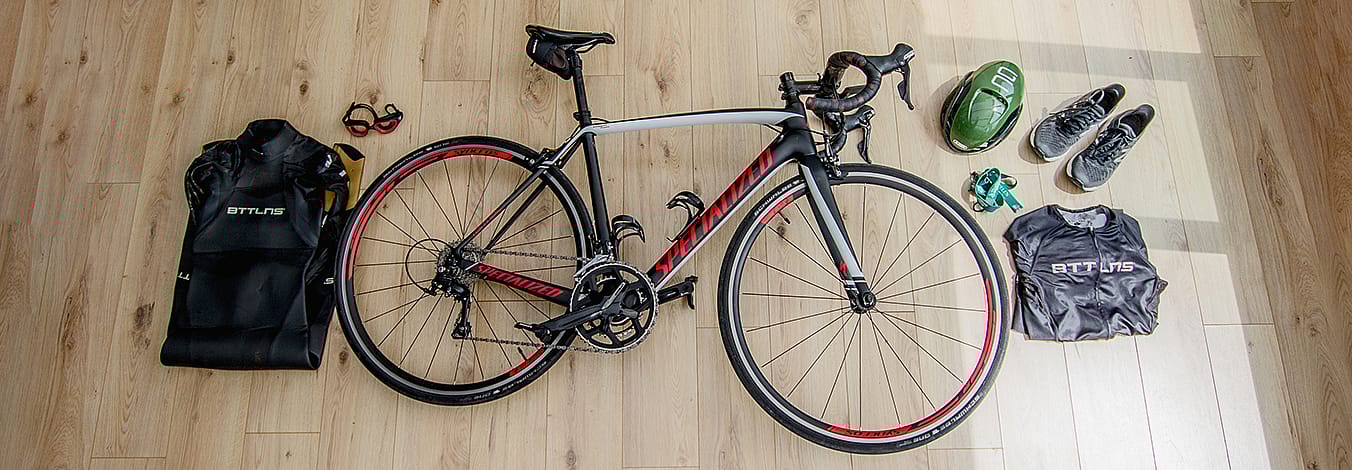
Besides training for your triathlon, the equipment you use is just as important. Since a triathlon consists of different phases, you need different equipment for each phase. Roughly, the phases can be divided into Phase 1: swimming, Phase 2: cycling, and Phase 3: running.
After reading this complete triathlon guide, you will know exactly what clothing and gear you need to successfully complete your triathlon as a beginner triathlete.
Do you want to participate in a half or full triathlon? Then also check out the blog for advanced triathlete equipment.
In this blog about what you need for your triathlon:
- What components does a triathlon consist of?
- What triathlon distances are there?
- What types of disciplines are there?
- What do you need for your triathlon?
- What equipment do you need for each discipline?
- What equipment do you need for swimming?
- What equipment do you need for cycling?
- What equipment do you need for running?
What components does a triathlon consist of?
Triathlon is a true combination endurance sport. It involves performing three sports consecutively. A triathlon always starts with swimming, followed by cycling, and finishes with running. Each of these sports on its own is already quite challenging, but as a die-hard athlete, you probably enjoy that extra challenge, right?
What triathlon distances are there?
Are you a beginner triathlete? Then you might not immediately attempt an Ironman triathlon, which is the longest and toughest triathlon. Fortunately, there are also shorter triathlons, such as the half sprint or one-eighth sprint, which you can do. Read more about the different distances here.
What types of disciplines are there?
Did you know that besides the standard triathlon, there are also several other variations? For example, if you do not enjoy cycling or swimming, you can also go for one of the other disciplines such as aquathlon or duathlon. Read more about the different triathlon variations.
What do you need for your triathlon?
Proper preparation is half the work, as this can immediately give you your first time advantage. Forgetting something would be a shame! Therefore, make a checklist and ensure that your items are ready 1 to 2 days before the triathlon. After all, you need clothing and equipment for three disciplines.
These items are the minimum you need
There are quite a few options when it comes to triathlon equipment. Depending on which triathlon distance you want to do and how often you plan to participate in triathlons, you can tailor your equipment accordingly. If you are participating for the first time, for example over a shorter distance, you will need less and different equipment than someone more advanced aiming for Ironman events.
Essential equipment includes:
- Trisuit
- Race number belt
- Timing chip strap
- Wetsuit
- Goggles
- Swim cap
- Road bike
- Bike helmet
- Running shoes
What equipment do you need for each discipline?
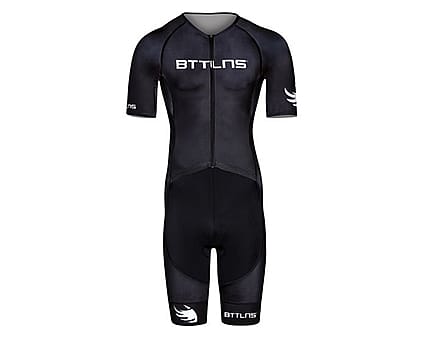
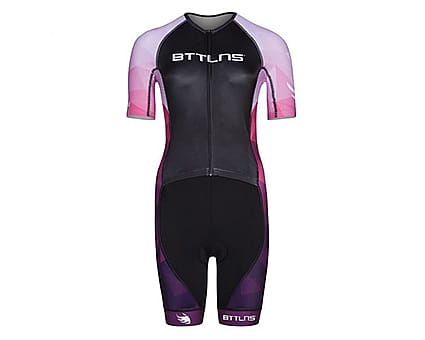
The trisuit
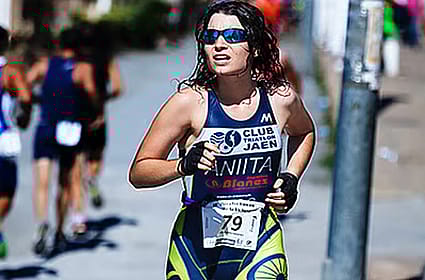
The major advantage of a trisuit is that you don’t need to change it during the race. These trisuits are specially developed for triathlons and have pockets on the back for sports nutrition. They also often feature thinner and narrower padding so it doesn’t get in the way while running. This special trisuit padding absorbs less water. Additionally, the fabric is a combination of cycling, swimming, and running clothing. It dries very quickly, absorbs little water, is breathable, and aerodynamic.
The big advantage is that you wear this trisuit for all three disciplines, saving you valuable time by not having to change.
The trisuits are available for both women and men. They are fully adapted to the female and male anatomy, providing better aerodynamics. If you are older, sometimes skin may slightly hang over a sleeveless trisuit. If this is uncomfortable, you can opt for a trisuit with short sleeves. Planning a triathlon in warm weather? Choose a sleeveless trisuit. If it’s cooler, go for a trisuit with short sleeves.

Race number belt
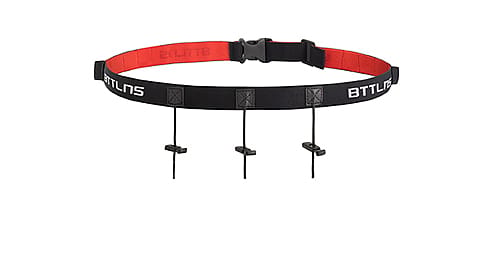
At every triathlon, you receive a race number that must be worn visibly (except during swimming) throughout the triathlon. In the past, a race number was sometimes pinned to the front of your shirt, but that’s not ideal. During cycling, the number was not clearly visible, so you had to pin it to your back, and once running, you had to move it back to the front of your shirt. A real time-waster.
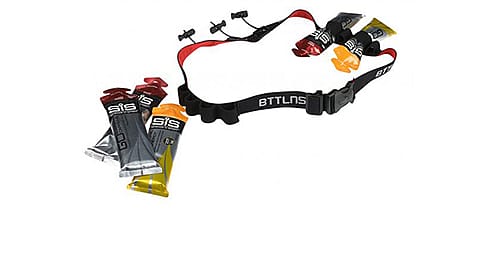
That’s why every triathlete today wears a race number belt. You wear this belt around your waist, and your race number is attached with clips. By wearing the belt at your waist, you can easily rotate your race number to the front or back.
An additional advantage of the race number belt is that it often has elastic bands where you can carry sports nutrition (such as energy gels).
The timing chip bands
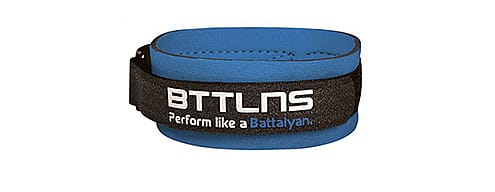
Another essential item is the timing chip bands. After a tough race, you’ll want to know your finishing time, right? The race chip records your time as you cross the finish line. However, you need to carry this chip during the race. That’s where the timing chip strap comes in. This small neoprene strap is worn around your ankle, where you attach the timing chip.
What equipment do you need for swimming?
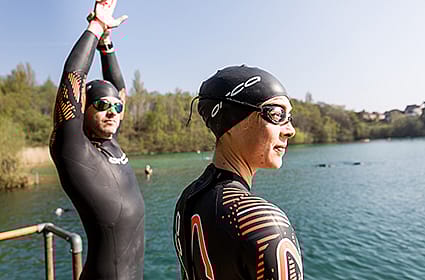
Triathlon wetsuit
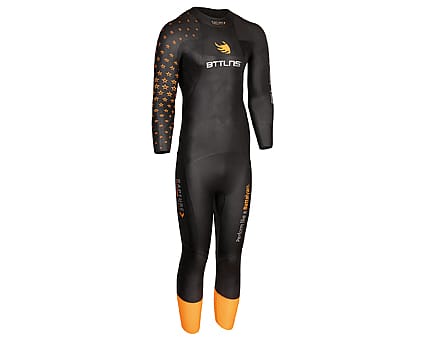
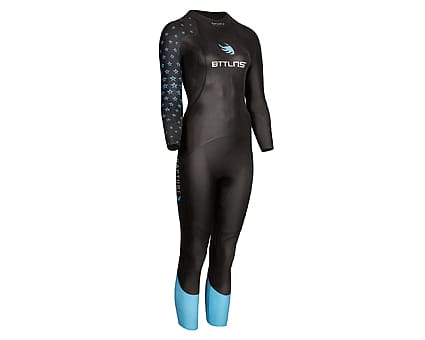
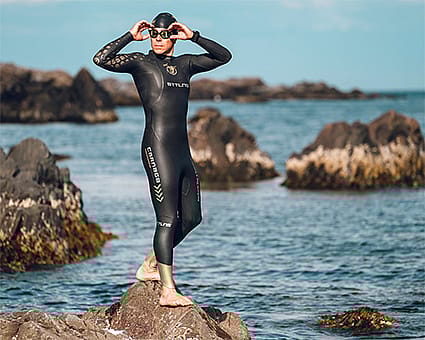
There are different types of wetsuits available. But if you want to participate in a triathlon, it’s important to choose a triathlon wetsuit and not a surf or diving wetsuit. Triathlon wetsuits are specifically designed for freestyle swimming.
The main feature of a triathlon wetsuit is to help you, as a swimmer, retain body heat and stay protected against hypothermia. An additional benefit is buoyancy, which keeps your body straighter and higher in the water, resulting in a significant time advantage.
The triathlon federation has established certain rules about when a wetsuit should or should not be worn. Read more about wetsuit usage at different water temperatures here.
Goggles
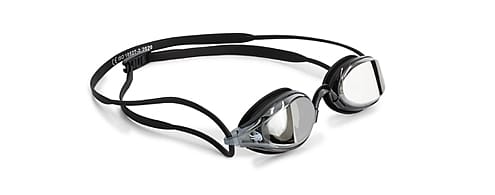
To protect your eyes and maintain clear vision while swimming, goggles play an important role. When swimming in open water, you are exposed to various external factors such as different weather conditions. This could be sunny weather causing reflections on the water or darker conditions. Curious how to choose the best goggles? Read our blog on how to choose the best goggles.

Swim cap
In competitions, wearing a swim cap is often mandatory. Sometimes the triathlon organization provides swim caps, but not always. A good swim cap ensures it fits well on your head, stays in place, and doesn’t fill with water. Additionally, a swim cap makes you more streamlined, allowing you to swim faster and retain body heat better. The advantage of having your own swim cap is that you are sure it fits your head properly. There are neoprene and silicone swim caps available. Note that a neoprene swim cap is almost never allowed in triathlon competitions, but can be used for open water or recreational swimming.
What equipment do you need for cycling?
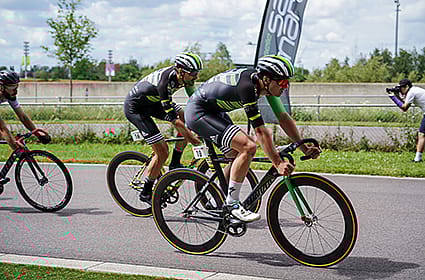
Your road bike
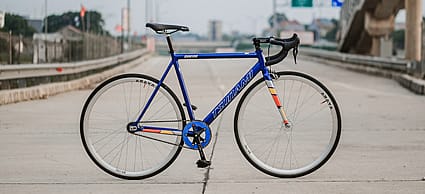
This goes without saying. Without a bike, you won’t get very far in the cycling discipline. If you are a beginner triathlete and are unsure whether you will participate in multiple triathlons, a simpler bike will suffice. Of course, not a city bike or granny bike, but a basic road bike will definitely do the job.
If you plan to participate in triathlons more frequently and want more speed, you can opt for a better road bike or even a specialized triathlon bike. These bikes are specifically designed for optimal aerodynamics to help you go as fast as possible.
The cycling helmet
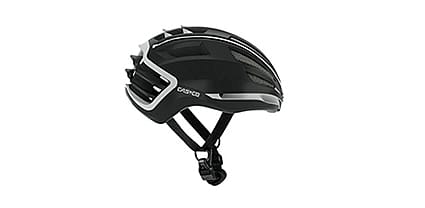
Wearing a good cycling helmet is mandatory in triathlons. This is, of course, for a good reason, as a helmet protects your head in case of falls or other accidents.
Bike helmets come in many different types. For example, there are road helmets with ventilation openings to help dissipate heat, but there are also special aero helmets for longer triathlons. If you spend longer periods in an aero position while cycling, you might consider an aero helmet. These helmets are designed to reduce air resistance and increase your speed.
What equipment do you need for running?
Running shoes
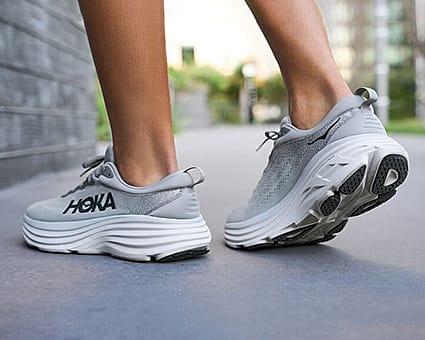
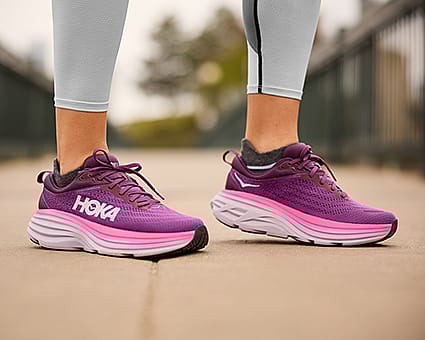
The final discipline of a triathlon is running. A good running shoe ensures that your feet are well supported while running. Additionally, they should absorb impact and assist with the natural rolling motion of your feet. Finally, the shoes must be breathable to prevent your feet from getting too hot during the run.
Are you a more advanced triathlete and looking for more information about equipment for your level? Then also check out our triathlon equipment blog for professionals.
Do you like to travel abroad to participate in triathlons? Then also read our blog about triathlon equipment for traveling.
Need help choosing your new triathlon equipment?
Do you want to buy triathlon equipment but aren’t sure which clothing or gear best suits your needs and preferences? Our specialists are happy to help you with all your questions to make the perfect choice. You can reach our triathlon specialists via +31(0)413-256800 or send an email. You can also visit our store in Volkel, Netherlands.