


Review: Shokz OpenRun Pro 2
When running, cycling or training, you want to get lost in your music without completely shutting out the world around you. You want to feel the rhythm and the motivation, but also hear traffic approaching or follow your coach's instructions. The Shokz OpenRun Pro 2 responds exactly to that need.
These open-ear headphones use bone conduction and air conduction technology, so your ears stay completely free while you still enjoy surprisingly powerful and clear sound. No pressure in your ear canal, no blocking of ambient sound – just safe, comfortable and effective training.
In this review, you'll find out whether the OpenRun Pro 2 really is the ideal choice for runners, cyclists and fitness enthusiasts. We take you through our experiences and the strengths and weaknesses, and explain why this headset stands out from the rest.
In this review of the Shokz OpenRun Pro 2:
- What is bone conduction?
- Design & wearing comfort
- Surprisingly rich for an open-ear headphone
- Battery life & charging
- Ease of use & connectivity
- The Shokz app
- Calls & microphone quality
- Durability, water resistance & build quality
- Comparison with the previous model
- Is the Shokz OpenRun Pro 2 worth it?
What is bone conduction and why athletes are choosing it en masse
If you hear about "bone conduction" for the first time, it may sound a bit futuristic. Music that's sent to your inner ear through your bones? Yet that's exactly what the Shokz OpenRun Pro 2 does, and it works surprisingly well, especially for athletes.
How does bone conduction work?
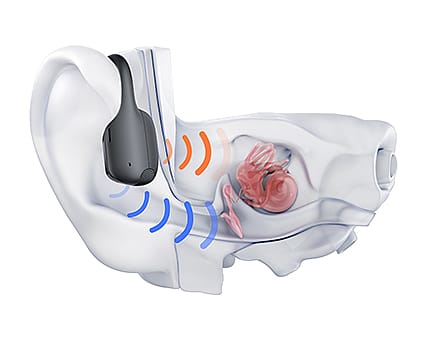
Unlike traditional earbuds that seal your ear canal and send sound through the air to your eardrum, bone conduction works differently. The speakers of the OpenRun Pro 2 rest in front of your ears, on your cheekbones. Through light vibrations, they conduct the sound directly to your inner ear, so your ears themselves stay free.
The result: you hear your music and your surroundings at the same time. No more closed-off feeling, no ear irritation, no hassle with earbuds that fall out while moving and exercising.
Why athletes choose bone conduction
For runners, cyclists and fitness enthusiasts, it's not just about good music. Safety, comfort and stability are at least as important. And that's where bone conduction scores highly:
- You can still hear ambient sounds, which is important in traffic or busy sports environments.
- You don't suffer from ear irritation or pressure, even during long training sessions.
- You don't have to wear anything in or over your ear, which is handy for people with hearing aids, piercings or sensitive ears.
What makes the OpenRun Pro 2 unique?
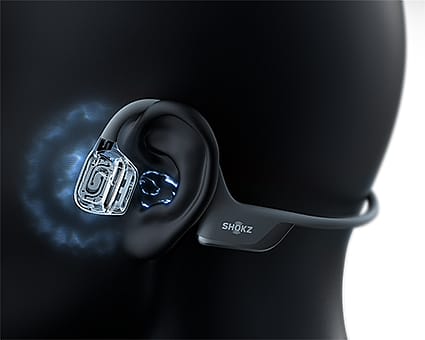
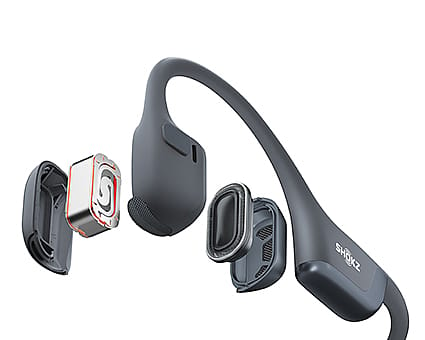
Where most bone conduction headphones fall short of traditional earbuds in terms of sound quality, Shokz takes a different approach. The OpenRun Pro 2 combines bone conduction with air conduction through its own DualPitch™ technology.
In short: an extra speaker has been built in that provides more bass, more depth and a richer sound. So music sounds fuller than you'd expect from an open-ear headphone, without having to put anything in your ear.
Design & wearing comfort
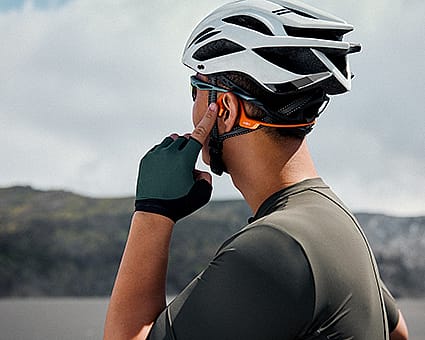
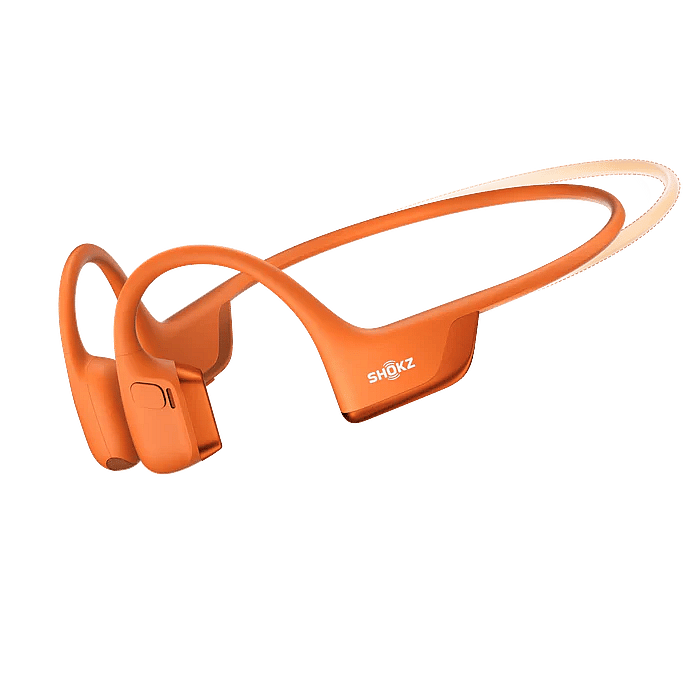
I've tested various sports headphones recently, but what immediately struck me about the Shokz OpenRun Pro 2 is how comfortable this headset actually is. While running, cycling and strength training, it felt so light and comfortable that I only thought about it again when I wanted to adjust the volume.
Lightweight and stable, even during intense movement
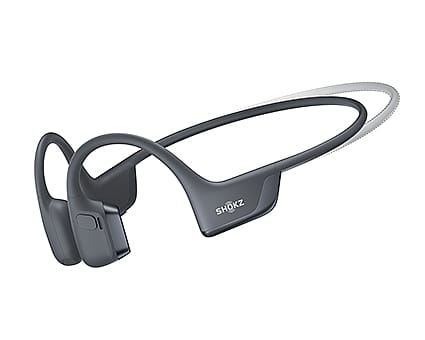
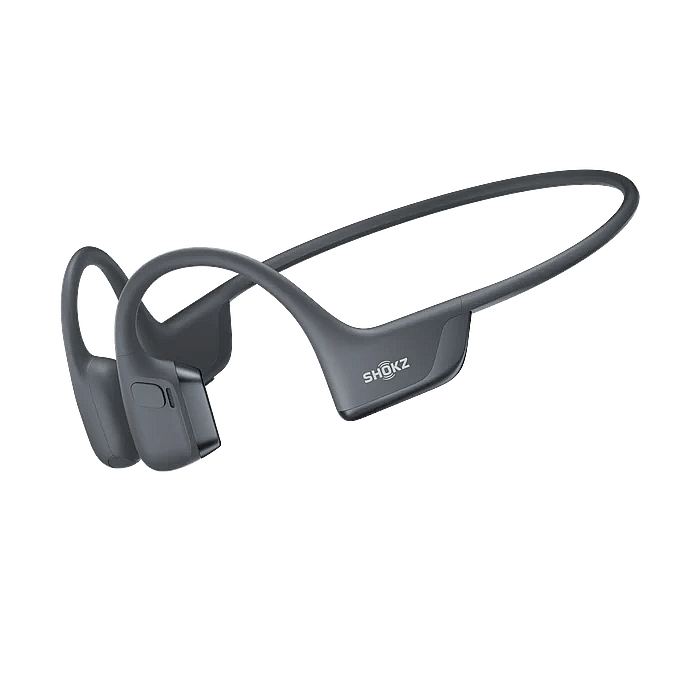
Weighing just 30.3 grams, these headphones are super light. The titanium headband feels sturdy yet flexible and stays perfectly in place, even during changes of pace and strength training. The silicone finish also feels soft on your skin and doesn't chafe, even during longer sessions or when you start to sweat.
For me, wearing comfort with glasses was extra important, but the comfort also had to hold up when I was out on the bike. With other models I often had pressure points or the headset started to shift, but the OpenRun Pro 2 stayed in place surprisingly well. The reduced clamping force (16% less) compared to previous models really makes a difference in wearing comfort.

This headset is also suitable for long sessions
I wore the headphones for more than 2 hours in a row several times, without any pressure or irritation at the ears. No in-ear buds that start to irritate, no over-ear cushions that make you hot – just a free feeling, but with music.
And because the open-ear design leaves your ear canal free, it never feels stuffy or closed off. Even indoors, where I'd normally choose different headphones, I simply kept the OpenRun Pro 2 on after exercising – that's how comfortable it was.
Mini or standard?
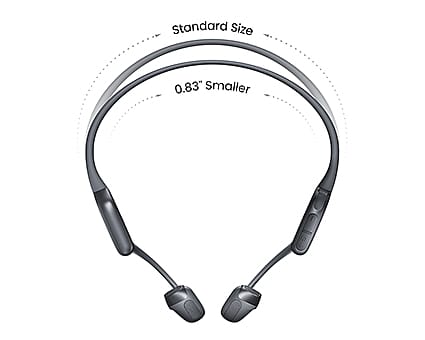
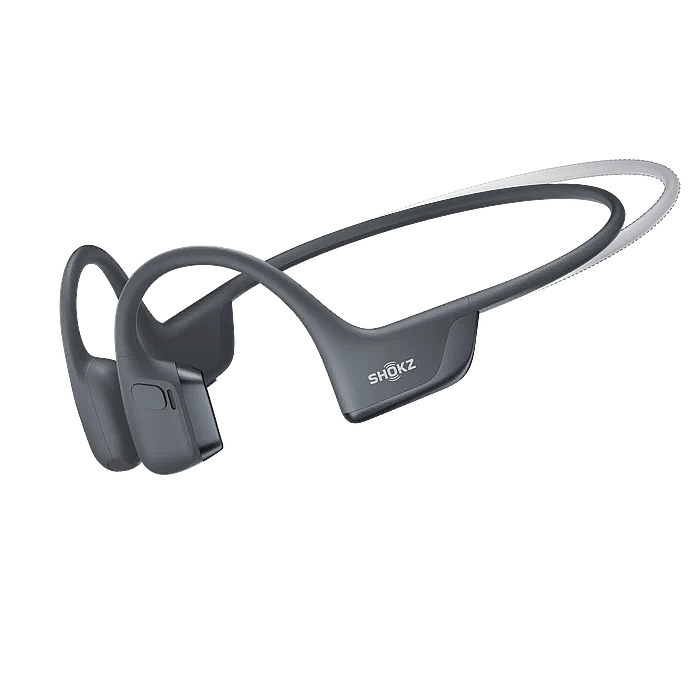
Shokz offers these headphones in a standard and a mini version. I used the standard version (which fits most head sizes), but it's nice to have a choice if, for example, you have a smaller head circumference. The band hardly moves during exercise, but is flexible enough to take with you easily.
Surprisingly rich for an open-ear headphone
Let me be honest: if you switch from good in-ear noise-cancelling headphones to a bone conduction model, it's a bit different. And yes, the Shokz OpenRun Pro 2 sounds different. But after more than two weeks of intensive testing, I dare say the sound is more than good.
The key to better sound with DualPitch™
What makes the difference is DualPitch™ technology, a combination of bone conduction and air conduction. Where traditional bone conduction headsets are mainly good at high and mid tones, the extra air conduction driver in the Pro 2 provides warmer bass and more depth.
During my runs I listened to techno, hip-hop and rock, among other things – three genres in which bass plays an important role. And although you don't feel the low end thumping like with closed earbuds, I was pleasantly surprised by the balance and fullness of the sound. Even at higher volumes it stayed clear, without distortion or the typical 'buzzing' on your temples that older models sometimes had.
EQ profiles in the Shokz app
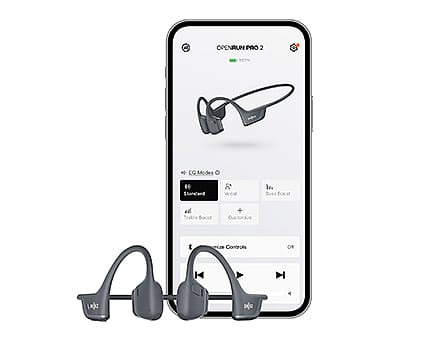
Via the Shokz app, you can choose from four preset EQ profiles:
- Standard: well balanced for most music.
- Vocal: emphasises voices, handy for podcasts or phone calls.
- Bass Boost: adds a bit more punch to the low end.
- Treble Boost: makes high tones a little sharper.
You can also create two personal EQ presets in the app, using a handy 5-band equaliser. I created a profile that puts slightly more emphasis on the low end, without losing clarity.
Battery life & charging
One of the biggest frustrations with wireless sports headsets? A flat battery just before your training starts. Fortunately, that's hardly an issue with the OpenRun Pro 2. In fact, I was really impressed by how well the battery holds up in practice.
Up to 12 hours of playback
Shokz promises up to 12 hours of listening time on a single charge, and that proved pretty accurate in my test. I used the headset for a week during two running sessions, a few bike rides and two gym visits, and only had to recharge after six days. So no battery stress, even with intensive use.
Small note: the exact consumption does depend on your volume and EQ settings. At higher volumes the battery drained a little faster, but never annoyingly fast.

Lightning-fast charging via USB-C
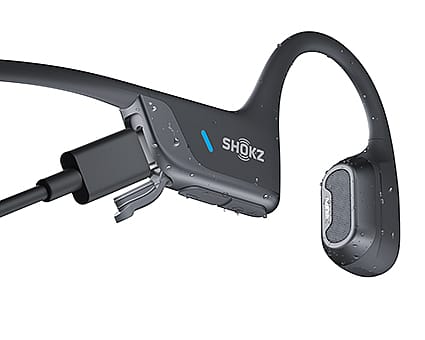
Perhaps the biggest improvement over older models: the switch to a USB-C connection. You simply use the supplied cable. For me, that means carrying fewer cables and charging more easily, wherever I am.
Charging is also amazingly fast:
- 5 minutes of charging = approx. 2.5 hours of listening time
- Full charge = approx. 1 hour
Several times I used a quick charge just before heading out, and each time I had enough battery for a full training session. That gives peace of mind, even if you forgot to charge it the night before.
Charging advice
Shokz recommends only charging the headset once it's completely dry. So after a sweaty or rainy run, let it dry first before connecting the USB-C cable. This prevents long-term damage.
Ease of use & connectivity
Headphones can sound great, but if connecting is awkward or the controls are frustrating, I quickly lose interest. Fortunately, that's not the case at all with the Shokz OpenRun Pro 2. In this category, it scores surprisingly high on simplicity and reliability.
Connecting is smooth, even with multiple devices
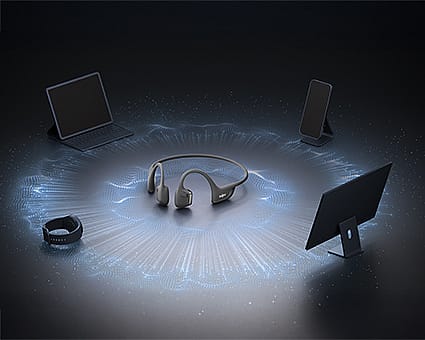
The headset uses Bluetooth 5.3, and you can tell: the connection is stable, fast and interference-free. During testing I effortlessly paired it with my smartphone, laptop and smartwatch. With multipoint pairing (connected to two devices at the same time), the headset also switches neatly and without delay.
For example: listening to music on your phone, but taking a Zoom call on your laptop? No problem. You set it up in the Shokz app and it works – super handy.
Physical buttons: simple but effective
The controls are purely physical, which in my opinion is a big plus. When running or cycling, I don't want to battle with touch surfaces or gestures. The multifunction button on the left lets you pause or answer a call with a single click. Behind your right ear are the volume and power buttons, which feel sturdy and respond well, even when you're wearing gloves.
Takes some getting used to? Perhaps. But after a few sessions I knew the positions and functions by heart.
The Shokz app
The Shokz app (available for iOS and Android) isn't a must, but it is handy if you want to:
- adjust EQ profiles or create your own presets
- manage multipoint pairing
- update the firmware
- see the battery status as a percentage
I especially liked the custom EQ function. It let me add just a bit of extra bass to my running playlist without it becoming distracting.
No automatic pause when you take it off
One small caveat: the OpenRun Pro 2 has no in-ear detection. So when you take the headset off, the music doesn't stop automatically. I sometimes missed that when I briefly talked to someone. Not a big deal, but it would have been a nice addition in this price range.
Calls & microphone quality – clearly audible, even in the wind
Although the Shokz OpenRun Pro 2 is mainly designed as a sports headset, I also tested it during phone calls. Because when you're on the go or get a call after your training, you don't want to switch headsets first. And the good news? This headset certainly doesn't disappoint.
Two microphones with smart noise cancelling
Shokz has built two microphones into this model, supported by AI-driven noise cancelling. In practice, this means your voice comes through clearly, even when you're outside and it's windy.
I made several calls while walking and cycling. In the city, with traffic in the background, the people I was talking to told me I was "surprisingly easy to understand". Wind noise was largely filtered out, and my voice remained clearly audible.
Please note: to the other person your voice does sound a little "further away" than through a standard in-ear headset. But it's not disturbing, more like calling on speaker with better filtering.
Calling while exercising
While running or cycling it's obviously not ideal to have long conversations, because you want to focus on your training. But answering short calls or quickly calling someone back works perfectly. You only need to briefly press the button on the left side to answer or hang up.
I found it especially handy while cycling: I didn't have to grab my phone and could communicate hands-free without endangering myself or others.
Less suitable for noisy indoor meetings
Is this headset suitable for professional video calls or online meetings? Only if you're in a quiet environment. In a busy room or with a lot of background noise, the microphone can't match dedicated business headsets. But for making calls on the go, it's more than fine.
Durability, water resistance & build quality
As an athlete, you want a headset you don't have to be careful with. Rain, sweat, dusty trails or a full sports bag shouldn't be a problem. And that's exactly where the Shokz OpenRun Pro 2 excels: this headset feels solid, is sport-proof and ready for intensive use.
IP55 certified: sweat, rain and dust? No problem
The OpenRun Pro 2 has an IP55 rating. During my test, I ran with it in the rain, trained hard in the gym and cycled on dusty paths without any problems.
Please note: you can't shower or swim with it. The headset is splash-proof. But for everything you do on dry land, it's more than up to the job.
Strong yet flexible: titanium + silicone
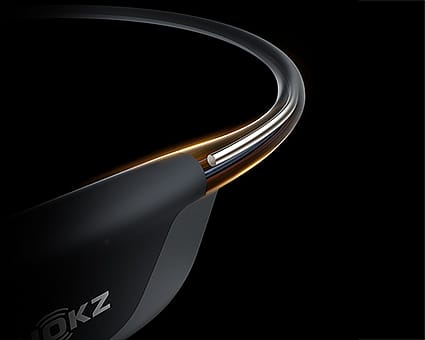
Something else I really liked is the titanium frame with a silicone coating. The headband is flexible and bendable, yet feels strong and stable at the same time. The finish is soft and comfortable on the skin, even during long sessions when you sweat a lot.
There are no loose parts or cables that can break. The unibody design gives it a minimalist and robust look. Everything about this headset says: "I'm built for sport".
Hard-wearing buttons and port
The physical buttons feel solid and still respond smoothly after dozens of uses. I also see the switch to USB-C as a plus here: no more fragile connector, but a sturdy port with a protective rubber flap. During my test, it never came loose or got dirty.
How does it compare with the previous model?
The Shokz OpenRun Pro 2 is the newest model in the Shokz line-up. But how does it compare with its predecessor, the OpenRun Pro, and the OpenRun?
OpenRun Pro 2 vs. OpenRun Pro
If you're already familiar with the first-generation OpenRun Pro, you'll mainly notice the following improvements:
- USB-C instead of a magnetic charging cable – USB-C is much more practical
- The Pro 2 has a better sound balance, especially in the bass (thanks to the dual air conduction)
- Less vibration on the temples at higher volumes
- Refined design with slightly less clamping force = more comfortable
Is the upgrade worth it? If you value ease of use and better sound, absolutely. The differences are subtle, but noticeable in daily use.
OpenRun Pro 2 vs. OpenRun
The OpenRun (without "Pro") is still a popular choice. It's cheaper and has a higher IP rating (IP67), which makes it more waterproof. But you do lose out on:
- Sound quality (no air conduction, so less bass and detail)
- Charging convenience (still with a magnetic cable)
- Battery life (10 hours instead of 12)
For dedicated athletes who want better sound and comfort, the Pro 2 is the better choice. But for occasional use, or if you mainly train outdoors in the rain, the regular OpenRun is a great alternative.
Is the Shokz OpenRun Pro 2 worth it?
After weeks of testing, from long endurance runs to fast cycling sessions and even strength training in the gym, I dare say that the Shokz OpenRun Pro 2 is one of the best sports headsets you can buy right now. Not because it's perfect, but because it excels in the areas that matter to athletes.
What I loved about the headset:
- Safe and aware training thanks to the open-ear design
- Amazingly good sound for bone conduction, with noticeable bass
- Ultra-light and comfortable, even during long sessions
- Fast USB-C charging + long battery life
- Stable Bluetooth 5.3 and multipoint pairing
- User-friendly controls and a solid app
Minor drawbacks:
- Not fully waterproof (so not suitable for swimming)
- Not the best choice for noisy indoor environments or meetings
- The sound quality falls slightly short of good in-ear earbuds, but that's simply the trade-off with open-ear


Order before 5:00 PM, delivered tomorrow
The final verdict
Are you a runner, cyclist or gym-goer who wants to enjoy music or podcasts without shutting out the world around you? Then this is the headset for you. The OpenRun Pro 2 combines comfort, safety and technology in a package that simply works.
Yes, the price is slightly higher than that of other sports headsets. But in return you get a well-thought-out, durable, high-end experience. And if you take your sport seriously, you don't want to compromise on something you use almost every day.
Also worth reading


