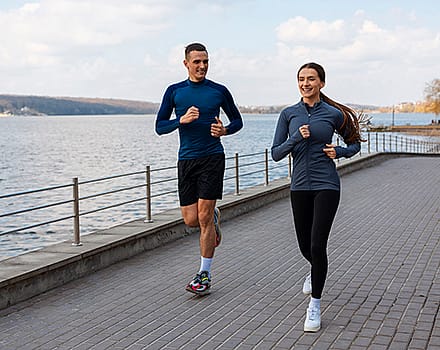
6 tips for running in hot weather / summer
Running in summer is wonderful: no more rain or cold, and warm sunshine on your face. But the heat does bring extra challenges. Higher temperatures and bright sunshine mean your body has to work harder to stay cool. That is why it is extra important to adapt properly, because if you’re not careful, overheating and dehydration can seriously affect your performance. Think of an increased heart rate, muscles that tire more quickly, a greater risk of cramp and, in the worst case, fainting. Fortunately, with a few adjustments and the right preparation you can keep running safely.
By planning smartly, wearing light, breathable clothing and staying well hydrated, you keep your energy levels up and can fully enjoy your summer runs. With a few adjustments, you can even keep performing on the hottest days. Curious how? We have put together 6 tips so you can keep running safely and effectively.
In this blog with 6 tips for running in hot weather:
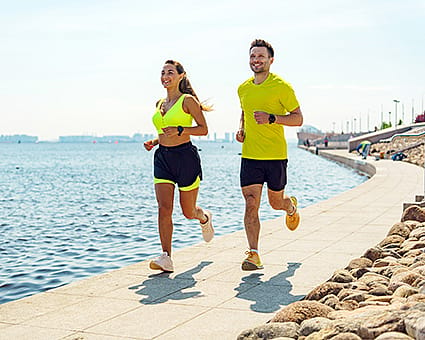
Tip 1: Match your running clothing to the temperature
In our complete guide to what you need for running you have already been able to read everything you need for running. Choosing the right running clothing has a big impact on how your body dissipates heat and how comfortably you can keep running. Now we look specifically at the best running gear for hot summer days.
Choose breathable materials and avoid cotton
A lot of clothing is made of cotton, which is fine in itself, but far from ideal for running in warmer weather. Cotton absorbs sweat and holds on to it, making your clothes feel heavy and clammy. You no longer run comfortably and your body has to work harder.
A better choice is running clothing made of technical fabrics such as polyester or nylon (or a technical blend). These materials are specially designed to wick sweat away from your skin quickly and let it evaporate, keeping your body dry and cool.
Choose a breathable running shirt or singlet
A good running shirt is one of the basics of your running gear. In our collection you will find different types of shirts, such as short-sleeved shirts, sleeveless shirts (also called singlets) for extra ventilation, long-sleeved shirts for when it’s still a bit too chilly, and even shirts with UV protection.
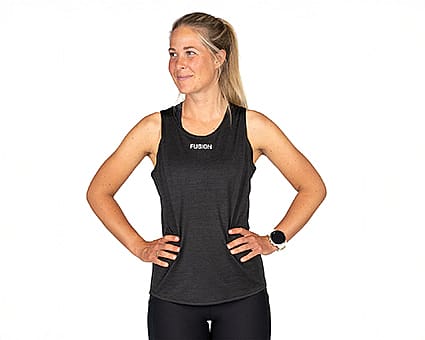

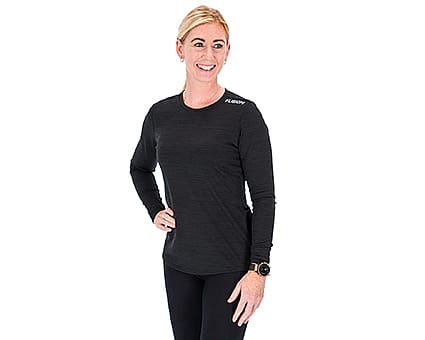
The colour of your running shirt also plays an important role in how your body retains or repels heat. Light colours such as white, beige or pastel reflect sunlight better than dark colours. Black and other dark shirts often have UV protection, but still absorb a little more heat than light colours, so your body temperature rises faster. For the really hot days, it is therefore better to choose a lighter colour.
Go for airy running shorts
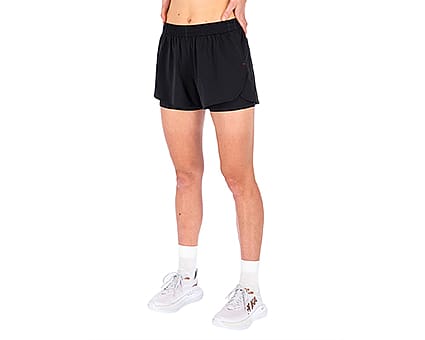
Besides a good running shirt, good running shorts are just as important. In warmer temperatures, running shorts provide more ventilation because your legs are free of fabric. This keeps your legs cool and dry, so you always have an optimal experience.
We also have running shorts in different models, such as classic looser running shorts, compression shorts for more support, 2-in-1 shorts and three-quarter tights for slightly cooler days.

Compression clothing
Compression clothing is often associated with colder temperatures or recovery, but it can also offer benefits in summer. We see more and more runners choosing this type of clothing because of its positive effect on blood circulation and muscle support.
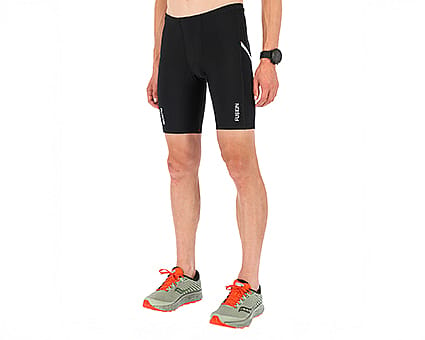
In hot weather, your legs can swell more quickly due to a combination of heat and exertion. A pair of compression shorts helps improve blood flow, support your muscles better and reduce muscle vibration. This can counteract muscle fatigue and help you stay fresh for longer, even when it’s a bit warmer. The same applies to compression shirts, which also improve blood flow and support, but for your upper body.
Another advantage of compression clothing is that it prevents friction between your thighs, reducing the risk of irritation and chafing so you can run more comfortably.

Running socks
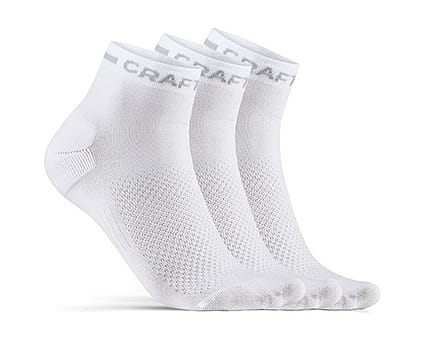
In hot weather, choosing good running socks is just as important as your running shoes. As mentioned earlier, it is better not to choose cotton, as this material retains moisture, which can cause friction and blisters. So choose special summer running socks: breathable, sweat-wicking running socks made of polyester or merino wool.
Good running socks often have a seamless finish to prevent chafing and offer extra cushioning at pressure points such as the heel and forefoot. Curious about our top running socks? Discover our top 5 best running socks in our blog.

Running accessories for extra protection
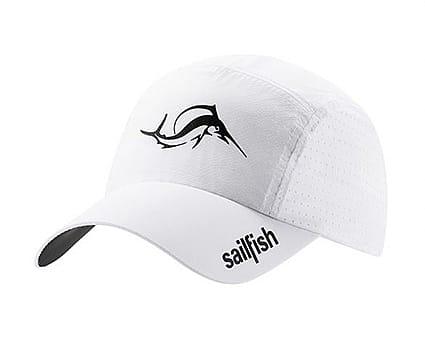
Besides your running clothing, there are also running accessories that make your runs a lot more pleasant, such as a running cap for extra protection for your head and running sunglasses to protect your eyes.
Your head catches a lot of sun and heat, which increases the risk of overheating. A breathable running cap helps keep your head cooler and stops sweat running into your eyes. When the sun is shining brightly, a closed running cap is nice to wear as extra sun protection. If the sun is a bit milder, you can also go for a visor, which lets heat escape from the top of your head while your face stays protected.

Tip 2: Prevent dehydration and overheating by staying well hydrated
Drinking enough water is extra important in sunny weather, and even more so if you go running in the heat. In higher temperatures, sweating causes you to lose not only fluid but also important minerals such as sodium and magnesium. This can lead to dehydration, muscle cramps and reduced performance. Even a fluid loss of 2% already affects your performance.
By hydrating smartly before, during and after your runs, you keep your fluid and energy levels where they should be and limit the risk of overheating. But how much should you drink? And should you choose water or a sports drink?
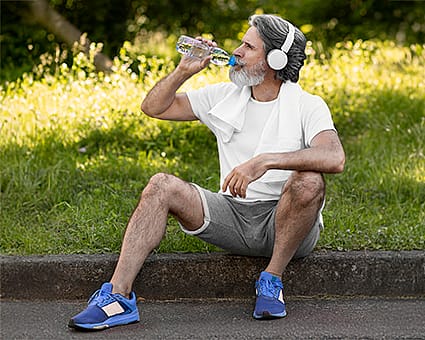
How much water (or sports drink) do you need before, during and after running?
The right fluid intake is important to prevent dehydration and loss of performance. These are rough guidelines you can follow:
Before running
- 2 to 3 hours before running: drink 500–750 ml of water.
- 15–30 minutes before you start: drink another 200–300 ml of water if your run will last longer than 60 minutes.
During running
- Shorter than 60 minutes: hydration is usually not necessary, unless it is very hot.
- Longer than 60 minutes: drink 150–250 ml every 15 to 20 minutes.
- During intense or long efforts (>90 minutes): add electrolytes to compensate for sodium loss.
After running
- Immediately after running: drink 500 ml of water or sports drink.
- For full recovery: drink 1.5 times the body weight lost in fluid (e.g. 1 kg weight loss = 1.5 litres of water).
Water or sports drink?
For hydration, you can choose between water and a sports drink. The choice depends on the duration, intensity and conditions of your training session or race.
Water is often sufficient for:
- Short sessions (<60 min) in moderate temperatures
- Low to moderate intensity (e.g. an easy long run or recovery session)
Sports drinks contain electrolytes (such as sodium, potassium and magnesium) and sometimes carbohydrates for energy.
Sports drinks are especially useful if:
- You exercise for longer than 60–90 minutes: prolonged exertion causes sweat loss and a drop in electrolytes
- You train intensively: at high intensity you use more carbohydrates and salts
- It is hot or humid: you lose more fluid and salts through sweating, making electrolytes essential
- You are prone to muscle cramps: a shortage of sodium and potassium can contribute to cramp.
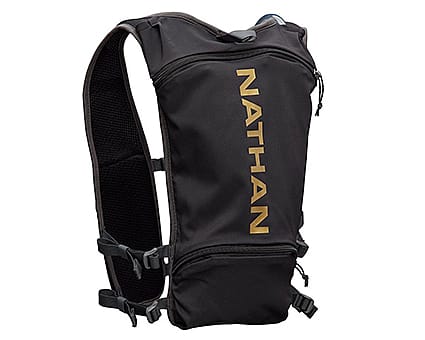
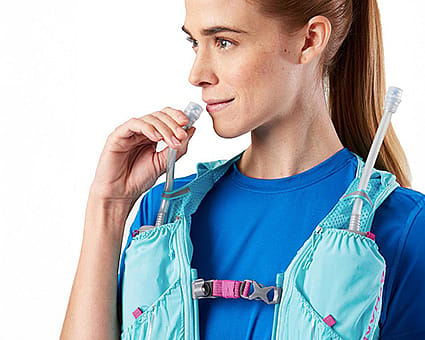
If you want to carry hydration during your run, you don’t want to run the whole way with a bottle in your hand. That is why we also have smart hydration systems such as hydration belts and hydration backpacks to help you drink easily without disrupting your running rhythm.
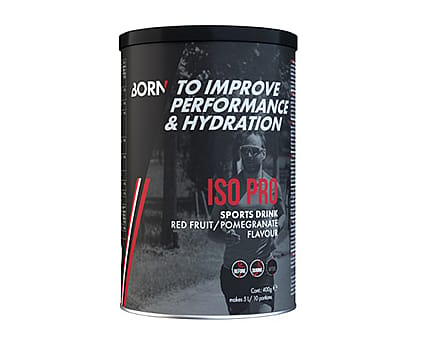

Hydration belts
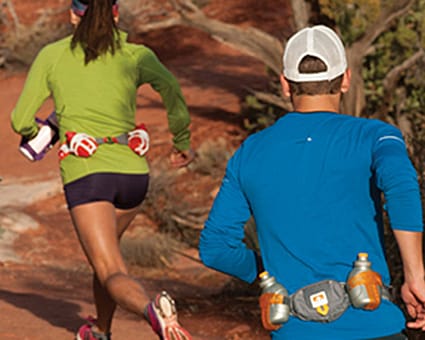
As the name suggests, this is a belt you wear around your waist that holds several small bottles. These belts have room for 2 or 4 small bottles, ensuring an even weight distribution. Some belts also have space for energy gels and/or your keys. Hydration belts are widely used by runners doing long runs, marathons and trail running. A hydration belt is useful when you are covering around 10 to 20 kilometres.
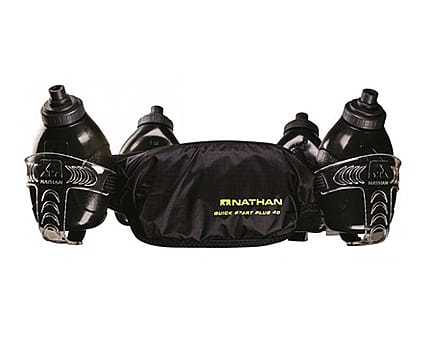
Hydration backpack
Besides hydration belts, we also have hydration backpacks. These have a water reservoir with a tube so you can drink without stopping, keeping your hands free at all times. Hydration backpacks are often used by ultrarunners, trail runners and long-distance runners. If you are covering more than 20 kilometres, a hydration backpack is handy to have.
Tip 3: Extra sun protection
Besides airy running clothing and protective items such as a running cap and running sunglasses, it is also important to protect the uncovered parts of your body. Although running in the sun is wonderful, it does carry various risks, such as sunburn, skin ageing and an increased risk of skin cancer. A good sport-formula sunscreen is therefore essential, especially if you like to go on longer runs and training sessions.
The easiest option is to buy a bottle of sunscreen with a high SPF, such as SPF 50. Not every sunscreen is suitable for runners, because the wrong cream quickly sweats off or feels sticky.
Tip 4: Adapt your running schedule to the heat
Although running in summer is lovely, it does bring extra challenges. Higher temperatures and humidity can affect your performance and increase the risk of overheating. That is why it is smart to adapt your running schedule to the warmer days.
Why is it important to adapt your running schedule to hot weather?
In higher temperatures, your body needs more energy to stay cool. This raises your heart rate and increases the risk of dehydration. That is why it is important to adjust your training properly: you limit the strain on your body as well as the risk of overheating.
Also adjust the intensity of your usual running schedule. For example, run fewer kilometres, adjust your pace and take more walking breaks. Or, if you normally run longer distances, split your schedule into two shorter sessions – for example an easy run in the morning and a short interval session in the evening.
What are the best times to run in hot weather?
It is important to plan the times you want to run carefully. The best times to run are:
Early in the morning (before 9:00)
- The temperature is at its lowest
- The sun is less strong, so you are less affected by the heat
- You start the day fresh and full of energy
Late in the evening (after 20:00)
- The temperature is already starting to drop
- There is less UV radiation, which is better for your skin and energy levels
- It is ideal for ending your day actively without the midday heat.
It is best to avoid training between 11:00 and 17:00, when the sun is at its strongest.
Pro tip: Don’t just look at the temperature, but also at the heat index. This is a combination of temperature and humidity. In high humidity, your body is less able to sweat and cool down, so the perceived temperature is higher. Use apps such as Weeronline or Buienradar to check the heat index before you go running.
Go for a forest route
If you live in a wooded area, it can be nice to run in the forest. It is usually much cooler there thanks to the shade than running through towns or on asphalt. Sometimes you will also find special running routes in forests, marked with signs. If you want to run in the forest, we do recommend trail shoes instead of urban running shoes.

Tip 5: Alternatives to running outdoors
Sometimes it is simply too hot to run outside. In that case, don’t try, but see whether you can get your exercise in an alternative way.
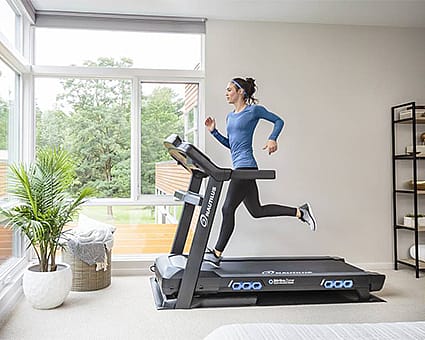
If you have a treadmill and air conditioning at home, it is better to train indoors in a cooler room. Or if you don’t have a treadmill but do have a cross trainer, do your training on that. That way you don’t have to run in the hot sun and can still work on your health.
Tip 6: Recognising overheating
Running in warmer weather requires your body to adapt well. But every body has its limits, and ignoring them can be dangerous. Your body has various ways of cooling down, but if you carry on too long without enough hydration or cooling, it struggles to regulate its temperature. This can lead to heat exhaustion or, in extreme cases, even heatstroke.
So always pay close attention to the following signals and stop immediately if you experience one or more of them:
- Dizziness or feeling faint
- Nausea or headache
- Dry skin and no longer sweating
- Muscle twitches or cramps
If you experience any of these signals, it is important that you:
- Stop running immediately
- Drink water or a sports drink
- Cool your body down
- Lie down and raise your legs
If you run with a running watch or heart rate monitor, you can also check your heart rate regularly. An extremely high heart rate, even at an easy pace, can be a sign that your body is overloaded.
Conclusion
Running in summer brings extra challenges, but with the right preparation and smart adjustments you can keep performing while limiting the risk of overheating. By choosing breathable running clothing, staying well hydrated and adapting your training times to the heat, you keep your runs a lot more comfortable and safe.
Also pay close attention to the warning signs of overheating and listen carefully to your body. Feeling dizzy, getting a headache or no longer sweating? Then rest immediately, cool down and hydrate.
And remember: on extremely hot days it is sometimes better to choose an alternative, such as a session on the treadmill or cross trainer. That way you stay active without overloading your body.
With these 6 tips you are fully ready for a summer full of successful and, above all, safer runs.
Enjoy your running, stay cool and keep moving!

Need help choosing your new summer running gear?
Would you like to buy new running gear for the summer, but are you not quite sure which clothing and equipment best suits your wishes and needs? We are happy to help you with all your questions so you can make the perfect choice. You can reach our running specialists via +31 85 773 00 58 or send an email. You can also visit our store in Volkel, the Netherlands.
Also worth reading