


What do you need for open water swimming?
Updated: 16 October 2026
Short answer: for open water swimming you need at least a wetsuit, outdoor goggles, a brightly coloured swim cap and a swim buoy. If you swim in water below 13 °C, add a neoprene swim cap, swim gloves and swim socks. If the water is warmer than 22 °C, a swimsuit, swim shorts or shorty is enough. You'll find everything in the checklist below, also as a free PDF.
Open water swimming is a unique and liberating way to swim. You're closer to nature and you feel a freedom you'll never get in a swimming pool. Whether you swim along the coast, do your laps in a lake or look for a challenge in a cold river: swimming in open water is always hugely rewarding.
With that freedom comes responsibility. In open water there are no lane lines, no pool edge to hold on to and no lifeguard keeping an eye on you. That's why your kit makes the difference between a great swim and an unpleasant or even dangerous one. Because we only go for great swims, let's dive in (see what we did there?) to everything you need as an open water swimmer. You'll get a complete checklist, a table showing what to wear at which water temperature and our most important safety tips. That way you'll get into the water well prepared.
The most popular basic kit for open water swimming


Order before 17:00, delivered tomorrow
In this blog about what you need for open water swimming:
- The open water swimming checklist at a glance (+ free PDF)
- What do you need as a minimum for open water swimming?
- An open water wetsuit
- Keep a clear view with the right goggles
- A brightly coloured swim cap for style and safety
- Swim safely with a swim buoy
- Extra kit for swimming in colder water
- From which water temperature can you swim in open water?
- Want even more comfort while swimming?
- 7 tips for swimming safely in open water
- Frequently asked questions
- Conclusion
The open water swimming checklist at a glance
Everything you need for open water swimming in one overview. "Essential" means you can't swim well or safely without this item. "Handy" means it makes swimming more comfortable, but you can do without it.
Download the open water swimming checklist (PDF)
Tip: print the checklist and lay out your kit the evening before using this list. That way you'll never be standing at the water without your swim cap, or with your swim buoy still at home in the hallway.
What do you need as a minimum for open water swimming?
Many triathletes already swim in open water, and more and more people who don't do triathlon are discovering this fun and challenging way of swimming and training. But open water swimming takes more than courage. The water is colder than in the pool, you can't see the bottom and you share the water with boats, surfers and other swimmers. Good kit therefore gives you better performance, but above all safety and comfort. This is what you need as a minimum:
- An open water wetsuit for warmth and buoyancy
- Good goggles for a clear view in any type of water
- A brightly coloured swim cap so others can see you
- A swim buoy or safety buoy for visibility and a place to rest
Below you can read what to look out for per item, and see the models open water swimmers choose most often.
An open water wetsuit
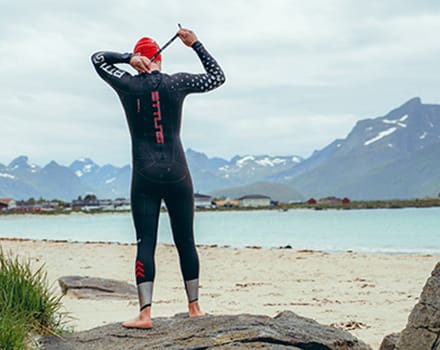
A good wetsuit is essential for open water swimming. It does three things at once. It keeps you warm, because a thin layer of water between your skin and the neoprene is warmed up by your body and held in place. It gives you extra buoyancy, so you lie higher and flatter in the water. And as a result you tire less quickly, so you can concentrate on your stroke and on where you're swimming. Especially over longer distances you'll notice the difference straight away.
It's important to know which stroke you swim. If you mainly swim front crawl, choose a wetsuit that is thin and flexible at the shoulders, like most triathlon wetsuits. If you mainly swim breaststroke, choose a breaststroke wetsuit. This type is also flexible at the legs and knees, so you can draw your legs in and kick out freely. A regular triathlon wetsuit feels stiff with the breaststroke leg kick and becomes tiring after just a kilometre. Read more in our blog what is a breaststroke wetsuit.
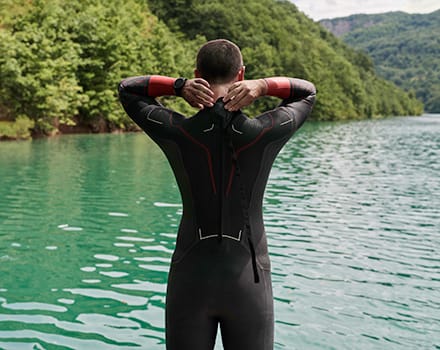
On top of that, fit is the most important thing. A wetsuit should fit tightly like a second skin, without folds in your lower back and without restricting your breathing. If it's too loose, cold water flows in with every stroke and you lose heat instead. So choose your size based on your body measurements rather than your usual clothing size. In our blog about wetsuit sizing you can read how to do that. Not sure which wetsuit suits you? Then also read what to look for when buying a wetsuit.
Open water wetsuits: the most popular models


Delivery within 3 – 7 business days
The BTTLNS Ceto 1.0 from the first row is a great wetsuit to start with. It's flexible enough for breaststroke and still gives you the buoyancy you want for front crawl. If you mainly swim front crawl and want more speed, many swimmers choose the Zone3 Agile, which is also available for women. Do you often swim in busy lakes or near boats? Then also take a look at the Orca Vitalis Openwater Hi-Vis, with brightly coloured arms that make you extra visible.
Warm water? Choose a shorty or kneeskin
At high water temperatures, from around 22 °C, a wetsuit with long sleeves and legs is usually too warm. That's when shorties and kneeskins are the perfect in-between option. These neoprene suits are thinner and have short legs and short sleeves, or are sleeveless. You still get some extra warmth and buoyancy, but you won't overheat. They're ideal at a water temperature of around 18 to 25 °C, when a wetsuit is too warm and a swimsuit or swim shorts just too cold. Popular choices are the BTTLNS Cratos 1.0 kneeskin and the Sailfish Pacific 3 shorty.
Keep a clear view in any type of water with the right goggles
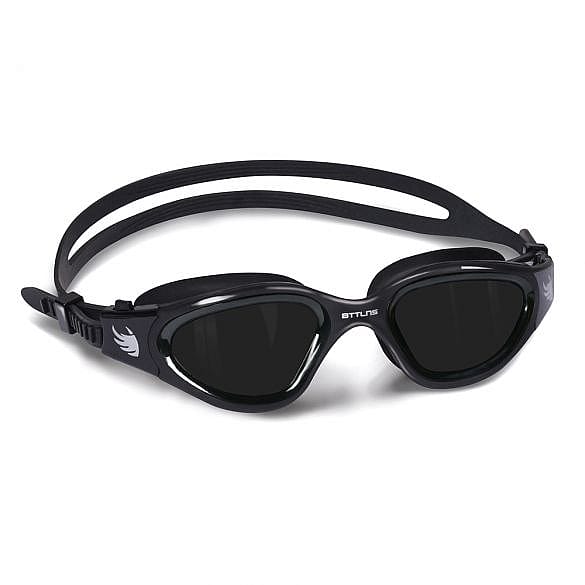
The right goggles are crucial for open water swimming. Goggles protect your eyes against fresh or salt water and against the bacteria in it. Just as important is your view: in open water you regularly have to look ahead to spot buoys, the shore or a landmark. This is called "sighting". With poor or fogged-up goggles you'll quickly swim tens of metres off course.
Look out for these points when choosing outdoor goggles:
- The lens: if you often swim in the sun, choose a dark, mirrored or polarised lens. These reduce bright light and glare on the water. In cloudy weather or at dusk you'll see better with a clear or light (amber or pink) lens. Our guide to goggle lens colours explains which lens suits which light. Also browse all our swimming goggles.
- A wide field of view: goggles with large lenses, such as the Zoggs Predator Flex, also let you see well to the side. That's handy in a group and when sighting.
- Anti-fog and UV protection: this keeps your view clear and protects your eyes from the sun.
- A comfortable fit: the goggles should seal well without pressing, and the strap should be easy to adjust, even with cold hands.
Want to know how to choose the perfect goggles? Then also read the blog how to choose the best swimming goggles. Want to see the best models side by side straight away? Check out our top 7 best open water goggles.
Goggles for open water: the most popular models

Delivery within 2 – 4 business days
Order before 17:00, delivered tomorrow
With a brightly coloured swim cap you always swim in style and safety
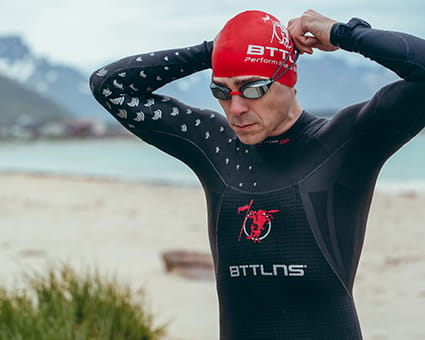
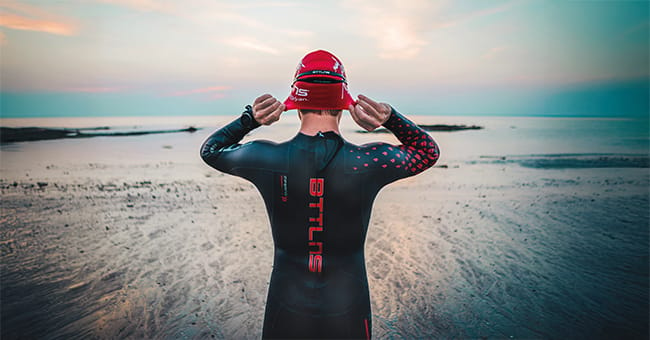
A silicone swim cap is one of the essential parts of your swimming kit. It makes you more streamlined, keeps your hair out of your goggles and above all: it makes you much more visible. In open water only your head sticks out above the water. For other swimmers, boats, paddleboarders and rescue services (which you hopefully never need), your swim cap is often the only thing they can see of you.
So choose a bright colour such as orange, neon yellow, bright pink or red. Dark caps in black or navy blue almost disappear in the water. Silicone swim caps are strong, stretchy and more comfortable than latex caps, and pull less on your hair. That's why most open water swimmers choose silicone. They come in many colours and prints, so you can choose one that matches the rest of your kit.
Tip for cooler water: wear two swim caps on top of each other, or a neoprene swim cap with a silicone cap over it. That way you keep your head warm and stay clearly visible.
Swim caps for open water: the most popular models

Order today, delivered on Tuesday

Order before 17:00, delivered tomorrow

Swim safely in open water with a swim buoy / safety buoy
Open water swimming is a great way to enjoy nature and train your body. But whether you swim in a lake, a river or the sea: your safety always comes first. One of the most important things you can do is swim with a swim buoy, also known as a safety buoy or tow float.
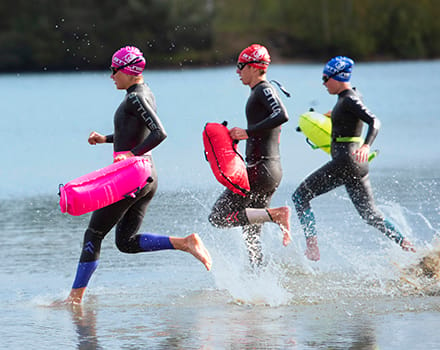
A swim buoy is a brightly coloured, inflatable float that you attach around your waist with a belt and a short leash. It floats behind you and you hardly notice it while swimming. A swim buoy has three advantages:
- You are much more visible to boats, kayakers, paddleboarders, swimmers and other water users. A bright buoy can be seen from hundreds of metres away, your head can't.
- You always have a place to rest. Got cramp, tired or want to catch your breath? Then hold on to the buoy.
- Your belongings come along. Most swim buoys have a waterproof compartment for your keys, phone, an energy bar or dry clothes.
Which size should you choose? A swim buoy of around 20 litres is compact and ideal for races and training sessions where you only take your keys. A buoy of 28 to 35 litres has more storage space and buoyancy, for your phone, a towel or clothes when you swim from A to B. There are also swim buoys that you can wear as a backpack after your swim, such as the BTTLNS Kronos 2.0 and the BTTLNS Tethys 2.0.
We recommend a swim buoy for everyone: for those who swim alone, for groups and certainly in unfamiliar water. Whether you're an experienced open water swimmer or just starting out, a swim buoy makes your swims a lot safer and more relaxed. Do keep in mind that a swim buoy is not a life jacket. It helps you rest for a moment, but it doesn't replace good preparation or a swimming buddy.
Swim buoys: the most popular models

Order before 17:00, delivered tomorrow

Order before 17:00, delivered tomorrow

Order before 17:00, delivered tomorrow
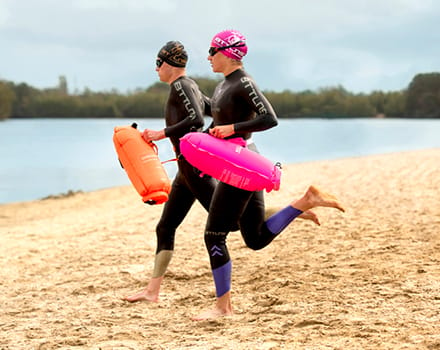
Prefer a different colour? The BTTLNS Poseidon 2.0 from the first row is also available in green, and the compact 20-litre Amphitrite 2.0 comes in orange and pink.
Other kit if you also like swimming in colder water
Are you the die-hard who keeps swimming when it gets colder outside? Then it's important to protect yourself better against the cold water. That way you won't get hypothermic and you can swim longer and more comfortably. You lose most heat through your head, hands and feet, and that's exactly what special neoprene items are made for. Besides a good wetsuit, these items shouldn't be missing from your swimming kit. Many of them come in a regular and a thermal version. Thermal items are thicker, have taped seams and often an inner layer of titanium or fleece, so less water gets through.
A neoprene swim cap or balaclava
When you swim in cold water, you lose a lot of heat through your head. That's why a neoprene swim cap is a must-have. It insulates your head and ears, so much less heat escapes there. A neoprene swim cap often has a chin strap, so it doesn't slip off. Want to protect your neck and cheeks too? Then choose a balaclava: a neoprene hood that extends over your neck. Is a full cap too warm for you in spring or autumn? Then a neoprene headband over your ears is a light in-between option. Wear a brightly coloured silicone cap over it so you stay clearly visible.
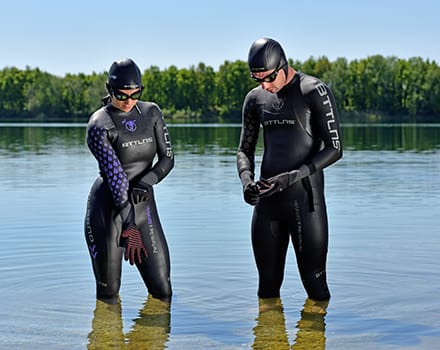
Neoprene swim gloves
Besides your head, you also lose a lot of heat through your hands. Cold fingers get stiff, and then your stroke gets sloppy. Neoprene swim gloves keep your hands warm, so you can keep swimming comfortably without your stroke suffering. Choose a snug fit: if they're too loose, new cold water keeps flowing in. Note: swim gloves are usually not allowed in triathlons. For recreational swimming and training you can always use them.
Neoprene swim socks
Just like through your head and hands, you also lose heat through your feet. And who likes cold feet? With neoprene swim socks your feet stay a lot warmer in cold water. They have another advantage: they protect your soles against sharp stones, shells and glass when walking in and out of the water. Choose socks with a non-slip sole if you often walk over rocks or a jetty. Pull the legs of your wetsuit over the socks so less water gets in.
A sleeveless neoprene vest
For extra protection of your core, you can wear a sleeveless neoprene vest under your wetsuit. It gives you an extra insulating layer without restricting your freedom of movement. It's important that only sleeveless vests fit well under your wetsuit. With sleeves it gets too tight at the shoulders, which makes swimming hard work. A popular model is the Orca Heatseeker vest.
Neoprene for cold water: the most popular models


Order before 17:00, delivered tomorrow
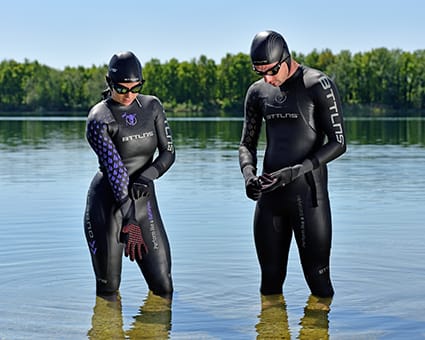
Want to protect your hands and feet in one go? Then the BTTLNS value set with neoprene swim socks and swim gloves is a smart choice. If you swim in water below 10 °C, choose the thermal versions, such as the BTTLNS Kheimon 1.0 thermal swim socks.
From which water temperature can you swim in open water?
Open water swimming is a wonderful way to exercise and enjoy nature. But always keep a close eye on the water temperature and prepare accordingly. The water temperature determines what you wear and how long you can swim safely.
In general, open water swimming is perfectly doable with just a wetsuit at a water temperature of around 13 °C and above. It gives you an insulating layer that helps you retain your body heat much better. Is the water colder than 12 to 13 °C? Then we recommend extra neoprene: a neoprene swim cap or balaclava, swim gloves and swim socks, and possibly a sleeveless neoprene vest. That way you stay a lot warmer and swim more easily, even in cold water.
This table is our guideline for the average recreational swimmer:
How you experience the water temperature differs from person to person. Some swimmers love cold water, others feel cold quickly at 18 °C. So listen carefully to your own body and don't take unnecessary risks. Going into cold water? Then enter slowly and give your breathing time to adjust before you really start swimming. You'll find more tips on swimming in cold water in our blog tips for braving cold water during open water swimming.
Want even more comfort while swimming?
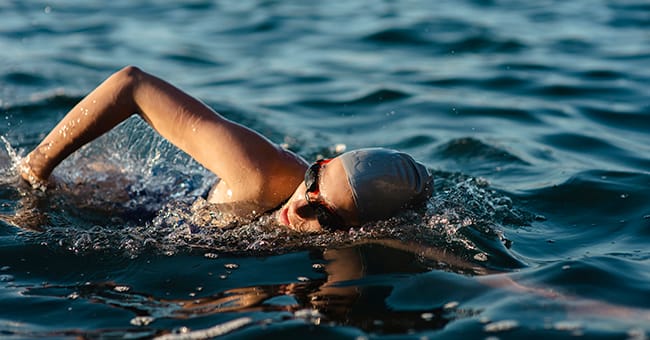
Chafing sometimes occurs when you swim in your wetsuit for a long time. Usually it's on your armpits, neck, crotch, ankles or chest. To prevent this, apply an anti-chafe balm to those areas beforehand, such as the BTTLNS Epione 2.0 anti-chafe stick. Don't use petroleum jelly: it damages the neoprene and the seams of your wetsuit. Mainly bothered by chafing on your neck? Then a Mugiro helps, a special neck protector that you wear under the collar of your wetsuit. You'll find more tips in our blog about preventing wetsuit chafing.
Going for really long swims? Then take a bottle of water or sports drink and something to eat in the compartment of your swim buoy. That way you can stop for a drink along the way. Earplugs, such as the BTTLNS Echo 1.0, keep cold water and wind out of your ears. That helps prevent dizziness and ear infections. And if you want to take your phone along safely, put it in a waterproof phone case in your swim buoy.
Besides your swimming kit you'll also bring other things, such as a quick-dry towel, warm clothes and sports nutrition and drinks for after your swim. A good swim bag is handy for this, and your wet wetsuit can go home in it afterwards. You keep your non-valuables in your swim bag on the shore. Your valuables go with you in your swim buoy.
Also handy when changing is a poncho towel: a towel in the shape of a poncho. You dry yourself while taking off your wetsuit, you stay warm in the wind and you can change in privacy. Take a look at the Orca Poncho Towel or the Orca Cotton Poncho.
Extra comfort: the most popular items


7 tips for swimming safely in open water
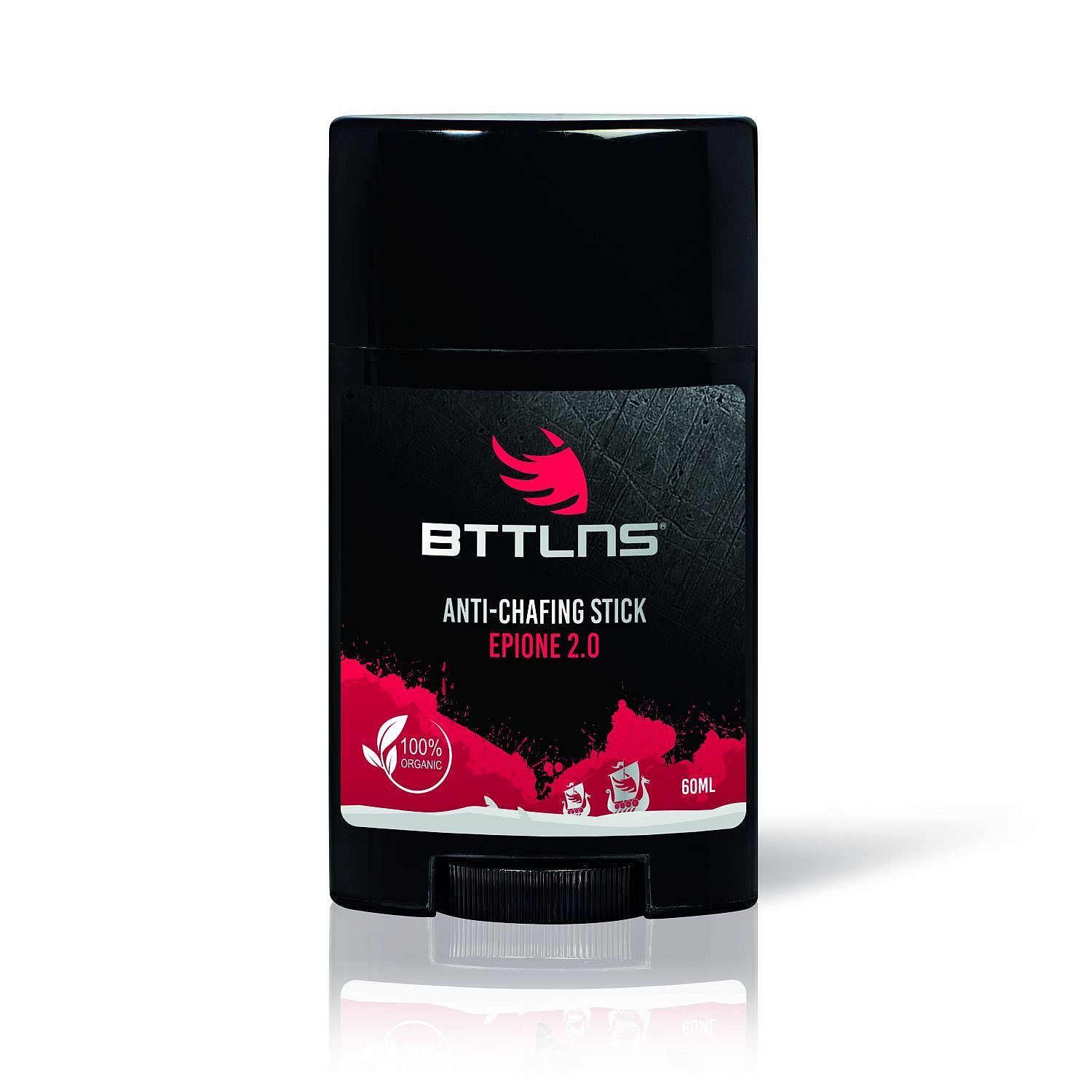
The right kit is the basis, but safe open water swimming starts with good preparation. With these seven tips you can swim with peace of mind:
- Never swim alone. Swim with a buddy, a group or a club, or at least let someone on shore know where you're swimming and how long you'll be.
- Choose an official swimming spot. Before you go, check the local information on water quality and any swimming warnings, for example because of blue-green algae. Avoid shipping lanes, harbours, locks and currents near bridges.
- Be visible. Swim with a brightly coloured swim cap and a swim buoy, especially if there are boats or surfers nearby.
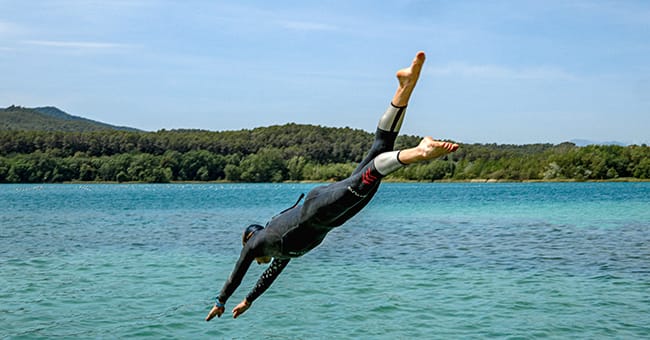
- Watch out for cold water shock. In cold water you involuntarily start breathing fast during the first minute. So enter the water slowly, consciously breathe out long and only start swimming when your breathing has calmed down. Never jump straight into cold water.
- Swim along the shore first. Build up your distance and swim parallel to the shore for your first sessions, so you can always get out quickly.
- Practise sighting. Every 6 to 10 strokes, briefly look ahead at a fixed landmark, such as a tree, building or buoy, so you keep swimming in a straight line.
- Avoid getting ill. Swallow as little water as possible, don't swim right after heavy rainfall (dirty water often flows into the lake or river then) and rinse off afterwards. If you get itchy bumps after swimming, it's often swimmer's itch. It's harmless, but annoying.
Want to know more about safety in the water? Then also read our blog about swimming safely in open water.
Frequently asked questions about open water swimming
What do you need to swim in open water?
At least a wetsuit (below around 18 °C), goggles with an outdoor lens, a brightly coloured swim cap and a swim buoy. In cold water, add a neoprene swim cap, swim gloves and swim socks. See the checklist at the top of this blog for the full overview, or download the checklist as a PDF.
Can I swim in open water without a wetsuit?
Yes. For recreational swimming you're not required to wear a wetsuit. Above 20 to 22 °C many people swim in a swimsuit or swim shorts. In colder water we do strongly recommend a wetsuit: it keeps you warm and gives you extra buoyancy. Triathlons do have rules: there, a wetsuit is usually mandatory at a water temperature of 15.9 °C or lower.
What clothing is suitable for open water swimming?
A wetsuit is the best choice for water up to around 20 °C. In warmer water, choose a shorty, kneeskin, swimskin, swimsuit or swim shorts. Under your wetsuit, wear a swimsuit, swim shorts or trisuit. It's best not to wear normal cotton clothing, because it absorbs water and gets heavy.
Do I need a breaststroke or a front crawl wetsuit?
That depends on your stroke. If you mainly swim breaststroke, choose a breaststroke wetsuit that is also flexible at the legs. If you mainly swim front crawl, a triathlon wetsuit with thin, flexible shoulders suits you better. If you swim both, a flexible entry-level model such as the BTTLNS Ceto 1.0 is a good middle ground.
Is a swim buoy mandatory?
For recreational swimming a swim buoy is not a legal requirement, but we always recommend one. More and more swimming clubs and organisers of open water events do require it. A swim buoy makes you visible to boats and gives you a place to rest when you get tired.
Why do I get ill after swimming in open water?
Open water can contain bacteria, viruses or blue-green algae, especially after heavy rainfall or in warm weather. If you swallow that water, you can get stomach and bowel complaints or a skin rash. So swim at official swimming spots, check the water quality beforehand, swallow as little water as possible and rinse off after swimming.
How do I start open water swimming?
Start at an official swimming spot with a buddy or a group, in pleasant temperatures (from around 16 °C). For your first sessions, swim short stretches along the shore and get used to the feel of your wetsuit and the dark water. Practise looking ahead (sighting) and build up your distance gradually each time. Many swimming and triathlon clubs also offer open water training sessions.
Conclusion
Open water swimming is a great experience that we recommend to everyone. It does require respect for nature and good preparation. The right swimming kit is essential. Whether you swim through the calm water of a lake, brave the waves of the sea or swim against the current of a river: every environment places its own demands on your kit and on yourself.
Start with the basics: a well-fitting wetsuit, outdoor goggles, a brightly coloured swim cap and a swim buoy. If you also swim when it gets colder, add a neoprene swim cap, swim gloves and swim socks to your kit. Dive in, embrace the elements and take your swimming experience to the next level.
Looking for open water swimming kit?
Our swimming specialists are happy to help with all your questions about wetsuits, goggles, swim buoys and neoprene accessories. That way you'll make a well-considered choice and swim safely and with extra enjoyment in open water. Call us on +31 (0)85 773 00 58, send us a message or visit our triathlon store in Volkel (the Netherlands), where you can also try on wetsuits.
Also worth reading


