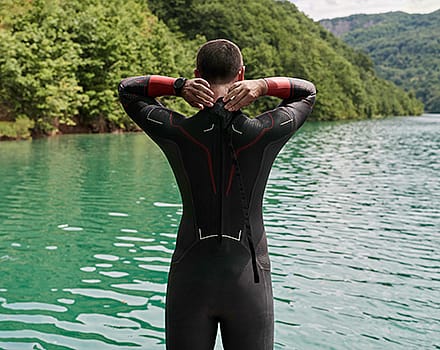
7 benefits of a triathlon wetsuit
You train hard, you've put in plenty of hours on your road bike and run tempo sessions on your regular loops. But as soon as you start your swim training, it just doesn't feel quite right. You sit too low in the water, your strokes cost more energy than you'd like, and the cold cuts through you with every stroke. Maybe you still swim without a wetsuit, or with a model that isn't really designed for triathlon or doesn't fit you properly.
Sound familiar?
For many beginner triathletes, buying a good triathlon wetsuit isn't an immediate priority, until they discover how much difference the right wetsuit actually makes. Not just in swimming speed, but also in energy consumption, body position, comfort and confidence in the water. A triathlon wetsuit is not a fashion item or accessory: it is an essential and functional suit that directly improves your performance.
In this blog you'll read about the real benefits a triathlon wetsuit brings. Whether you're a beginner who is still in doubt or you're looking for a better model for your next PR: together we'll look at the benefits a triathlon wetsuit offers, so you can get even more out of your races and training sessions.
In this blog about the benefits of a triathlon wetsuit:
- Benefit 1: Improved swimming performance
- Benefit 2: More buoyancy = better body position
- Benefit 3: Saving energy for the rest of your triathlon
- Benefit 4: Staying warm in cold water
- Benefit 5: Better body position and technique
- Benefit 6: Protection against sun, jellyfish and chafing
- Benefit 7: Peace of mind and confidence in the water
- Conclusion
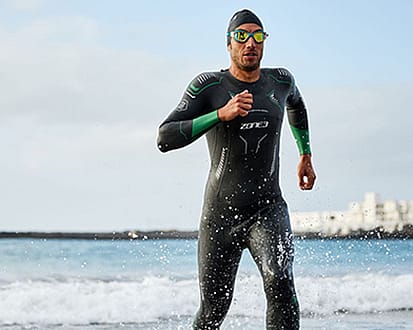
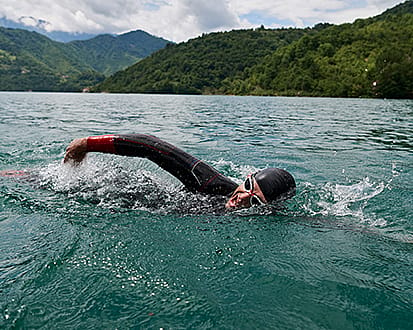
Benefit 1) Improved swimming performance
Want to swim faster without having to work and train harder? A triathlon wetsuit helps you achieve exactly that. Thanks to the smart combination of smooth neoprene, strategic buoyancy and a streamlined fit, you get more speed and efficiency out of every stroke.
Less drag, gliding through the water more smoothly
Triathlon wetsuits are specially designed to minimise water resistance. The smooth neoprene surface allows the water to flow past your body more easily, so you literally cut through the water. You need to put in less effort to move forward, and you'll notice it straight away in your pace.
At the same time, the fit has been developed to fully support your swimming technique. No unnecessary creases or material slowing you down, but a close-fitting design that moves with you.
Measurably faster with less effort
So what does that really deliver, in numbers? In practice, swimmers wearing a good triathlon wetsuit are on average 5 to 10 seconds per 100 metres faster than without a wetsuit. Over a distance of 1500 metres, that quickly adds up to more than a minute. And more importantly: you save energy that you'll badly need later on the bike and during the run.
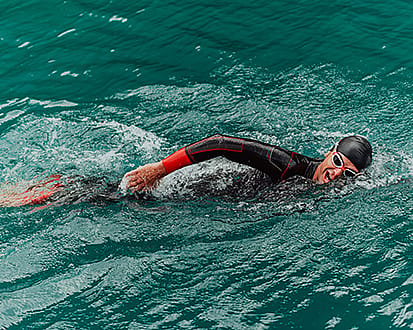
Benefit 2) More buoyancy = better body position
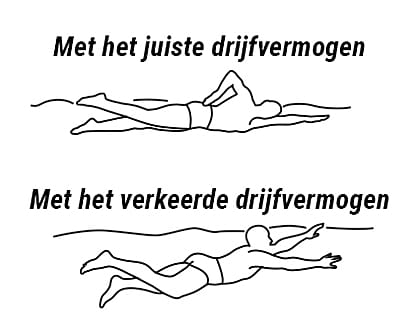
Where you lose most of your energy while swimming is in overcoming water resistance. And a low or unstable position in the water increases that resistance considerably. That's exactly why buoyancy is one of the most powerful benefits of a triathlon wetsuit, and often the most underestimated.
Neoprene lifts your body up
A triathlon wetsuit is made up of different thicknesses of neoprene, strategically placed across the body. Thicker neoprene is often used especially around the hips and thighs (for example 4 or 5 mm), while the material at the shoulders and arms is thinner and more flexible (often 1.5 to 2 mm).
The result? Your body is "lifted" into a naturally horizontal position, with your torso, hips and legs sitting higher in the water. This prevents the 'sinking legs' that many swimmers, especially beginner or recreational triathletes, struggle with.
Better body position and less drag
A higher position means a smaller frontal area that has to cut through the water. This reduces the total drag, which leads directly to more efficient swimming. You need to use less energy to correct your position or lift your legs. The wetsuit does that work for you, so you can fully focus on your strokes and breathing.
Especially over longer distances, you'll notice this benefit in muscle fatigue: your lower back, hamstrings and core are put under less strain, simply because your position stays stable. You save energy, not only during the swim, but also for the bike and run that follow.
Extra benefit for less experienced swimmers
For those without a perfect swimming technique, buoyancy often has an even bigger impact. Where experienced swimmers can partly compensate for their position with stronger core muscles and technique, a wetsuit helps the less practised athlete get closer to that ideal position, without extra strength or training.
Want to know which type of wetsuit best suits your build and swimming style? In our guide How to choose the right wetsuit for a triathlon we explain exactly what to look for when choosing the right thickness, fit and flexibility.
Benefit 3) Saving energy for the rest of your triathlon
Speed matters during the swim, but how much energy it costs you is at least as important. Especially in a triathlon, every bit of muscle tension, heart rate and kilocalorie counts, because two more disciplines follow the swim. A good triathlon wetsuit not only helps you swim faster, but also smarter: with less energy loss and less physical strain.
Better position = less muscle activation
As mentioned earlier, the wetsuit lifts your body into a better position in the water. As a result, you need to keep fewer muscle groups active to keep your legs up, stabilise your core or keep yourself balanced. This especially spares your lower back, hamstrings and calves. Over longer distances, this difference can have a big effect on your overall fatigue.
Staying warm prevents energy loss
Open water races are often held in water with temperatures between 14°C and 22°C. Without protection, your body has to work hard to stay at temperature, which leads to extra energy consumption and increased fatigue. A wetsuit with sufficient thermal insulation reduces that thermal stress, so your internal energy balance stays more stable.
Even a drop of 1°C in core temperature can lead to muscle stiffness, slower reactions and reduced blood flow to your arms and legs. With a wetsuit you keep your body warmer, without having to eat or drink more to compensate.
More efficient stroke = lower heart rate peaks
Because you move through the water faster and more efficiently, you can cover the same distance with fewer heartbeats per minute. That means less oxygen consumption per stroke, more stable breathing and lower peak loads on your cardiovascular system. Especially for triathletes who are prone to a high heart rate in cold water or from race-start nerves, this is an important benefit.
The RPE score stands for "Rate of Perceived Exertion", in other words the level of effort as you subjectively experience it during exercise.
In short:
- It is a scale from 1 to 10, where a higher score means something feels harder.
- An RPE of 8/10 means the swim feels pretty hard.
- An RPE of 6.5/10 means the same effort feels lighter: you have more control, feel less tired and can probably keep it up for longer.
Curious which wetsuit can actually give you that extra speed and energy saving? Take a look at our selection of the Top 5 best triathlon wetsuits.
Benefit 4) Staying warm in cold water
Almost all triathlons take place in open water, and that means: no constant temperature like in the pool, but fresh to cold conditions. Especially at starts in spring or late in the season, it can be quite a bit cooler. In such conditions, heat loss is not only unpleasant, but can also limit your performance or even be dangerous.
Neoprene insulates without limiting your freedom of movement
A good triathlon wetsuit is made of closed-cell neoprene. This material acts as a buffer: it doesn't let water through, and the thin layer of water that forms between your skin and the suit is warmed up by your body. This creates a protective insulating layer that helps maintain your core temperature, without compromising your freedom of movement.
Top brands use neoprene 4 to 5 mm thick in critical zones (such as the torso and thighs), while the shoulders and arms are thinner (1.5–2 mm) to ensure flexibility. That way you stay warm and agile.
Less risk of cold shock or cramps
Especially at a water start, your body suddenly comes into contact with cold water. Without protection, this can lead to cold shock: your heart rate shoots up, your breathing speeds up and you temporarily lose control of your breathing. A wetsuit reduces this risk considerably. It also reduces the chance of muscle stiffness, cramps or early fatigue, because your body has to spend less energy on staying warm.
Essential at temperatures below 18°C
At water temperatures below 18°C, wearing a wetsuit is not only comfortable, but also mandatory in many races (according to World Triathlon and Ironman guidelines). Below 14°C, it is even considered essential for your safety and physiological performance.
Choosing a good triathlon wetsuit isn't something you do on gut feeling. In What to look for when buying a wetsuit we give practical tips to avoid mistakes and make the right investment.
Benefit 5) Better body position and technique
An efficient swimming technique starts with your position in the water. Many triathletes, especially those without a swimming background, often experience sinking hips or an unstable torso, which leads to extra drag, sloppy strokes and energy loss. This is where a triathlon wetsuit offers a clear advantage: it supports your body in such a way that you automatically end up in a more streamlined position.
Buoyancy guides your position
Thanks to the strategically placed neoprene around the hips and thighs (often 3–5 mm thick), the wetsuit corrects your position in the water. Your legs sink less and your torso stays more stable, so your body adopts a natural horizontal line. This reduces your frontal drag and improves your hydrodynamics, without you having to actively focus on it while swimming.
More focus on technique and breathing
Because your position is more stable, you need to compensate less with your legs and core, so you can focus better on your stroke rhythm, catch phase and breathing.
Extra tip: combine your wetsuit with technique training
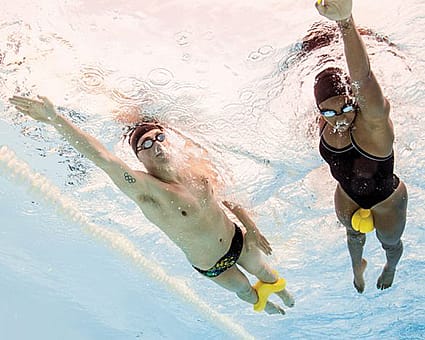
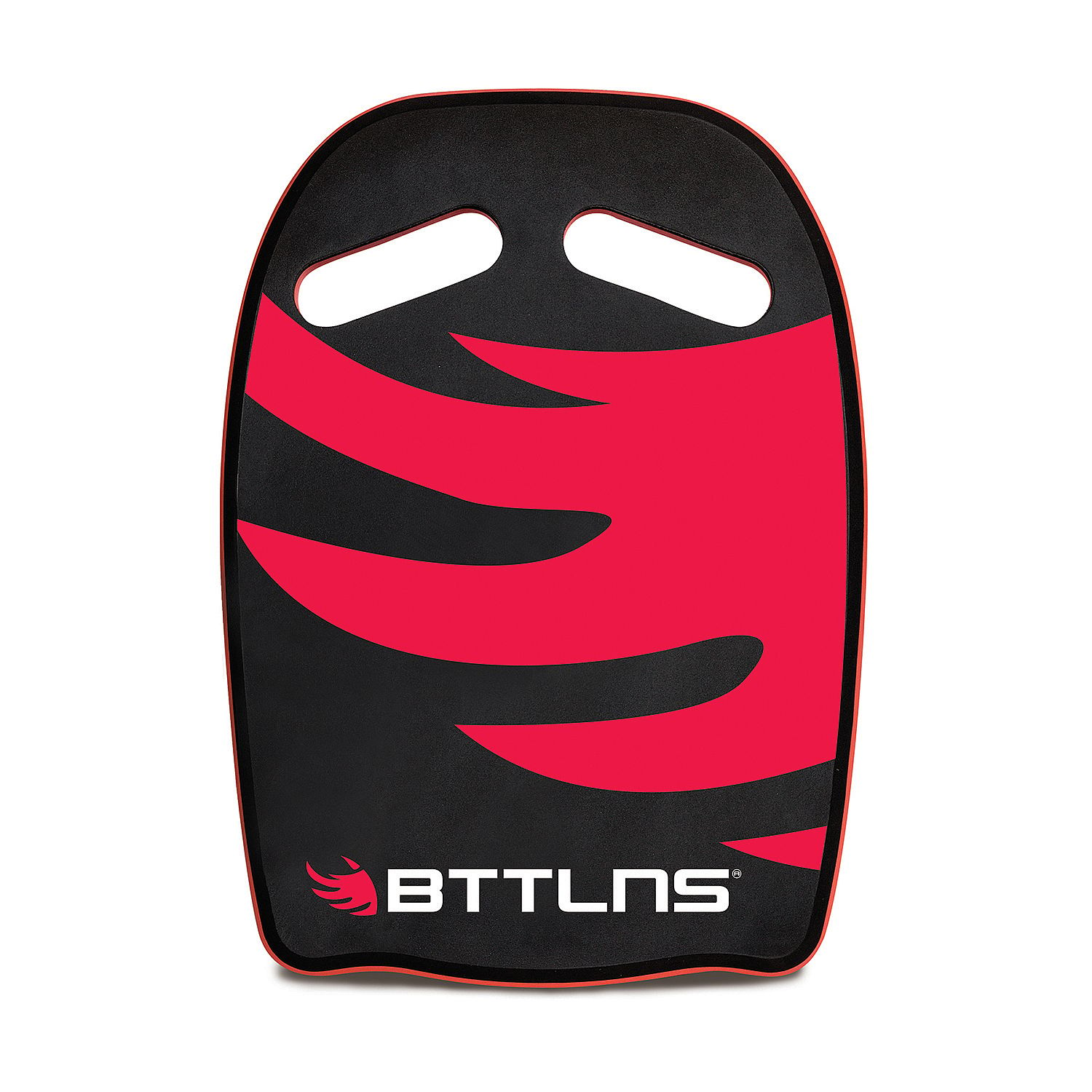
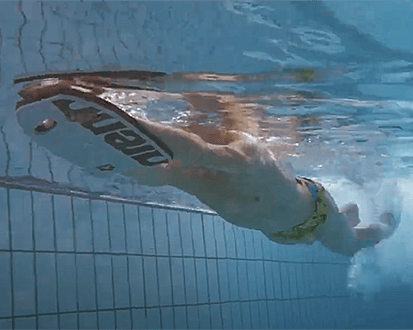
Want to structurally improve your swimming position and stroke technique? Then consider adding training aids such as a pull buoy or kickboard to your swim sessions.
Just like a wetsuit, a pull buoy simulates extra buoyancy for your legs, so you can focus on your arm movement and core stability during technique sets. In our blog "What is a pull buoy and what is it used for?" you can read how this training aid helps improve your swimming position.
A kickboard, on the other hand, helps you isolate and strengthen your leg kick, which is extra important if you want to support your position with active leg control. Also read the blog "What is a kickboard and what is it used for?" for more explanation.
Benefit 6) Protection against sun, jellyfish and chafing
A triathlon wetsuit does more than just help with speed, body position or saving energy. It is also a physical barrier, a second skin that protects you from environmental factors you don't have to deal with in the pool. In open water, protection plays a much bigger role.
UV protection during long swim sessions
During training sessions or races in open water, you are often exposed to the sun for long periods. Especially in half or full distance triathlons, a swim can easily take 30 to 60 minutes, often in direct sunlight. A wetsuit offers UV protection as standard (often UPF50+), so your skin is better protected against sunburn and damage from prolonged exposure. This is not only comfortable, but also important to prevent loss of performance due to overheating or sunburn.
Less chance of skin irritation or chafing
Swimming for long periods, especially in salt or cold water, can cause skin irritation. The constant friction between skin, water and swimwear leads to red patches, chafing under the armpits or even small wounds around the neck or groin for some athletes. A well-fitting wetsuit minimises this risk thanks to smooth neoprene and strategic seams or seals.
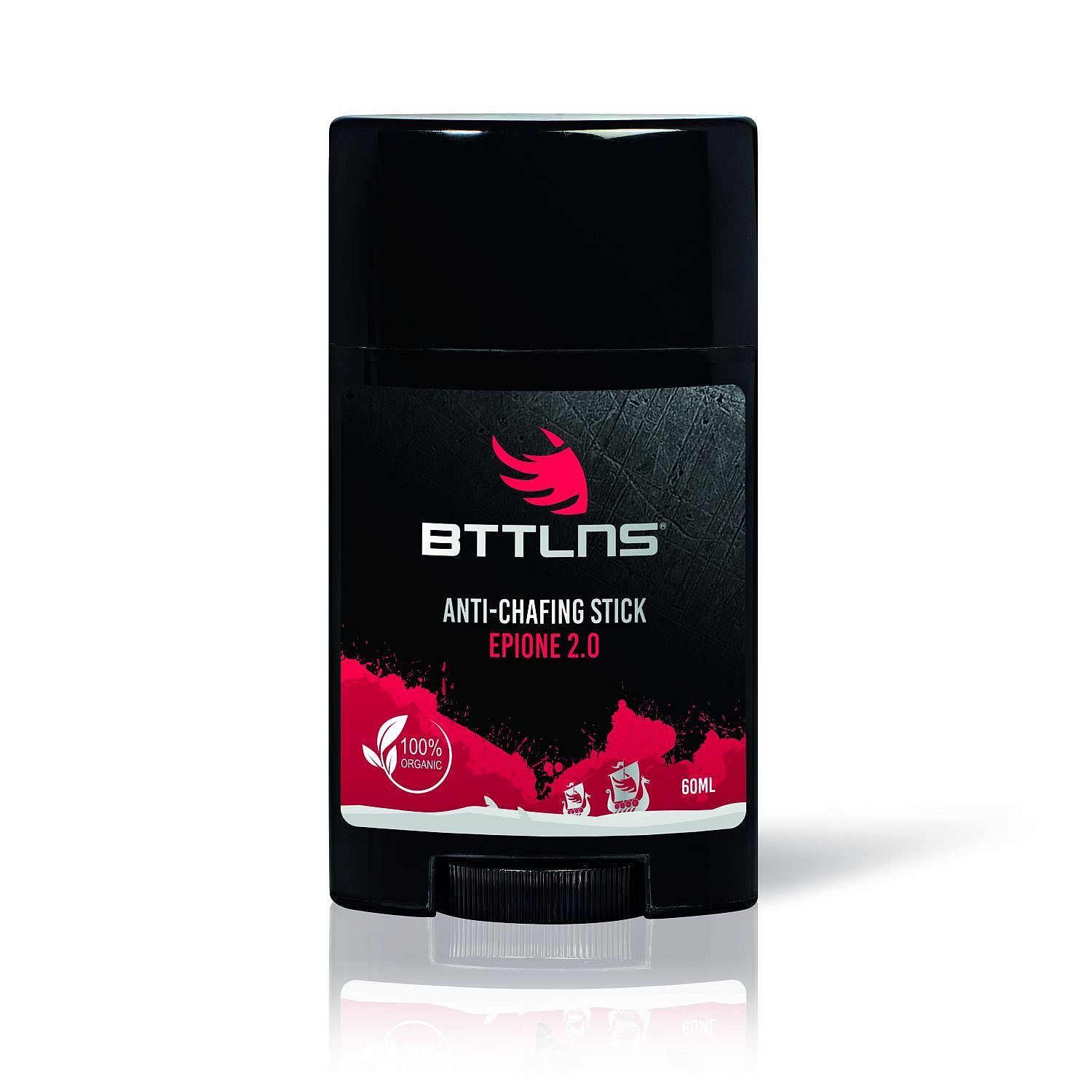
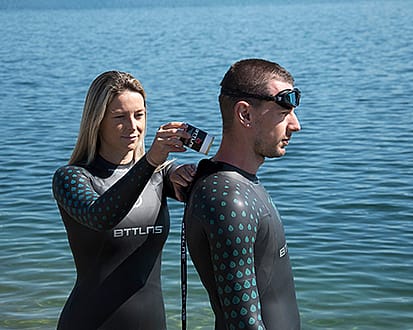
If you do experience some chafing, you can also apply a special anti-chafe stick to these areas.
Protection against jellyfish, buoys and other open water contact
In open water you have no control over what you come across: floating plants, jellyfish, rough buoys or invisible obstacles under water. A wetsuit provides a physical barrier between your skin and these external factors. The neoprene offers effective protection especially against jellyfish stings, which are painful and hamper your performance. A wetsuit also prevents grazes and scratches during busy starts or contact with other swimmers.
Benefit 7) Peace of mind and confidence in the water
One of the most underestimated benefits of a triathlon wetsuit is the effect on your peace of mind. Especially for beginner triathletes or swimmers who don't (yet) feel completely comfortable in open water, a wetsuit often makes the difference between tense and relaxed swimming.
Buoyancy gives confidence
The simple knowledge that you'll stay afloat, even if you stop swimming for a moment, immediately gives you peace of mind. This is no small detail: in the first metres after the start, or when your breathing speeds up, knowing that you won't 'sink' is a powerful reassurance. For many athletes, this is the point at which their fear of swimming or open water stress decreases.
Thanks to that extra confidence, you can focus on your technique, your breathing and your position in the field, without being overwhelmed by panicky thoughts.
Dealing better with unexpected situations
Open water swimming is unpredictable. Waves, cold, other swimmers or an awkward breath can disrupt your rhythm. In those situations, a wetsuit acts as a buffer, both physically and mentally. You know your body is protected, that you'll stay afloat and that you can always pause for a moment without losing your balance completely.
That makes it easier to stay calm, find your rhythm again and carry on swimming with more control.
More calm at starts and during training
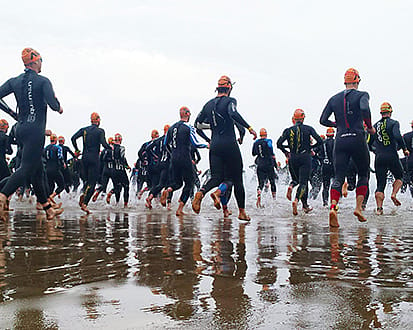
Triathlon starts are often hectic: lots of swimmers close together, confusing conditions, a sudden shortness of breath. At that moment, a wetsuit can be your anchor. You feel protected, in place, and more in control of your body and your surroundings. That translates into less stress, a lower heart rate and better performance.
During training in cold or choppy open water, a wetsuit also gives you that same peace of mind, so you train longer, safer and more consistently, without mental blocks. Want extra safety during training? Then you can also opt for a swim buoy, which you can use as a resting point when you're tired or if you get cramp, for example.
Conclusion
Whether you want to swim faster, save energy or feel more confident in the water, the benefits of a triathlon wetsuit speak for themselves. It's not a nice-to-have, but an essential suit that directly contributes to your performance, technique and comfort.
In short: this is what a good triathlon wetsuit gives you
- Faster swim times thanks to less drag and a streamlined profile
- More buoyancy, so you automatically sit higher and more stable in the water
- More efficient energy distribution: save your muscles for the bike and run
- Staying warm in cold water and protection against hypothermia or cramp
- Improved body position and technique, even without a perfect swimming style
- Protection against sun, chafing, jellyfish and obstacles in open water
- Peace of mind and self-confidence, essential for a strong start and focus
Whatever your level, beginner or experienced triathlete, a well-fitting triathlon wetsuit is an investment in your comfort, safety and performance.
Want to get the very most out of your triathlon? Then it starts with the right wetsuit.
Take a look at our range of triathlon wetsuits for men or triathlon wetsuits for women and choose the wetsuit that suits you best.
Need help choosing your new triathlon wetsuit?
Would you like to buy a triathlon wetsuit, but you're not quite sure yet which wetsuit best suits your wishes and needs? Then we're happy to help you with all your questions so you can make the perfect choice. You can reach our wetsuit specialists on +31 85 773 00 58 or send an email. You can also pay a visit to our shop in Volkel, the Netherlands.
Also worth reading