What is triathlon?
Triathlon is a dynamic and challenging sport that combines three disciplines – swimming, cycling and running – in one race. This unique combination of very different sports tests both your physical endurance and your mental resilience. Whether you want to do your first triathlon or are going for that famous, challenging Ironman, there's a suitable triathlon for everyone. In this blog we'd like to take you into the world of triathlon, so let's explore this great sport together.
In this blog about triathlon:
- What is triathlon?
- The history and origins of triathlon
- The different disciplines of triathlon
3.1. Swimming
3.2. Cycling
3.3. Running - The different triathlon distances
- Triathlon is for everyone
- Conclusion
What is triathlon?
Maybe you've heard of it or seen it on television: triathlon. And maybe you've become so enthusiastic that you'd like to do a triathlon yourself one day. So let's take a closer look at triathlon.
Triathlon is a collective name for three endurance sports and is also called a multisport. This means it's a sport made up of several disciplines – in this case swimming, cycling and running. Triathletes (participants) compete to set the fastest overall finish time.
The history and origins of triathlon
The first triathlons were held in France sometime between the 1920s and 1930s. Back then it wasn't called triathlon yet and was known by various names such as Les Trois Sports, La Course des Débrouillards and La Course des Touche-à-Tout. It became increasingly popular over the years.
In the early 1970s, the first registered triathlon was organised by the San Diego Track Club in California. This race was designed by Jack Johnstone and consisted of a 500-metre swim, an 8-kilometre bike ride and a 10-kilometre run. Initially these races were organised as a challenge for club members, but they attracted more and more athletes.
The first Ironman in Hawaii in 1978
In 1977, a discussion arose between naval officer John Collins, his wife and a few others about which athletes were the fittest. According to Collins, cyclists were the fittest. Collins and his wife Judy were already familiar with triathlons such as those of the San Diego Track Club and the Optimist Sports Fiesta Triathlon, as were a number of other people in the bar.
To test this, they decided to organise a race (triathlon) that combined all the long-distance races in Honolulu: the Waikiki Roughwater Swim (3.8 km), the Around Oahu Bike Race (185 km) and the Honolulu Marathon (42.195 km). The winner of this race could call himself the official Ironman.
Although the Hawaii Ironman was more of a private affair for these fanatics, this triathlon got a big boost when the American media started reporting on it. Triathlons started being organised all over the world.
The different disciplines of triathlon
Triathlons always consist of three different disciplines: swimming, cycling and running. The disciplines are always done in this order. Let's take a closer look at each discipline, starting with swimming.
Swimming
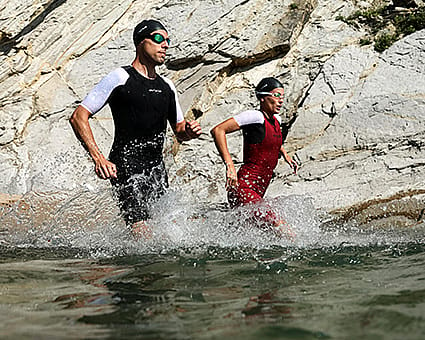
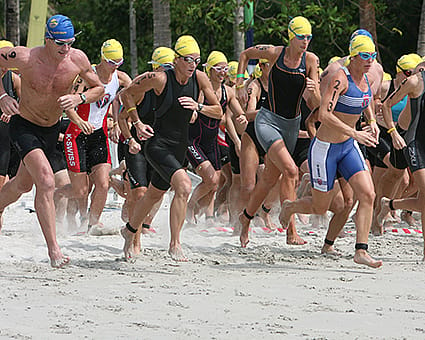
Swimming is the first part of the triathlon and a great, unique challenge because it takes place in open water, such as a lake, river or the sea. The distance of this part varies depending on the length of triathlon you're doing, but it's usually around 750 metres, the Olympic distance of 1.5 kilometres or 3.8 kilometres for an Ironman.
The start can sometimes be quite chaotic (if you've done a triathlon before, you may recognise this). Everyone wants to get off to the fastest possible start and be at the front, which is why the start is also known as the “washing machine”, because of all the arms and legs flying around.
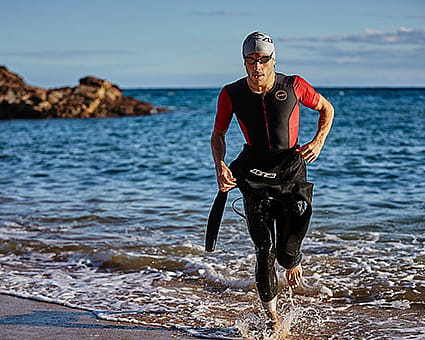
As a triathlete you also need to swim as efficiently as possible, so it's important to train your swimming technique well. Over the years, swimwear has also improved enormously: there are special triathlon wetsuits, swimskins and trisuits with improved swimming properties and much more, giving you the support you need to get the most out of your triathlons.
Cycling
After the swim you move on to the next part: cycling. The transition from swimming to cycling is also called T1. It's important to change the necessary gear as quickly as possible (wetsuit off if you're wearing one, helmet on, cycling shoes on, race number in position), because changing completely would cost you far too much valuable time.
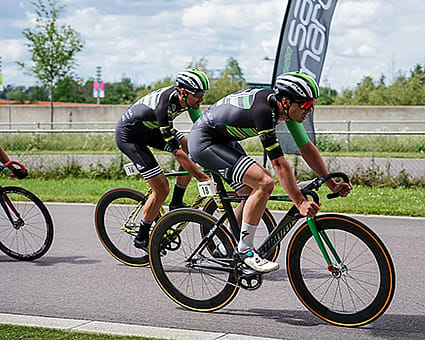
This is the longest part of the triathlon, both in time and distance. If swimming isn't your strongest point, you can make up a lot of ground on the bike. Depending on how serious you are, a good road bike is usually fine. But if you really want to do it properly, go for a special time trial bike. These bikes are specially designed to maximise your aerodynamics. Time trial bikes have a different design from a road bike, with a more forward-leaning position that increases efficiency and speed.
Several rules apply to the bike leg of a triathlon. For example, you have to stay a certain number of metres behind the rider in front of you and you're not allowed to draft or pace behind a motorbike. Drafting means riding close behind the rider in front of you to benefit from their slipstream, which saves you energy. Motor-pacing is the same as drafting, except that you ride as close as possible behind a motorbike.
The bike leg is extremely important in a triathlon because it allows you to greatly improve your position, so you get off to a good start in the next discipline: running.

Running
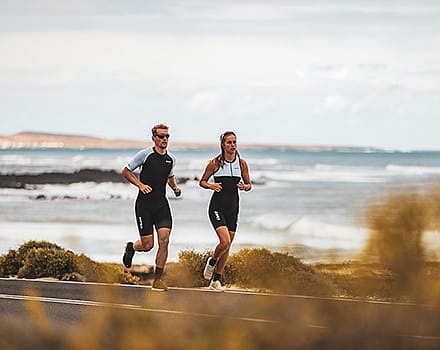
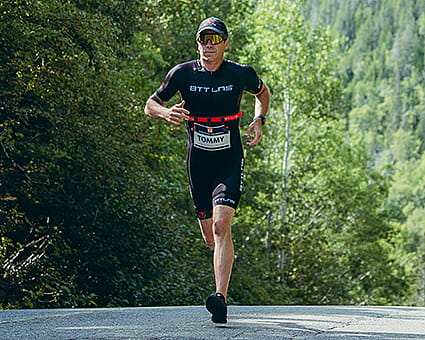
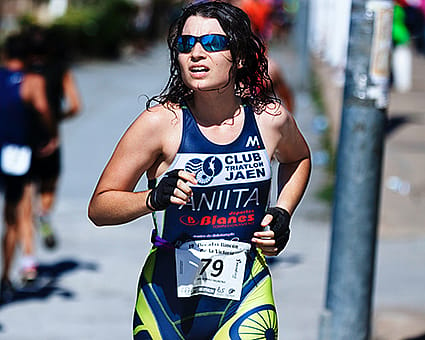
Running is the third and final part of the triathlon. The transition from cycling to running is also called T2. Here you swap part of your cycling gear for your running gear, such as your cycling shoes for running shoes and perhaps a cap against the sun.
The distance of the run varies depending on the type of triathlon you're doing. In a sprint triathlon it's usually 5 kilometres, at the Olympic distance about 10 kilometres and in an Ironman just over 42 kilometres.
Running after cycling will feel like a tough challenge, which is why many triathletes also do so-called brick training. In this type of training you do two disciplines back to back, most often cycling and running. These sessions are important to prepare your body for the stiffness and fatigue you'll feel after cycling.
The run at the end of your triathlon is often the toughest part, where races are won or lost. Your ability to keep up a strong pace after hours of hard work is what sets the best triathletes apart from the rest.
The different triathlon distances
Taking part in a triathlon is a great experience. But you don't just do a triathlon on a whim: you have to train and prepare well. That's why, besides the well-known Ironman, there are other distances as well.
You can read more about the different triathlon distances in our blog about the different triathlon distances.
Triathlon is for everyone
It's sometimes said that triathlon is only for men, but nothing could be further from the truth. We see more and more women completing the toughest triathlons, whether it's a sprint triathlon or an Ironman. That's what makes triathlon such a fun and inspiring sport, where men and women compete on equal terms and challenge each other.
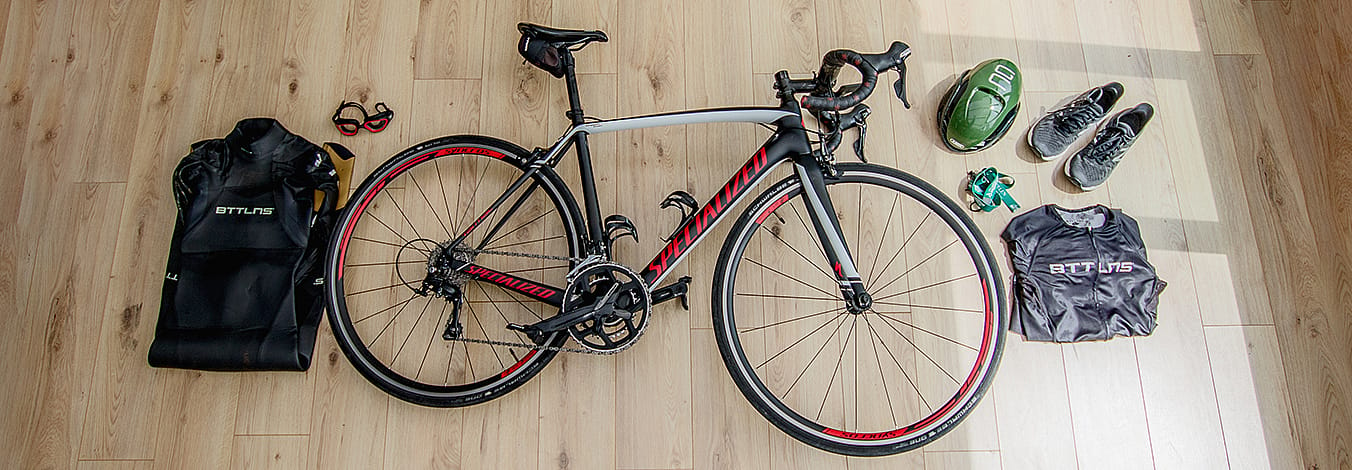
They say good preparation is half the battle, and that also applies to triathlons. Besides training well for swimming, cycling and running, your gear is also very important, as it can support you in various ways so you can get even more out of your triathlons. From trisuit to wetsuit to swimming goggles: curious which gear you need as a beginner triathlete? Then read our blog about what you need as a beginner triathlete, or if you're more advanced, our blog about what you need as an advanced triathlete.

Conclusion
Triathlon is a fascinating sport that combines swimming, cycling and running in one competitive challenge. Starting around 1920 in France, the sport has grown considerably in recent years into a global sport in which both men and women compete to set the best finish time. From the chaotic “washing machine” experience of the swim to the strategic bike leg and the ultimate battle of endurance on the run: triathlons are a real test of your endurance, speed and willpower.
Each discipline requires good training and specific skills and gear, from special triathlon wetsuits to time trial bikes for the real die-hards. Whether you want to do your first triathlon or you're an experienced triathlete preparing for that famous Ironman: triathlon offers different distances to suit every ambition.
Challenge yourself, push your limits and start your first triathlon
If you're looking for a new challenge that pushes your physical and mental limits, triathlon is for you! This great sport offers a unique combination of swimming, cycling and running in one race. Whether you're a beginner or an experienced athlete, triathlons are accessible to everyone and there are different distances to suit your ambitions.
Taking part in a triathlon means more than just testing your physical endurance: you become part of a motivating and supportive community where everyone knows each other.
So what are you waiting for? Find a local triathlon club near you, or otherwise a swimming, cycling or running club. Start training, get yourself ready, take on that fun challenge and meet new people.
Need help choosing your new triathlon clothing?
Would you like to buy new triathlon clothing, but you're not quite sure which clothing best suits your wishes and needs? We're happy to help with all your questions so you can make the perfect choice. You can reach our triathlon specialists on +31 85 773 00 58 or send us an email. You can also visit our store in Volkel, the Netherlands.
Also worth reading