The 10 most common running injuries
Running is healthy, but injuries are always lurking. Whether you're training for your first 5 kilometres or have years of experience: sooner or later, almost every runner has to deal with them. In this blog we list the 10 most common running injuries for you. What causes them and how do you recognise the symptoms?
We give you insight into which injuries occur most often in runners, what the typical signs are and why they occur. That way, you know what to look out for and how to prevent small aches from growing into long-term problems.
In this blog about the 10 most common running injuries:
The 10 most common running injuries
Running is an accessible and effective way to stay fit. Unfortunately, it's also one of the most injury-prone sports. Whether you're training for your first 5 kilometres or have years of marathon experience: injuries can always crop up. Fortunately, you can prevent many problems by recognising the signals in time and training smart.
In this blog we list the 10 most common running injuries for you. For each injury, we briefly explain what it is and how to recognise it. That way, you can build an injury-free running routine.
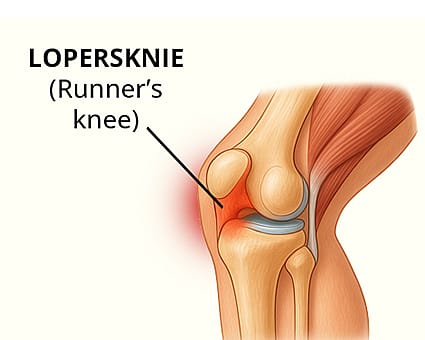
1) Runner's knee (iliotibial band syndrome)
Runner's knee is the classic among running injuries. You recognise it by a nagging to stabbing pain on the outside of the knee, which gets worse during or after running, especially over longer distances, when running down stairs or training uphill. The culprit? An overloaded band of tissue (the iliotibial tract) that runs along your thigh to your knee.
Weak hip or glute muscles and a knee that caves inwards while running are known risk factors. Unsuitable running shoes can make the injury worse.
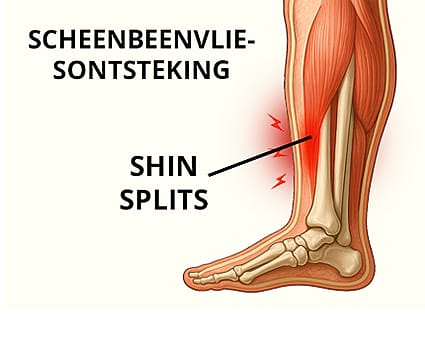
2) Shin splints (medial tibial stress syndrome)
Do you have a nagging pain on the inside of your shin during or after running? Then there's a good chance you're suffering from shin splints, also known as medial tibial stress syndrome (MTSS). This is a typical overuse injury, especially in beginner runners or when training is built up too quickly.
The pain occurs because the attachment of the bone membrane becomes irritated, often due to poor footwear, little cushioning or a running style with a heavy heel strike. Although often described as an inflammation, technically it's an overload of the bone membrane and surrounding structures.
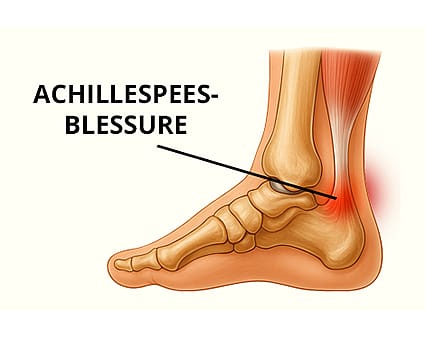
3) Achilles tendon injury
The Achilles tendon connects your calf muscles to your heel bone and absorbs enormous forces with every step. Overload, stiff calves or the wrong shoes can irritate the tendon. You notice it as pain or stiffness when getting up, or during the first metres of your run.
A cadence that's too low and a long stride can put extra pressure on the tendon. This injury is common in both beginner and advanced runners and usually heals slowly.
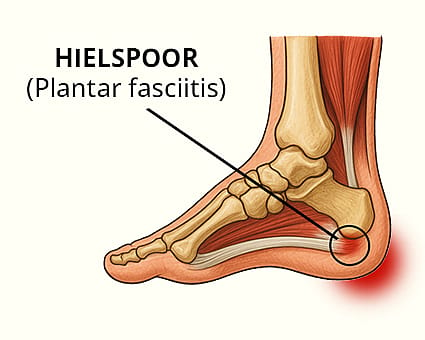
4) Heel spur (plantar fasciitis)
A sharp, stabbing pain under the heel, especially in the morning or after sitting for a long time? There's a good chance you're dealing with plantar fasciitis, an irritation or inflammation of the band of tissue under the foot. This injury often develops due to a surface that's too hard, the wrong footwear or a collapsing arch.
The longer you keep running with it, the harder it is to recover. The right cushioning and support are essential to prevent further irritation.
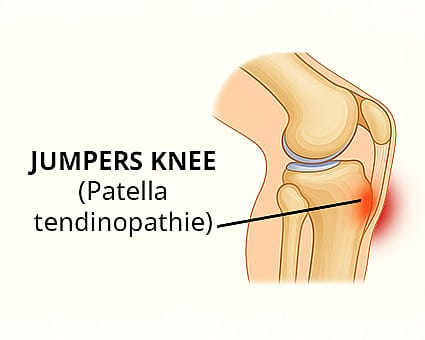
5) Jumper's knee (patellar tendinopathy)
A painful spot just below your kneecap, especially during squats, on stairs or with explosive movements? Then it could be jumper's knee, an overload of the patellar tendon. Although the name suggests it's a jumping injury, it's also common in runners, particularly during intensive interval training or hill training. Weak quadriceps and glutes can add to the strain on the patellar tendon.
6) Hamstring injury
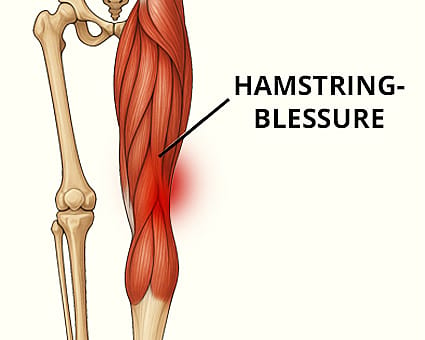
A sudden stab at the back of your thigh, or a nagging pain while running? Then you may have a hamstring strain or even a (partially) torn muscle. This injury often occurs during sprints or rapid accelerations, especially if the muscles haven't been warmed up enough.
An imbalance between the hamstrings and the front thigh muscles (quadriceps) increases the risk of complaints.
7) Ankle injury (sprain)
A misstep is easily made. Especially during trail runs or on uneven surfaces, a sprained ankle is a common injury. The ankle ligaments are often stretched or even partially torn. This leads to swelling, instability and pain when rolling off the foot. Weak ankle muscles or old injuries can also increase the risk of it happening again.
8) Hip complaints
A nagging pain in your hip(s) during or after running can indicate overload. It's often the result of an unstable pelvis or weak core and glute muscles. Because your hips have to absorb shocks with every step, instability can cause irritation or inflammation of the bursa or tendons in the hip area.
Hip complaints are slightly more common in women, due to anatomical differences in pelvic position and running pattern.
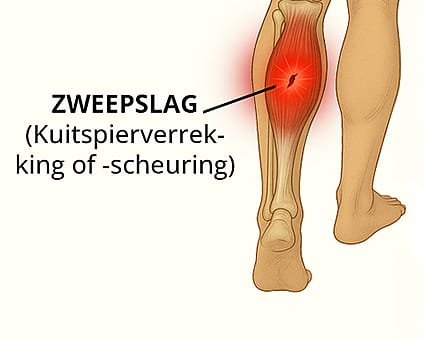
9) Calf strain (torn calf muscle)
A calf strain – sometimes called "tennis leg" – is an acute injury that feels as if someone has struck your calf with a whip. It's usually a small tear in the calf muscle. This injury often occurs with explosive loading or when you're tired at the end of a training session or race.
A good warm-up and sufficient calf strength are important to prevent this injury.
10) Stress fracture
A stress fracture is a small crack in the bone, usually in the shin or the metatarsals. This injury develops gradually and is often not recognised straight away. Causes include prolonged overload, insufficient recovery, the wrong shoes or nutritional deficiencies (for example calcium or vitamin D).
If you keep running with a stress fracture, it can get worse and become a complete fracture. Recognising it in time and resting is essential.
Conclusion
Running injuries are common, but with the right knowledge, preparation and gear you can prevent them in many cases. Whether it's a nagging knee, a stiff Achilles tendon or a stabbing pain under the heel, recognising it early and responding smartly makes the difference between a short break and a long interruption.
Listen carefully to your body's signals, build up your training gradually and take recovery as seriously as effort. Invest in good running shoes that suit your running style, choose comfortable clothing that prevents chafing, and don't forget the importance of warming up, strength training and rest.
Also worth reading