What is overpronation?
Do you suffer from pain in your ankles, knees or shins during or after running? Do your running shoes wear mainly on the inside? Or do you feel your feet “collapse” slightly with every step? Then there is a good chance you overpronate – a common running gait deviation that can quietly lead to injuries and less enjoyment of running.
But what exactly is overpronation? And why is it so important to pay attention to it as a runner? In this blog you will discover what overpronation is, how to recognise it and what you can do about it to keep running injury-free. We also give you tips on good running shoes for overpronation, so you can not only improve your performance but also enjoy pain-free running for longer.
Curious whether you overpronate? Then read on and discover whether you can improve your running style for even better results.
In this blog about overpronation:
What is overpronation?
Overpronation is a gait deviation in which your foot rolls too far inwards when running or walking. This puts extra strain on your ankles, knees and other joints, increasing the risk of injury.
Pronation itself is perfectly normal: every foot rolls slightly inwards on landing to absorb the impact. With overpronation, however, your foot rolls too far inwards. During the stance phase (when your foot is on the ground), your ankle collapses excessively inwards. This may seem like a small detail, but it can have a big impact on your body while running.
Think of your foot as a kind of spring. If you have a neutral running style, your foot compresses and rebounds in a controlled way. With overpronation, however, the arch compresses too much. This puts extra pressure on the inside of your foot, ankle and knee. It can lead to a less efficient push-off (you lose power because your foot first “collapses” before pushing off) and puts extra strain on joints and tendons higher up in your body.

Different causes of overpronation
Overpronation can have various causes. It is often a combination of congenital and environmental factors. These are some common causes of overpronation:
Flat feet or low arches: People with flat feet (a fallen arch) naturally tend to pronate more.
Excess weight or pregnancy: carrying extra weight puts more pressure on your feet. This increased pressure can cause the arches to drop, leading to overpronation.
Unsuitable shoes: Running in shoes that offer little or the wrong support can make overpronation worse. Think of old sneakers, sneakers without stability or running shoes that don’t suit your personal running style.
Weak muscles and limited joint mobility: Weaker foot and ankle muscles or limited mobility can encourage overpronation.
Standing for long periods or running a lot on hard surfaces: People with jobs that involve a lot of standing, or runners who train a lot on hard surfaces, may see their arches weaken over time.
It is important to realise that everyone is different. Not all runners with flat feet will develop complaints, for example, but the risk is higher. If you know you have flat feet or weaker muscles, it is advisable to choose running shoes that give you the right support for overpronation.
Symptoms and consequences of overpronation for runners
Now that you know what overpronation is, it is important to recognise the signals and signs. Some important signs to look out for are:
- Pain on the inside of your ankle or foot: a common symptom is a nagging or stabbing pain on the inside of your ankle, just below the bony part (inner ankle). Your arch itself can also hurt or feel tired, especially after longer runs.
- Shin splints (shin pain): Overpronation can contribute to shin splints, i.e. pain along the inside of your shinbone. This is because your shin muscles have to work extra hard to stabilise your foot with every step. You notice this overload as irritation or inflammation in the shin.
- Pain on the inside of the knee: Because your lower leg and knee rotate slightly inwards with every step when you overpronate, you can develop pain on the inside of your knee. Many runners who overpronate therefore talk about “runner’s knee”-like complaints or a nagging feeling in the knee after running.
- Faster wear of your shoes: You may have noticed it when looking at the sole of your shoe. With overpronation you often see excessive wear on the inner edge of the heel and forefoot. The inside of the sole is worn down at an angle and more than the outside. This uneven wear pattern is a clear indication that your feet roll inwards every time you run.
- Increased risk of injury: Overpronation increases the risk of various running injuries. The unnatural load can irritate your tendons and joints. Common injuries related to overpronation include plantar fasciitis (heel spur), pain under the heel due to overloading of the plantar fascia, and Achilles tendon problems. Back and hip complaints can also occur in the long run, because your entire posture is affected.
At first you may only notice tired feet or slight pain, but it is important not to ignore these signals. If the pain keeps getting worse, it can develop into chronic injuries that make running a lot less enjoyable.

How can you recognise overpronation?
Think you overpronate? There are several ways to test this: a simple self-test at home or a professional gait analysis. Let’s first look at the self-test you can do at home.
The self-test, also known as the wet foot test
A well-known and easy way to check your foot type and pronation is the so-called wet foot test. This test gives you an indication of your arch and whether you tend to overpronate:
- Wet your foot: fill a shallow tray with a thin layer of water. Dip one foot in so that the sole of your foot gets wet.
- Step onto a piece of cardboard or paper: place a piece of brown cardboard or dark paper on the floor and stand on it with your wet foot. Make sure you put your full weight on the wet foot for a few seconds.
- Look at your footprint: Step off the cardboard or paper and study the print of your foot. Compare your print with what is “normal”.
- Do you see an almost complete print of your foot (nearly the whole sole)? Then you probably have a low arch or flat feet. This indicates that your foot collapses strongly inwards (a sign of overpronation).
- Do you see only a narrow strip connecting your heel and forefoot? Then you have a higher arch. In this case overpronation is less likely; you tend more towards supination (underpronation).
- A normal foot shows about half of your arch in the print.

Although the wet foot test is not a perfect test, it does give you a good first indication.
Professional gait analysis:
If you want to know for sure, you can also have a professional gait analysis done. A specialist can carry out a gait analysis and use the results to see whether you overpronate.
A podiatrist or sports physiotherapist can also help with the diagnosis. They can examine your foot position and measure whether there are any deviations. The advantage of a professional analysis is that you immediately receive personal advice on a possible solution.
During a gait analysis, the specialist can analyse your running style, carry out pressure measurements and give suitable advice on that basis.
The importance of the right running shoes
For running, the most important solution is wearing the right running shoes. In our collection you will find special anti-pronation running shoes designed to support you if you overpronate. The difference lies in the construction: anti-overpronation running shoes usually offer:
- Better support on the inside: running shoes for overpronation usually contain a reinforced element on the inside of the sole (medial side). This can be a firmer piece of foam that gives less than the rest of the sole. It supports your arch during landing, so it can’t collapse as far.
- Firm heel counter and midfoot: anti-pronation running shoes often have a firmer heel counter (the part that wraps around your heel) to counteract unwanted tilting of your heel. The midfoot construction is also sometimes a little less flexible, to prevent your foot from bending or twisting too much in the middle.
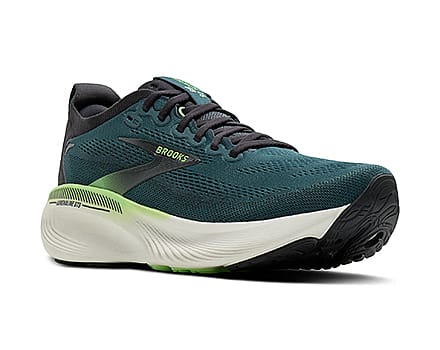
- Stability without overcorrection: Good anti-pronation running shoes offer stability where you need it, while remaining comfortable and providing extra cushioning. Today’s good running shoes, such as those from Hoka and Brooks, give you exactly the right support at exactly the right moment.
When running, you take thousands of steps (average cadence: 160–180 steps per minute). With the right running shoes, your feet stay in a more favourable position for all those steps, drastically reducing the pressure on your joints.
Some top models from Hoka are:


Conclusion
Overpronation is a common problem among runners and can lead to injuries and reduced performance in the long term. Fortunately, it is easy to recognise and correct with the right tools and knowledge. By paying close attention to the signals, such as foot, knee or shin pain, and by doing a self-test or having a professional gait analysis carried out, you can take action in time and prevent discomfort.
The most effective way to limit overpronation is to wear special stability running shoes that support your foot and correct the rolling motion. Brands such as Hoka and Brooks offer special anti-overpronation shoes, so you can soon run better and with even more enjoyment.
Don’t wait until small aches become big injuries. Have a gait analysis done and choose the best running shoes for your feet.
Need help choosing your new anti-overpronation shoes?
Would you like to buy new running shoes with extra stability and support, but are you not quite sure which shoes best suit your wishes and needs? We are happy to help you with all your questions so you can make the perfect choice. You can reach our running specialists via +31 85 773 00 58 or send an email. You can also visit our store in Volkel, the Netherlands.
Also worth reading